# Ultra-Bright Nanoparticles Spot Chemical Twins That Hide in Plain Sight
Researchers have engineered nanoparticles so luminous they can detect and differentiate between nearly identical molecules, a breakthrough that promises to revolutionize how scientists identify drug contaminants and environmental pollutants. The particles work by amplifying light signals so dramatically that extremely subtle chemical differences become visible to standard laboratory equipment.
The work addresses a persistent problem in analytical chemistry: distinguishing between molecules that share nearly identical structures. Many dangerous drug impurities and environmental contaminants have chemical compositions that differ only slightly from their legitimate counterparts, making them nearly impossible to identify with conventional detection methods. Current techniques often require expensive, specialized lasers and sophisticated instrumentation available only in well-equipped laboratories.
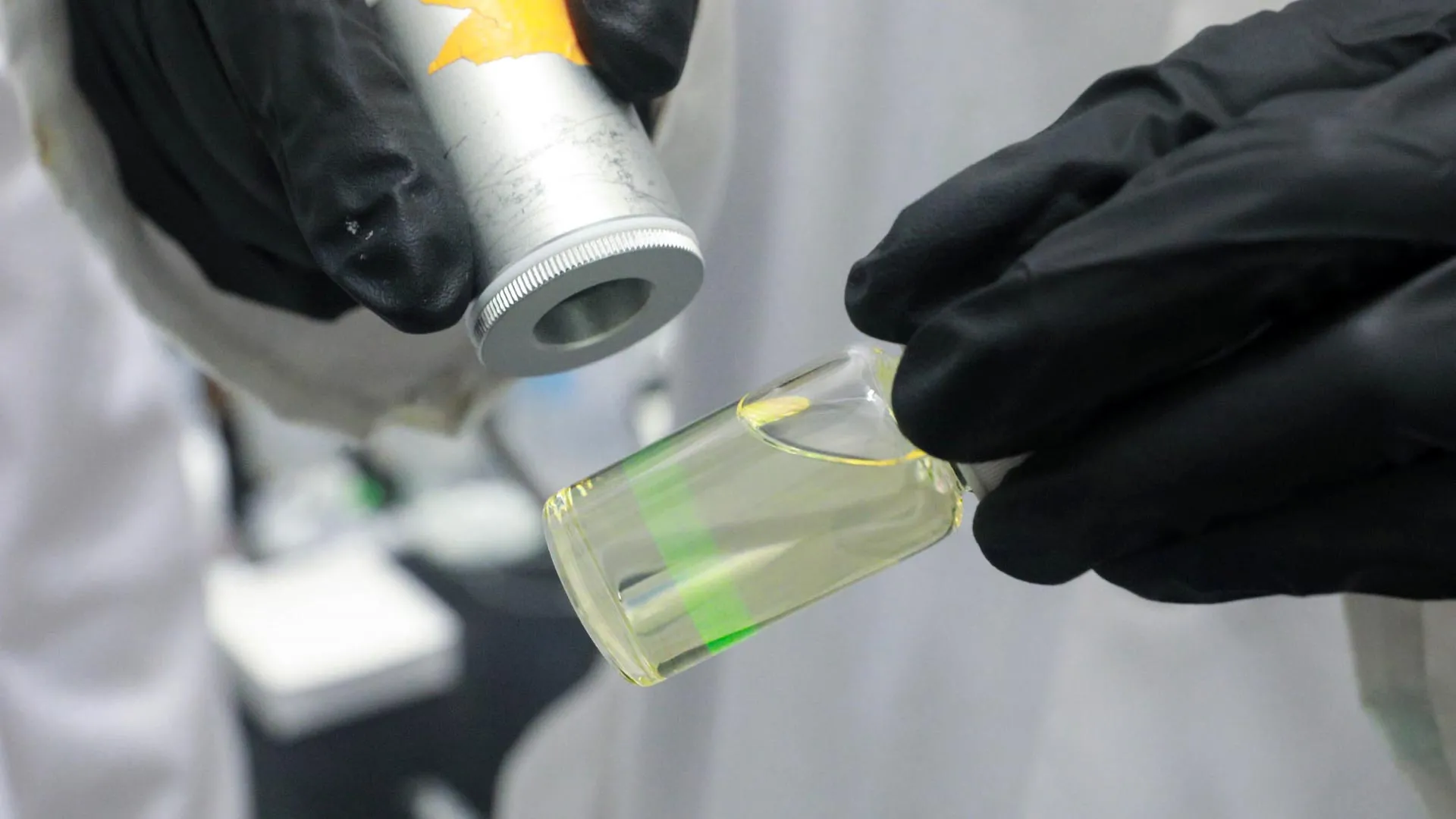
The new nanoparticles function as optical amplifiers. When light hits them, they emit light at intensities far beyond what natural materials can achieve. This extreme brightness, termed high luminescence, transforms faint chemical signatures into detectable signals. The technology relies on the principle that different molecules scatter and absorb light in subtly different ways. Most instruments cannot register these minute variations. The engineered nanoparticles magnify these differences enough that even low-power, inexpensive lasers can pick them up.
The breakthrough carries implications for drug manufacturing and quality control. Pharmaceutical companies must verify that products contain no dangerous isomers or byproducts that mirror the active ingredient's molecular structure but carry different biological effects. Currently, detecting such impurities demands hours of analysis and expensive chromatography equipment. Nanoparticle-based detection could streamline this process and reduce costs substantially.
Environmental monitoring represents another application. Detecting trace pollutants in water supplies often requires equipment found only in specialized facilities. Nanoparticles that respond to contaminants with visible light signals could enable on-site testing at water treatment plants or agricultural facilities, providing faster results and reducing the need to transport samples to distant laboratories.
The technology also opens doors for forensic applications and counterfeit product detection. Counterfeit medications and illicit drugs frequently contain fillers or alternative isomers that appear chemically similar but behave differently in the body. Portable detection systems based on this nanoparticle technology could help authorities identify fakes at borders and in supply chains.
One limitation centers on nanoparticle design specificity. Each type of nanoparticle typically works best for detecting certain chemical families. Developing a universal detection platform would require engineering multiple particle types or creating highly adaptable particles. Researchers continue working on this challenge.
The practical transition from laboratory success to field-ready devices still requires additional development. Scientists must validate the technology across diverse real-world conditions, test stability over extended periods, and establish protocols that match or exceed the accuracy of conventional methods.
The research builds on years of work in plasmonic and fluorescent nanoparticle engineering. The combination of extreme brightness with chemical selectivity represents a meaningful advance, particularly for applications demanding portability and cost-effectiveness over laboratory-based analysis.