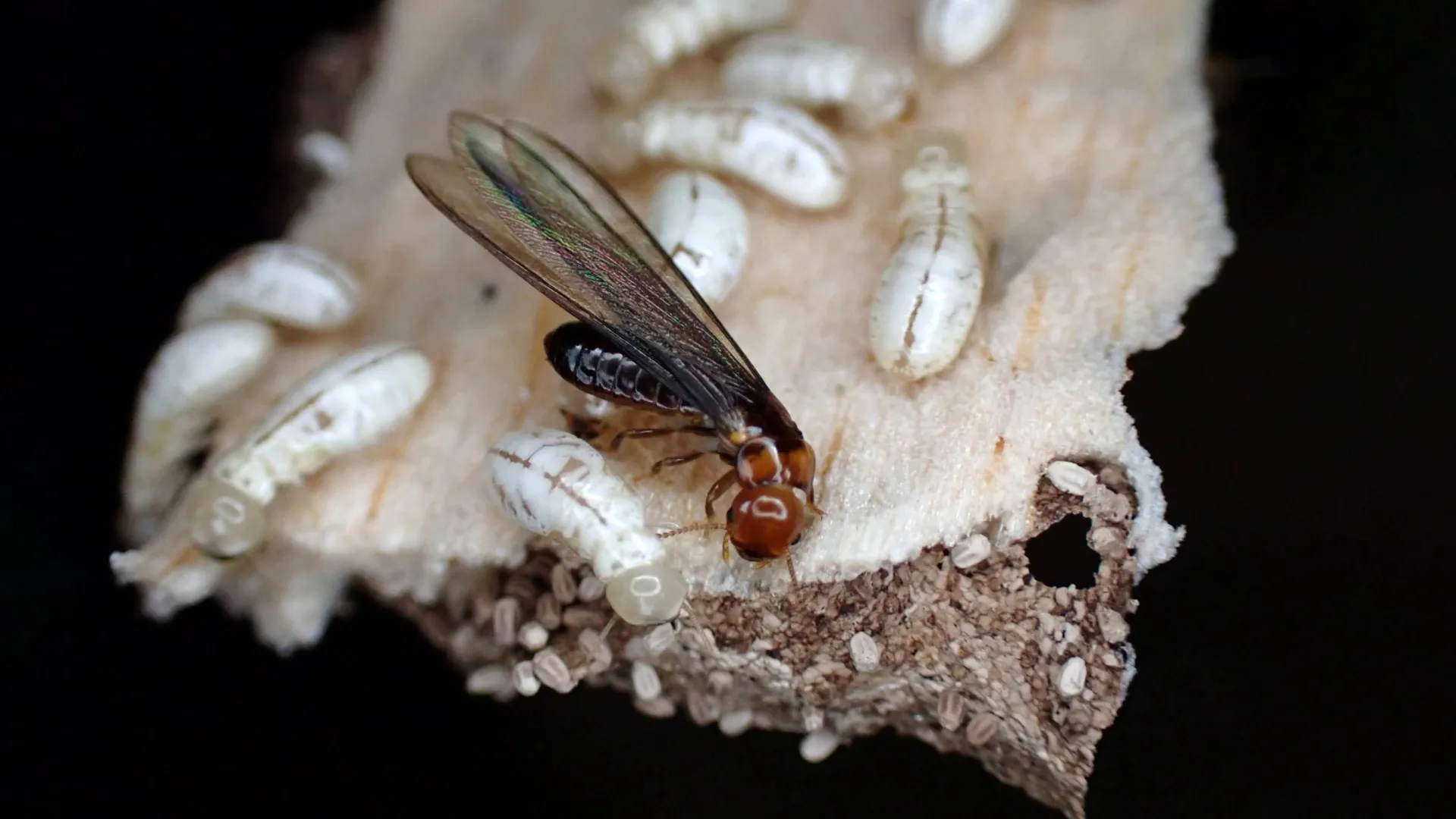
# New Chemical Targets Termite Molting to Eliminate Colonies Without Human Risk
Researchers have developed a chemical compound that exploits termites' natural life cycle to achieve a 95% kill rate in laboratory colonies, presenting a less toxic alternative to conventional fumigation methods used in homes and buildings.
The compound works by disrupting chitin synthesis, the process termites use to build their exoskeletons. Unlike broad-spectrum pesticides that poison insects through multiple mechanisms, this targeted approach forces drywood termites into a biochemical trap. When these insects molt, as they must do repeatedly throughout their lives, they cannot properly form new exoskeletons. The result is fatal.
The research reflects a growing trend in pest control toward mechanism-based strategies that exploit the unique biology of target species. Termites cannot skip molting. It remains an obligatory process in their development, making the exoskeleton-building pathway an ideal target. The chemical essentially weaponizes normal insect physiology against the pest itself.
Traditional termite control relies heavily on sulfuryl fluoride fumigation, a broad-spectrum gas that requires residents to vacate treated structures for days. The process poses respiratory risks and raises environmental concerns about volatile organic compounds. Alternatives like liquid termiticides work well but require extensive soil treatment around building foundations and can leave residual chemical traces in the environment for extended periods.
This chitin synthesis inhibitor represents a departure from those approaches. The 95% efficacy rate in laboratory testing on drywood termite colonies demonstrates strong promise, though real-world conditions present additional variables. Field trials in residential and commercial settings will clarify whether laboratory results translate to practical effectiveness when termites occupy complex wooden structures and can escape into deep wall cavities.
The human safety profile appears favorable based on the mechanism. Humans and other mammals do not synthesize chitin. We rely on alternative biochemical pathways for skeletal support and connective tissue formation. A compound that blocks chitin production should therefore leave human physiology unaffected. Researchers must still establish appropriate exposure thresholds, application methods, and potential off-target effects on non-pest insects through rigorous toxicology testing.
The compound's selectivity raises fewer environmental concerns than current fumigation standards. However, termite colonies interact with broader soil ecosystems. Other arthropods that synthesize chitin, including beneficial insects, require evaluation to confirm the chemical does not cause unintended ecological damage. Researchers have not yet detailed these secondary toxicity studies.
Drywood termites cause an estimated $5 billion in annual property damage in the United States alone. Infestations occur when reproductive termites find their way into wooden structures and establish colonies within walls and attics. Once established, these colonies grow for years before visible damage appears. Prevention and early detection remain the most effective strategies, but new treatment options matter for already-infested buildings.
Development timelines for pesticide alternatives typically span five to eight years from laboratory validation through regulatory approval by agencies like the Environmental Protection Agency. Additional studies on formulation stability, shelf life, application equipment, and interactions with common building materials lie ahead.