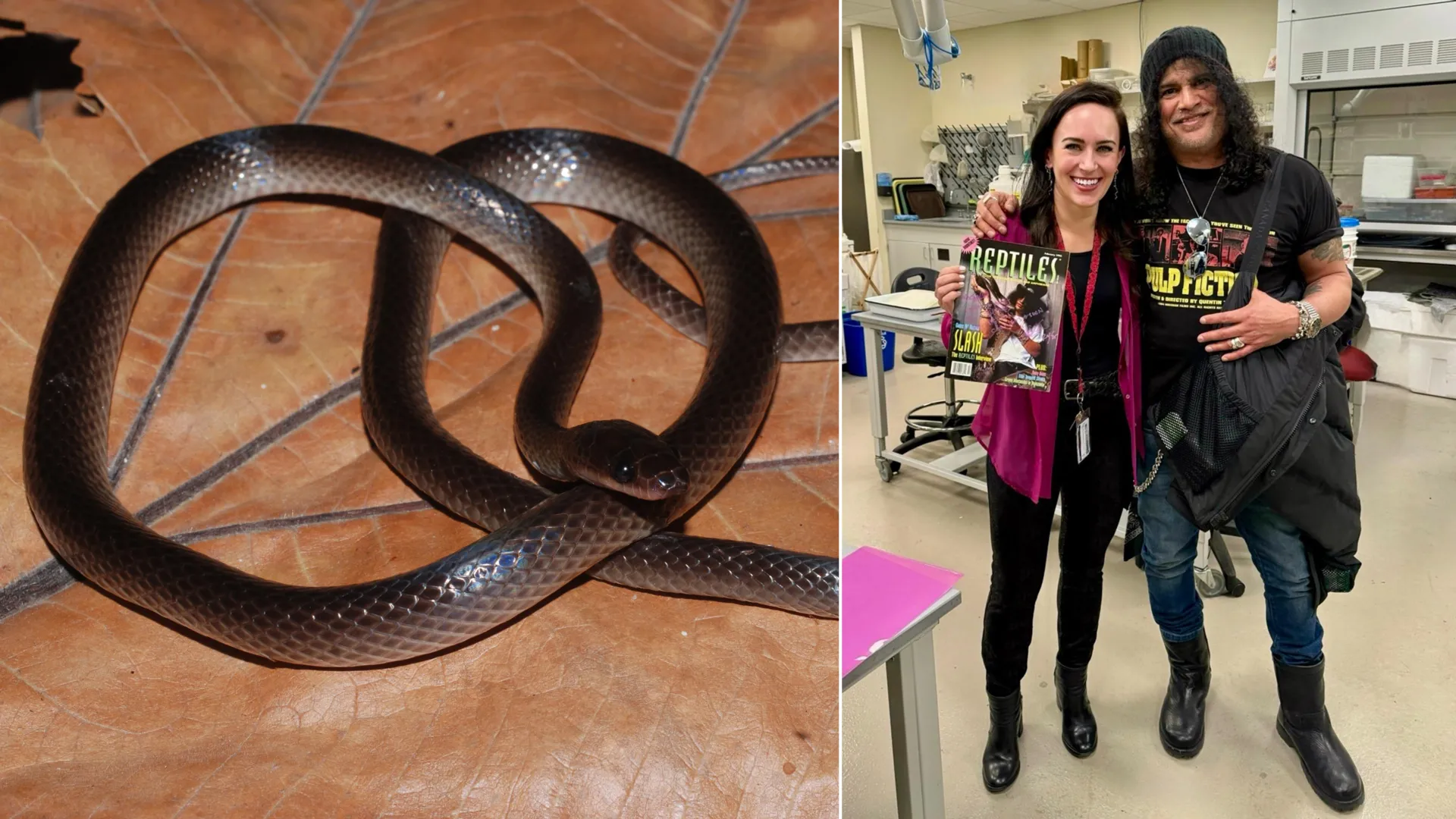
A newly discovered groundsnake from the rainforests of New Guinea now bears the name of one of rock music's most iconic guitarists. Scientists formally described Lielaphis slashi, a reddish-brown nonvenomous snake, in a peer-reviewed study after genetic testing and physical examination proved it represented an entirely new species previously unknown to science.
The creature's namesake, Guns N' Roses guitarist Slash, has maintained a lifelong passion for reptiles dating back to his childhood. The connection between the musician and herpetology prompted researchers to honor him through the species name, a common practice in biology where discoverers select names to recognize individuals who have contributed to or supported the field.
The research team relied on molecular genetic analysis to distinguish Lielaphis slashi from related groundsnake species. Physical characteristics also set it apart, though the exact morphological differences remain part of the formal description published in the peer-reviewed literature. The snake inhabits the tropical forests of New Guinea, an island that harbors extraordinary biodiversity and continues to yield new animal species at a steady pace.
The snake's biology suggests specialized hunting behaviors. Scientists determined that Lielaphis slashi likely uses enlarged rear teeth, called maxillary teeth, to capture and consume prey items that other snakes might struggle to grasp. The primary targets appear to be slippery lizards and reptile eggs, food sources that demand specialized dental adaptations for secure capture and consumption. This feeding specialization represents an evolutionary response to the particular ecological niche the snake occupies within New Guinea's complex forest ecosystems.
Naming newly described species after public figures remains a tradition in taxonomy, though it typically honors scientists, explorers, or conservationists. Naming an organism after a rock musician is uncommon but not unprecedented when the individual demonstrates genuine interest in natural history. Slash's long-standing fascination with reptiles made him an appropriate choice for the research team.
New Guinea remains one of the planet's most biologically productive regions. The island's isolated geography and varied terrain have produced thousands of endemic species found nowhere else on Earth. Scientists estimate that many species remain undescribed in remote forest areas, awaiting formal scientific recognition. The discovery of Lielaphis slashi adds to the growing catalog of New Guinea biodiversity while highlighting how much remains unknown about the world's fauna.
The formal description of this species demonstrates the ongoing work required to catalog Earth's biological diversity. Each new species description contributes to understanding evolutionary relationships, ecological networks, and the distribution patterns of life across different regions. For conservation purposes, identifying and naming species accelerates efforts to protect them from habitat loss and environmental degradation.
Slash's enthusiasm for reptile conservation potentially amplified the significance of having this snake bear his name. Public figures with documented interests in natural history can raise awareness about biodiversity and the importance of species preservation. The association between a globally recognized musician and a newly discovered organism may generate broader public interest in herpetology and rainforest conservation than traditional species descriptions achieve alone.