# Brain's Hidden Wiring May Protect Cognition During Aging
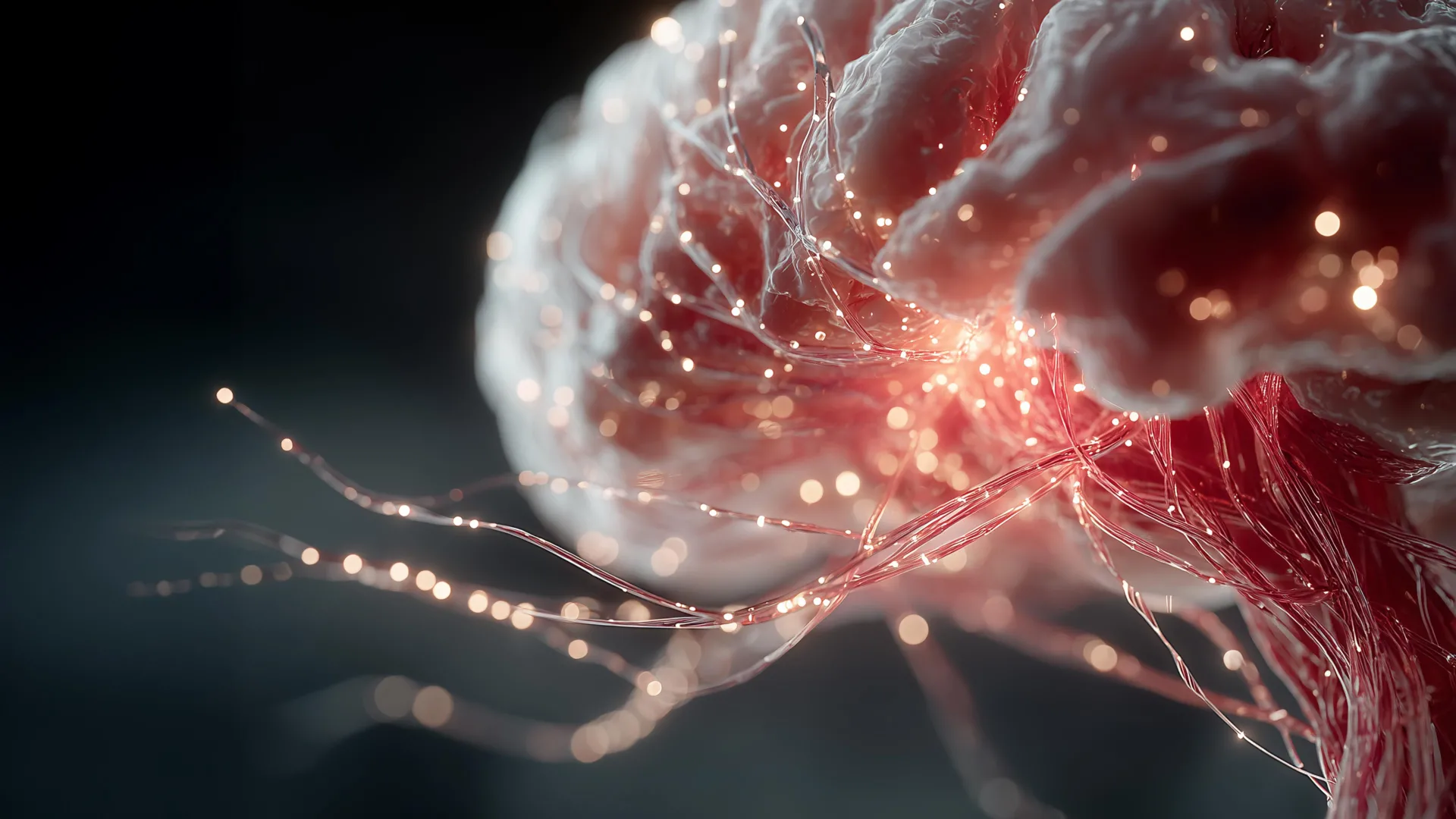
Researchers have identified a neural compensation mechanism that may help preserve cognitive function even as the brain shrinks with age. The study found that robust white matter connections just beneath the brain's surface correlate with stronger language skills and buffer against the cognitive decline typically associated with gray matter loss.
The discovery addresses a longstanding puzzle in neuroscience: why some older adults maintain sharp minds despite measurable brain shrinkage, while others experience cognitive decline proportional to their gray matter volume. The answer appears to involve the quality and integrity of short-range white matter fibers that connect nearby brain regions.
White matter consists of myelinated axons that transmit signals between neurons across the brain. Gray matter contains the neuron bodies themselves. As people age, both typically atrophy, but the relationship between this shrinkage and cognitive decline varies substantially among individuals. The new research suggests that efficient local wiring preserves mental acuity by enabling remaining brain tissue to communicate more effectively.
The study examined language comprehension and production, functions closely tied to gray matter volume in classical brain maps. Researchers observed that participants with stronger white matter integrity in short-range fibers showed better language performance than would be predicted by their gray matter volume alone. This indicates that white matter quality partially compensates for structural loss.
The findings emerge from research into what scientists call "reserve" and "resilience" in aging brains. Reserve refers to the brain's structural capacity. Resilience refers to how efficiently existing neural networks function. This work demonstrates that resilience mechanisms operate at the white matter level, suggesting that maintaining connection quality matters as much as preserving tissue volume.
The implications extend beyond aging research. Understanding how healthy white matter supports cognition could inform strategies to preserve brain function in neurodegenerative diseases where gray matter loss accelerates. It also raises questions about interventions that might strengthen white matter integrity, whether through cognitive training, physical exercise, or other lifestyle factors.
However, the research carries limitations. The study examined specific language functions in a particular population. Whether this compensatory mechanism applies uniformly across other cognitive domains, such as memory or executive function, remains unclear. The direction of causality also requires clarification. Do healthy white matter connections protect gray matter from loss, or does preserved gray matter maintain white matter integrity? Longitudinal studies tracking individuals over years could answer this question.
The research contributes to accumulating evidence that brain aging is not a simple story of inevitable decline. The brain's structural organization, particularly the architecture of connections between nearby regions, plays an active role in determining whether age-related changes translate into functional loss. This opens new avenues for identifying which older adults face cognitive vulnerability and which possess neural reserves that buffer against decline.
Future work should examine whether interventions that enhance white matter health, such as aerobic exercise shown in other studies to benefit brain structure, could preserve or restore cognitive function in aging and disease contexts.