# Quantum-Powered Microscopy Could Revolutionize How Scientists See Delicate Samples
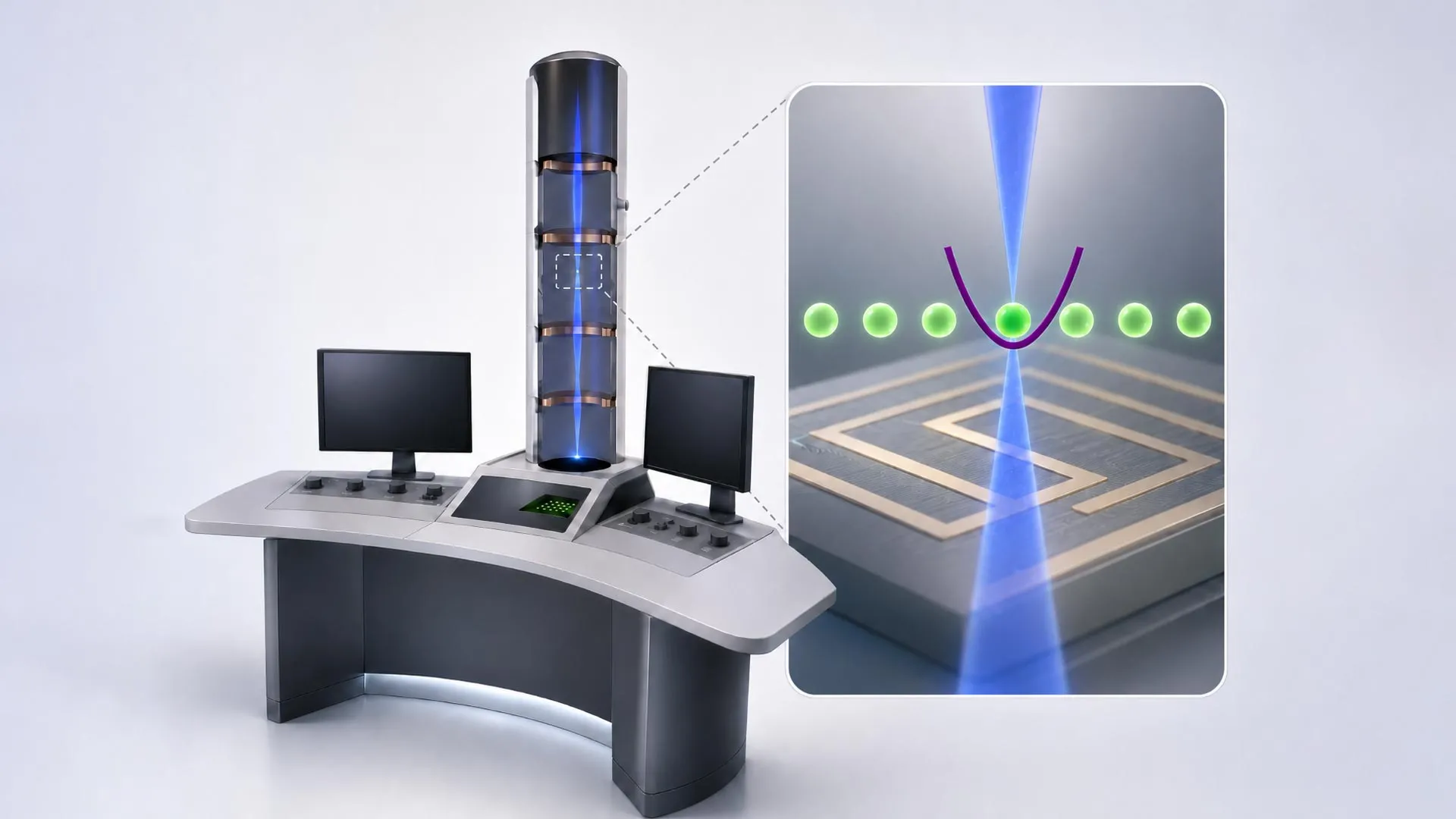
Researchers have begun integrating quantum computers with electron microscopes to extract vastly more information from individual electrons, a breakthrough that could preserve fragile biological and material samples from the destructive effects of conventional imaging.
Electron microscopes have long pushed the boundaries of biological and materials imaging, achieving resolutions far beyond optical microscopes by using accelerated electrons instead of light. However, they carry a tradeoff. The electron beams necessary to generate detailed images can damage or destroy the very samples scientists want to study, particularly delicate specimens like proteins, viral particles, and organic tissues.
The new approach harnesses quantum computing principles to fundamentally change how microscope data gets processed. Rather than relying solely on classical computation to interpret electron interactions, the hybrid system leverages quantum algorithms to extract far more structural information from each electron that interacts with the sample. This efficiency gain means researchers can achieve comparable image quality and detail using substantially fewer electrons.
The concept works by encoding microscopy data into quantum states where information exists in superposition, a distinctly quantum property that allows simultaneous processing of multiple possibilities. Quantum computers excel at exploring vast solution spaces simultaneously, so they can identify patterns and reconstruct sample details from minimal electron scattering data that classical computers would struggle to interpret.
This development addresses a persistent challenge in electron microscopy. Scientists studying temperature-sensitive biomolecules like membrane proteins, enzyme complexes, or newly formed viral particles must balance image resolution against potential beam damage. Low electron doses preserve sample integrity but produce grainy, lower-resolution images. High doses yield clearer pictures but risk causing structural artifacts or destroying samples entirely. Quantum-enhanced microscopy narrows this gap by generating high-fidelity images from gentler electron doses.
The practical applications extend broadly across structural biology and materials science. Researchers investigating protein folding diseases, vaccine development, and drug binding mechanisms could observe native structures with minimal artifact. Materials scientists studying semiconductors, alloys, and nanotechnologies could examine atomic arrangements without introducing defects. Cryo-electron microscopy, already revolutionary for visualizing molecular structures at near-atomic resolution, could become even more powerful while requiring lower radiation exposure.
The technology remains in early development stages. Quantum computers themselves are still maturing, with limited qubit counts and reliability issues constraining their real-world utility. Integration with existing electron microscope infrastructure presents engineering challenges. Researchers must develop algorithms tailored to specific microscopy applications and validate that quantum-processed images accurately represent physical reality rather than computational artifacts.
Questions about cost and accessibility persist as well. High-end electron microscopes already represent substantial capital investments for research institutions. Adding quantum computing hardware amplifies expenses, potentially limiting adoption to well-funded laboratories initially. Broader democratization would require either dramatic cost reductions or cloud-based quantum microscopy services.
The convergence of quantum computing and electron microscopy represents a tangible example of how emerging computational paradigms solve longstanding problems in experimental science. As quantum computers mature and algorithms become more sophisticated, microscopy applications may showcase practical quantum advantage where the quantum approach delivers capabilities impossible through classical means. This hybrid approach also suggests other experimental techniques might benefit from quantum enhancement, potentially reshaping how scientists interact with their instruments.