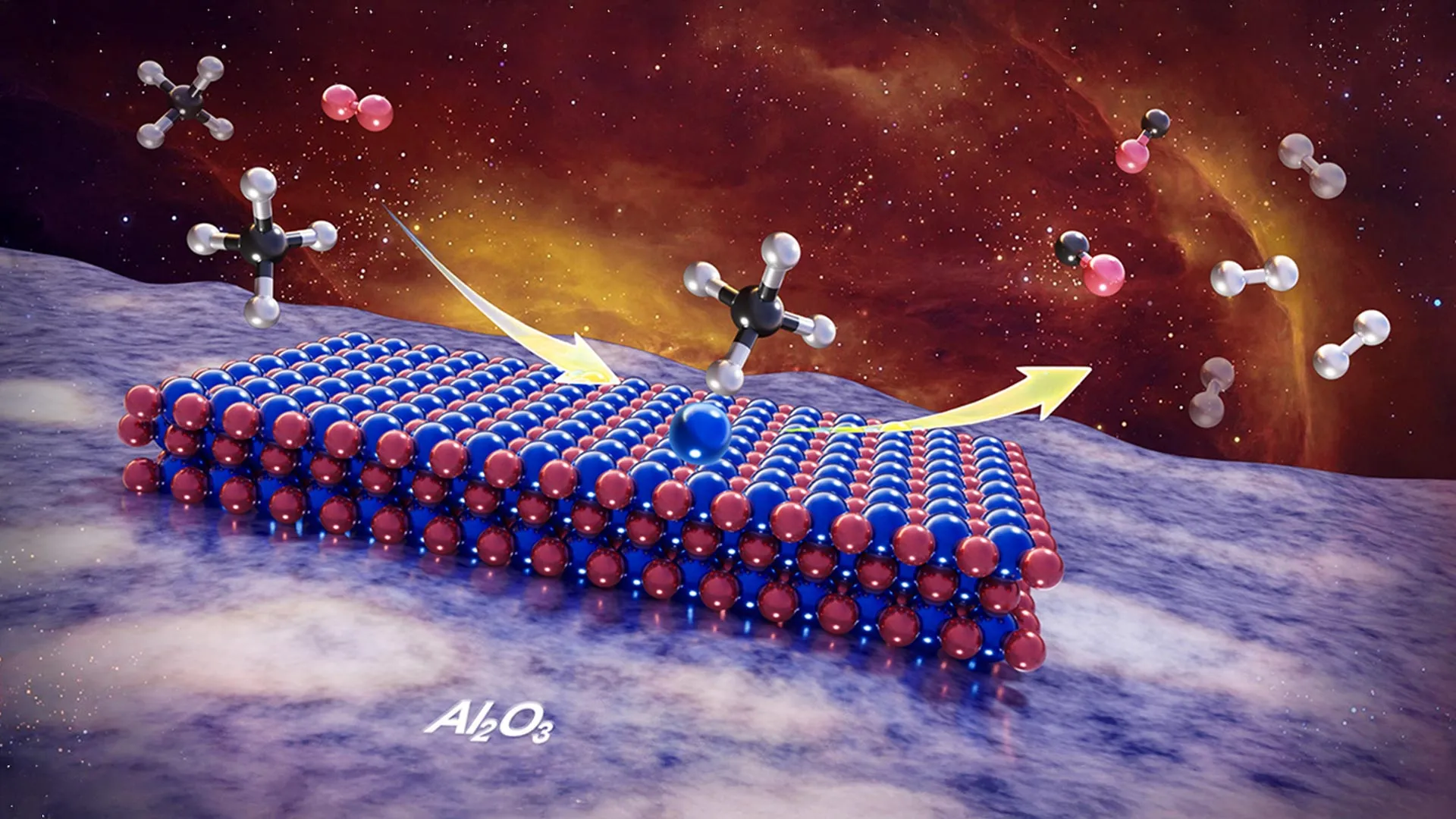
Researchers at Chinese institutions have identified an unexpected atomic structure in nickel oxide that dramatically improves methane conversion, overturning decades of assumptions about how these catalysts work.
The team discovered that a hidden atomic arrangement forms on nickel oxide surfaces during methane processing. This structure outperforms the metallic nickel that scientists previously thought was the primary driver of the chemical reaction. The finding emerged from detailed atomic-level analysis of catalysts in action.
The practical implications are substantial. A catalyst containing just 10 percent of the metal loading achieved performance equivalent to conventional catalysts requiring 100 percent metal content. This discovery creates a direct path toward reducing the cost of industrial catalysts while maintaining or improving their efficiency.
Methane conversion sits at the center of multiple industrial processes. Converting methane into useful chemicals and fuels represents one of the most valuable applications in chemical manufacturing. The reaction also plays a role in emissions management and energy production. Any improvement to catalyst efficiency translates directly into lower production costs and reduced environmental impact at industrial scale.
The researchers conducted their work using advanced microscopy and spectroscopy techniques that allowed them to observe atomic structures in real time as reactions progressed. By examining the catalyst surface at the atomic level, they identified the previously unknown structure and documented its role in accelerating methane conversion. This methodological approach, examining catalysts under actual working conditions rather than in static form, revealed details that conventional analysis had missed.
The low-nickel catalyst system opens several commercial opportunities. Industrial plants currently operating methane conversion processes could adopt less metal-intensive formulations, reducing material costs without sacrificing productivity. For developing nations with limited access to expensive materials, this breakthrough expands the feasibility of building domestic methane processing infrastructure.
The work also demonstrates how atomic-level understanding of catalytic mechanisms can overturn established dogma. For decades, the field operated under the assumption that metallic nickel bore primary responsibility for methane conversion. This new evidence shows that the real workhorses are these hidden atomic structures that form at specific interface regions within the oxide material.
Future applications extend beyond methane. The principles governing this nickel oxide system likely apply to other metal oxide catalysts used in industrial chemistry. Researchers may now systematically search for comparable hidden structures in other catalytic systems, potentially unlocking efficiency gains across multiple industries including petrochemicals, hydrogen production, and synthetic fuel manufacturing.
The discovery reflects broader trends in catalysis research toward understanding and deliberately engineering atomic-scale features rather than simply increasing raw material quantities. As industrial chemistry faces pressure to reduce costs and environmental footprints simultaneously, such atomic-level optimization becomes increasingly valuable. The Chinese team's work provides a template for how detailed structural investigation can yield practical solutions that benefit manufacturers and the environment alike.