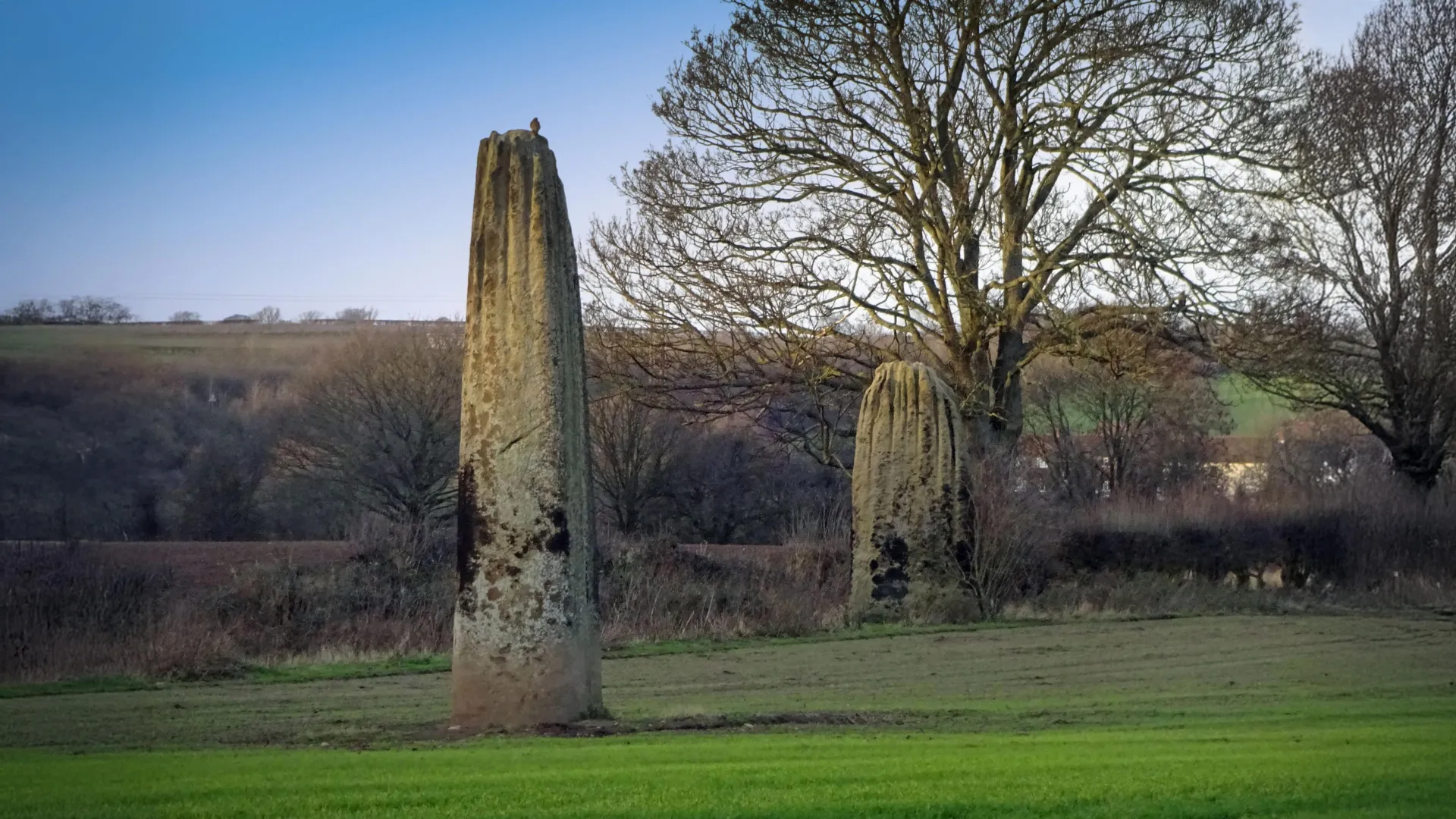
# Ancient Builders Transported 55,000-Pound Stones Across 11 Miles for Britain's Tallest Stone Row
Archaeologists have solved a centuries-old mystery about Britain's Devil's Arrows, determining that Neolithic builders transported massive 25-tonne stones at least 18 kilometers from Brimham Rocks to construct the monument around 4,000 years ago. The research reveals an extraordinary investment of labor and logistical planning by prehistoric societies that far exceeds previous assumptions about their organizational capacity.
The Devil's Arrows stand in North Yorkshire as three towering monoliths reaching up to 7.6 meters high, forming Britain's tallest stone row. Their origins have puzzled scholars for generations. A team of researchers used geochemical analysis and petrographic examination to fingerprint the stones' composition and trace their source to Brimham Rocks, a distinctive gritstone outcrop located approximately 11 miles away across challenging terrain.
The journey from Brimham Rocks to the monument's current location in Boroughbridge required moving each 55,000-pound stone across open moorland, through valleys, and over natural obstacles without wheeled transport or modern machinery. No roads existed for this journey. Workers relied entirely on human labor, wooden sledges, and possibly animal power to accomplish the feat. The sheer distance combined with the stone weight represents one of the most demanding prehistoric construction projects documented in Britain.
The researchers' analysis involved comparing trace elements and mineral compositions of the Devil's Arrows stones with geological samples from multiple potential sources across the region. The geochemical signature matched Brimham Rocks precisely, eliminating speculation that the stones originated from closer locations or were naturally transported by glaciation. This methodical approach to stone provenance follows techniques successfully applied to other British monuments like Stonehenge, where sarsen stones came from Wiltshire's Marlborough Downs, roughly 20 miles away.
The discovery carries implications beyond engineering prowess. The deliberate choice of Brimham Rocks when closer stone sources existed suggests cultural or spiritual motivations guided the selection. Brimham Rocks held particular significance for these communities, perhaps related to astronomical alignments, sacred geography, or ancestral connections. The monument itself may have served ritual functions tied to that distant sacred landscape.
This finding demonstrates that Neolithic British societies possessed the organizational sophistication to undertake multi-year projects requiring coordinated labor, sophisticated knowledge of geology, and long-distance planning. The effort represents an investment in collective identity and shared purpose that bound communities together across generations. Monument construction consumed vast resources, yet communities chose to invest them anyway, revealing values beyond immediate survival needs.
The research also contextualizes Britain's Neolithic period within broader European patterns. Contemporary societies across Europe moved massive stones considerable distances for ceremonial purposes. The Devil's Arrows place northern Britain within this continent-wide tradition of monumental construction driven by social cohesion and religious belief.
Future investigations may reveal whether Brimham Rocks hosted quarrying activity or ceremonial gatherings. Excavations around the Devil's Arrows themselves could yield artifacts establishing construction timelines and ceremonial sequences. The answers will deepen understanding of how Neolithic communities assigned meaning to landscape features and mobilized collective effort toward shared monuments.