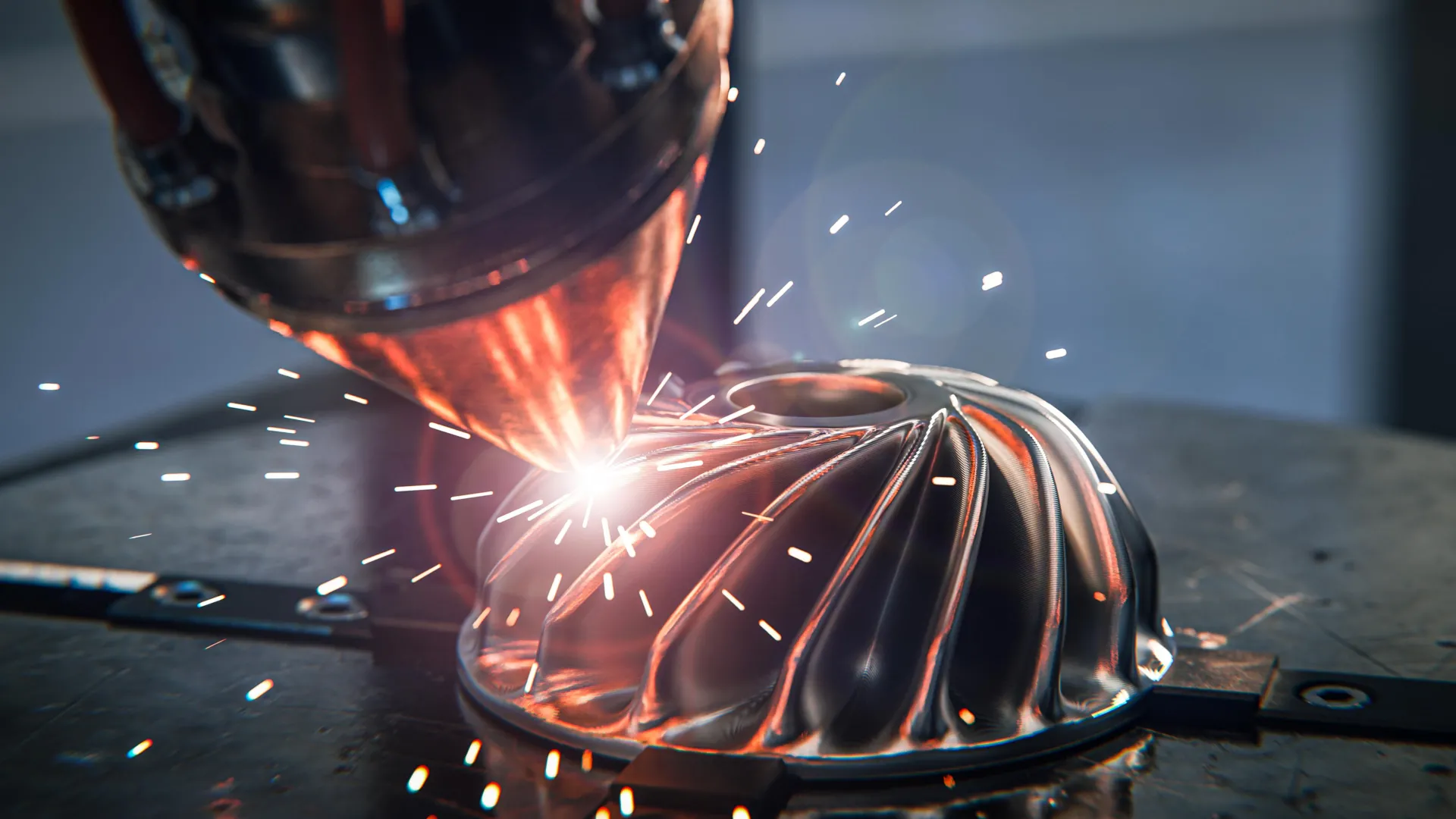
Researchers have used artificial intelligence to dramatically accelerate the development of 3D-printing techniques for GRCop-42, a high-performance copper alloy used in NASA rocket engines. The team searched through over 100 million possible printer settings and identified six viable configurations after conducting just 40 experiments, a fraction of what traditional trial-and-error methods would require.
The breakthrough centers on a critical discovery: one configuration operates at only 500 watts, the lowest power requirement ever achieved for printing this alloy. This matters because GRCop-42 currently demands specialized, expensive equipment. The ability to print it on more common machinery could slash production costs and expand which manufacturers can produce rocket components.
GRCop-42 is a copper-chrome-niobium alloy engineered to withstand extreme temperatures and stresses inside rocket engine combustion chambers. NASA developed it to replace traditional cooling systems in next-generation engines. However, additive manufacturing of GRCop-42 has proven temperamental. The process requires precise control over laser power, scan speed, layer height, and dozens of other parameters. Too much energy and the material becomes brittle. Too little and parts fail to form properly. Finding the right combination through conventional experimentation would take years and consume enormous resources.
The AI system attacked this optimization problem by using machine learning algorithms to predict which settings would work before physically testing them. Researchers built a model trained on metallurgical physics and previous 3D-printing data. The AI then generated predictions across the massive parameter space. Rather than testing millions of combinations sequentially, the algorithm identified the most promising candidates and ranked them by likelihood of success.
After just 40 actual printer runs, the system had mapped six working configurations. The 500-watt setting represents a breakthrough because standard laser systems often operate at much higher power levels. This opens manufacturing to facilities using cheaper, more accessible equipment. The reduced energy requirement also means faster printing speeds and lower operational costs per part.
The research demonstrates how AI can compress engineering timelines from months or years into weeks. Instead of scientists making educated guesses about which parameters to test next, algorithms rapidly explore the solution space and propose experiments most likely to yield results. This accelerates iteration cycles dramatically.
The results have practical implications beyond NASA. Additive manufacturing of specialty alloys represents a multibillion-dollar sector. Copper alloys like GRCop-42 see applications in aerospace, automotive, and power generation industries. Any technology that makes production cheaper and more accessible to manufacturers attracts immediate commercial interest.
However, the work also highlights limitations. Six successful configurations is encouraging but not exhaustive. Real-world printing involves variables the lab cannot fully control, including material batch variation and equipment quirks. Configurations validated in controlled research settings sometimes behave differently in production environments.
The researchers have not yet published peer-reviewed results, though the work originates from established institutions with expertise in materials science and machine learning. Independent verification through academic journals will be necessary before claims about record-low power consumption and broader applicability can be fully assessed.
This research represents growing convergence between AI optimization and materials engineering, a trend that accelerates development of expensive specialty components for aerospace and defense applications.