# Compact Light Chip Could Power Next-Generation 6G Communications
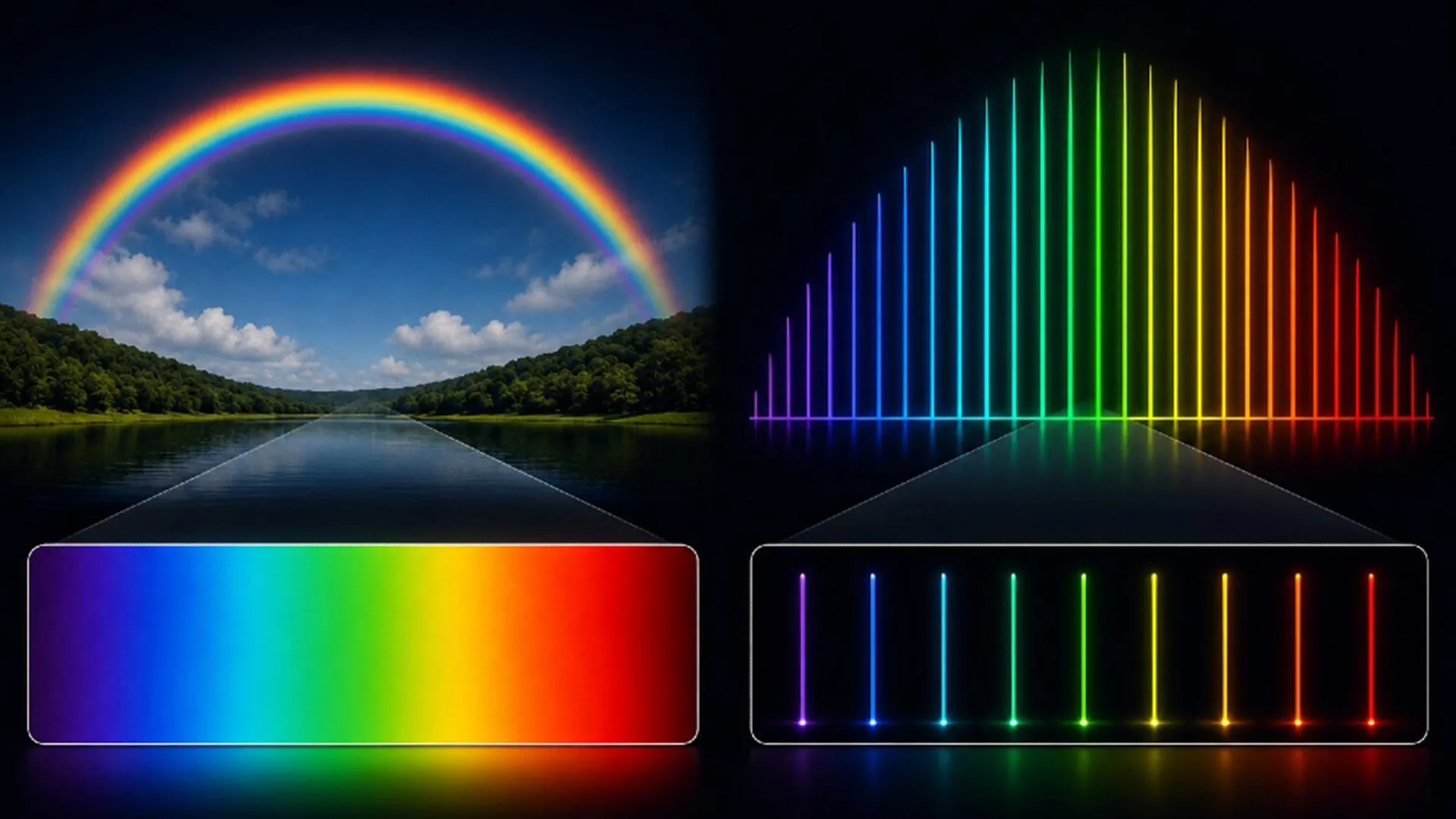
Researchers have developed a miniaturized optical device that generates a stable spectrum of light wavelengths, creating what they describe as a "rainbow on a chip." The technology produces multiple high-frequency signals simultaneously with unprecedented precision, offering a pathway to dramatically faster wireless networks and applications spanning quantum computing to satellite navigation.
The breakthrough addresses a fundamental challenge in telecommunications. Current 6G development requires systems capable of generating and managing dozens or hundreds of distinct optical frequencies at once. Traditional approaches rely on bulky laboratory equipment or complex integrated systems that consume significant power and occupy substantial physical space. This new chip condenses that capability into a device small enough for practical deployment in consumer electronics, telecommunications infrastructure, and space-based systems.
The chip's architecture enables what researchers call frequency comb generation. Rather than producing single wavelengths of light, the device outputs evenly spaced frequencies across a broad spectrum, analogous to the distinct colors of a rainbow. Each frequency can encode different data streams or serve distinct functions simultaneously. The extreme stability of these frequencies distinguishes this advance from previous attempts at miniaturization, which often produced outputs prone to drift or degradation.
Applications extend well beyond 6G wireless communications. The technology holds particular promise for quantum timing applications, where ultra-precise frequency references enable atomic clocks and synchronized quantum systems. Navigation systems dependent on GPS or alternative positioning technologies could leverage the chip's frequency stability to achieve unprecedented accuracy. Radar systems designed for autonomous vehicles or weather monitoring would benefit from the ability to generate multiple measurement frequencies with minimal power consumption.
Space exploration presents another compelling use case. Satellite-based communications networks increasingly require compact, power-efficient optical components. The miniaturized rainbow chip could enable next-generation satellite constellations to transmit data at rates currently impossible with conventional technology, while simultaneously reducing the weight and energy requirements that constrain spacecraft design.
The researchers have not yet disclosed specific details about the chip's manufacturing process, materials composition, or which institution led the work. These details remain essential for assessing scalability and commercial viability. Moving from laboratory demonstration to mass production typically requires years of refinement to ensure consistency, cost-effectiveness, and reliability across manufacturing batches.
The technology's impact on 6G development timelines remains uncertain. Most telecommunications experts project 6G deployment in the 2030s, providing a reasonable window for this technology to mature toward commercial integration. Earlier implementation in niche applications like quantum timing or space communications appears more likely, given the shorter development cycles for those sectors.
The stability of the optical frequencies generated by this chip represents a quantum leap in miniaturization efficiency. Previous integrated photonics approaches often sacrificed precision for size, requiring complex feedback systems to maintain frequency accuracy. This advance apparently achieves both compact form factor and high precision simultaneously, though verification through peer-reviewed publication remains pending.
The development aligns with broader industry trends toward integrated photonics, where optical functions previously requiring discrete components now consolidate onto single chips. Competing research teams at universities and corporations worldwide pursue similar goals using different architectural approaches, creating a competitive landscape that accelerates innovation while raising questions about which technologies will ultimately dominate commercial markets.