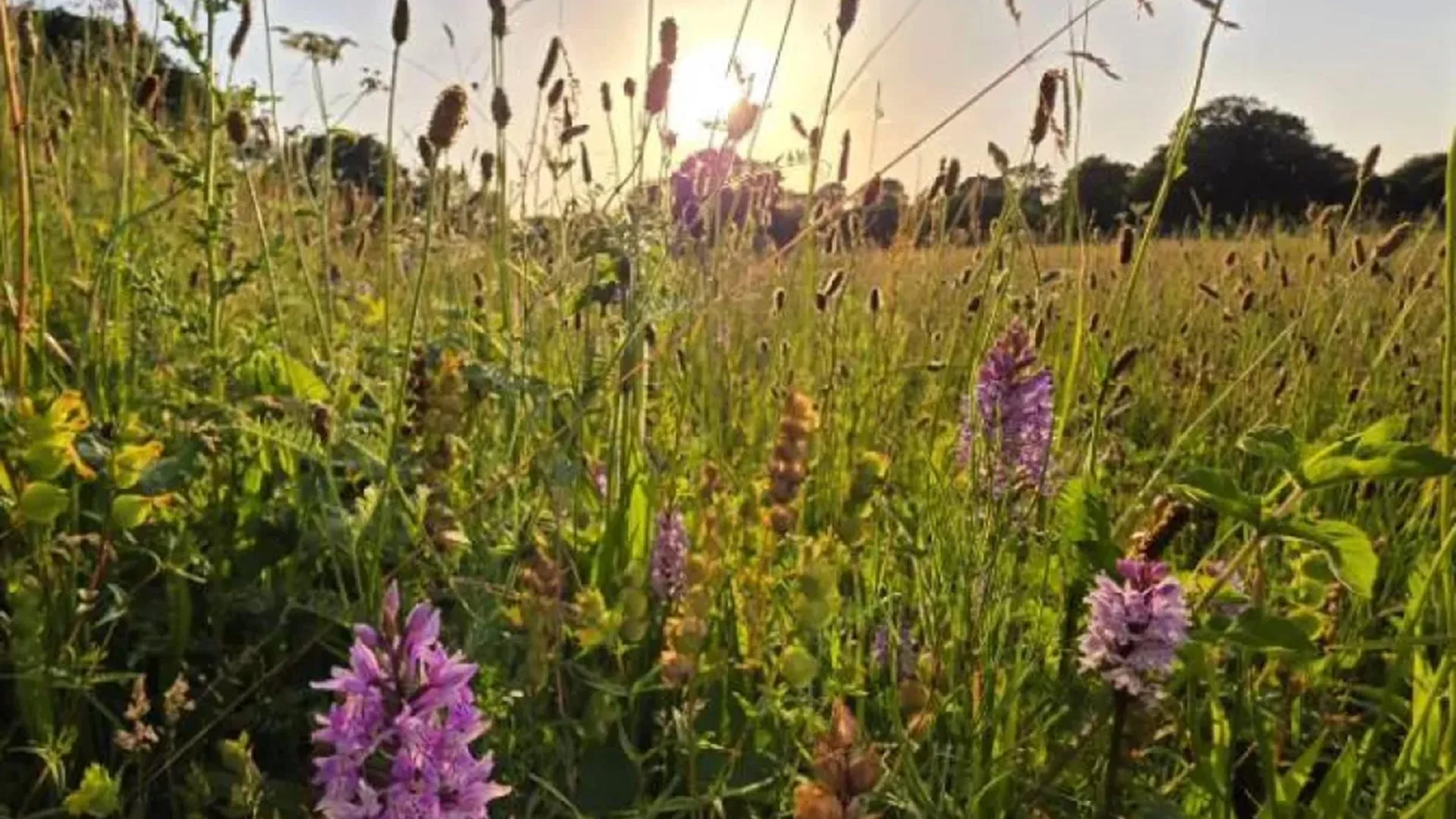
# Abandoned Farm Field Explodes With Wildflowers, Including Thousands of Orchids
A neglected agricultural field has transformed into a thriving wildflower meadow, offering proof that passive restoration works faster and cheaper than intensive management techniques. The abandoned land saw plant diversity double and thousands of orchids spontaneously establish themselves in just over a decade, according to researchers who monitored the recovery process.
The study documents what ecologists call "passive restoration," where degraded land is simply left undisturbed to allow native plants to regenerate naturally. This approach contrasts sharply with active restoration methods that require seeding, weeding, transplanting, and ongoing human intervention. The findings challenge conventional wisdom in conservation biology, which often assumes that damaged ecosystems need aggressive human management to recover.
The orchids proved particularly notable. These orchid-rich meadows represent some of Europe's most valuable habitats for biodiversity, yet they have declined dramatically across the continent due to agricultural intensification and habitat loss. The spontaneous appearance of thousands of orchid plants demonstrates that seed banks buried in soil can remain viable for years, waiting for the right conditions to germinate. Once the field was abandoned and grazing or plowing stopped, dormant seeds from surrounding landscapes established themselves naturally.
Plant diversity metrics showed the transformation clearly. The field progressed from degraded pastureland with limited species composition to a complex ecosystem supporting hundreds of plant types within 12 to 15 years. This timeline proves significant because it shows recovery happens at an ecologically meaningful pace, not over centuries.
The cost implications alone make this finding noteworthy. Active restoration programs across Europe spend millions annually on habitat management. Seed collection, cultivation, translocation, and ongoing maintenance consume substantial budgets. Passive restoration requires primarily one thing: time. Land managers only need to exclude destructive activities like cattle grazing, mowing, or pesticide application.
However, researchers acknowledge important limitations. Not all degraded land will recover equally well. Success depends heavily on proximity to source populations of native plants, regional climate conditions, and soil properties. A field surrounded by intensive agriculture and far from seed sources may take decades longer to recover or never restore fully. Additionally, some invasive species might colonize the space before native plants establish dominance, requiring targeted intervention.
The orchid meadow case likely benefited from favorable circumstances. Regional plant communities nearby provided seed sources. Soil chemistry had not been permanently altered by decades of chemical inputs. The particular European region had sufficient precipitation and suitable temperature ranges for meadow plants.
Conservation agencies are now evaluating where passive restoration fits into broader landscape management strategies. In regions with abundant native plant refugia and degraded land that can be protected from disturbance, simply stopping human activity emerges as a viable first step. In more fragmented landscapes with greater agricultural pressure, combining passive restoration with active seeding or species reintroduction may prove necessary.
The findings come from extended ecological monitoring, with researchers documenting species composition, abundance, and changes annually. This detailed record-keeping made quantifying the recovery rate and tracking the orchid explosion possible. Future studies will examine how this passive restoration approach scales across different habitat types and European regions.