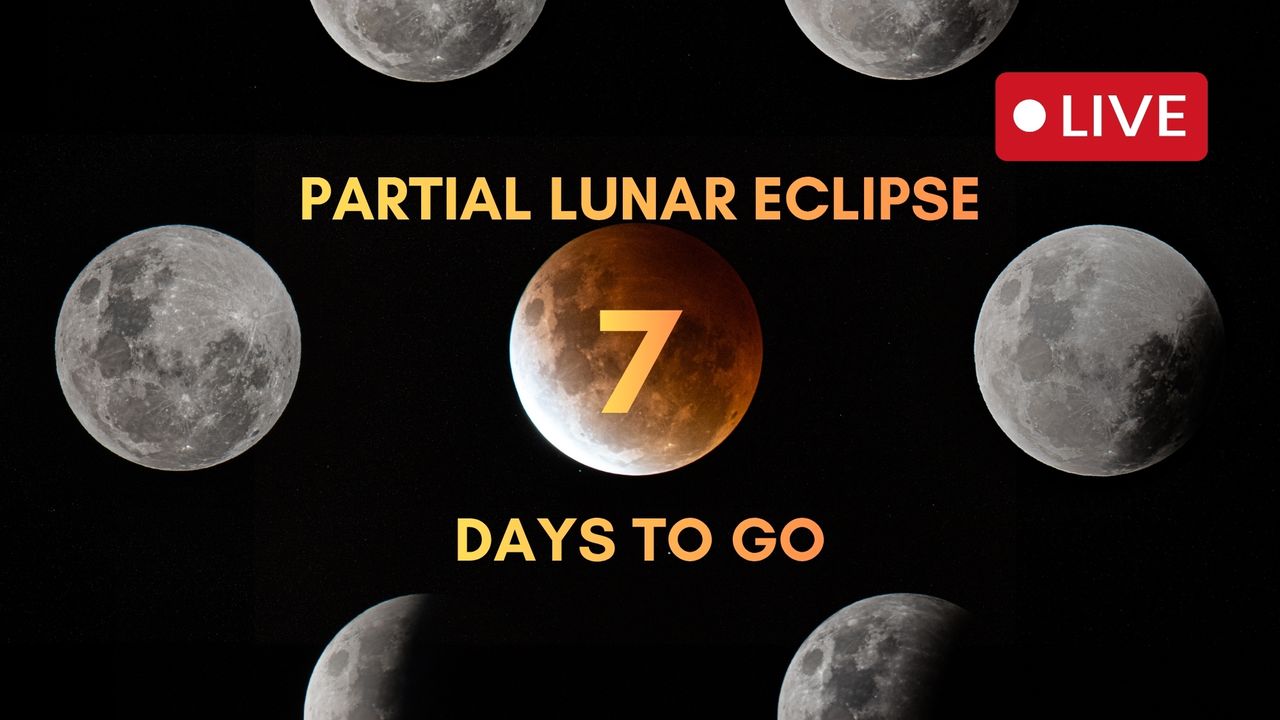
A partial lunar eclipse will unfold on August 27-28, representing the deepest such event until December 2028. Space.com is providing live coverage with real-time updates, viewing guidance, and latest developments throughout the event.
During a partial lunar eclipse, the Moon passes through Earth's umbra, the darkest part of our planet's shadow, but does not enter it completely. This creates a distinctive appearance where a portion of the lunar surface darkens while the rest remains illuminated. The depth of the eclipse determines how much of the Moon enters Earth's shadow, with deeper eclipses producing more dramatic visual effects.
This particular eclipse ranks among the most significant partial lunar events in recent years. The next comparably deep partial eclipse will not occur until December 2028, making August's event noteworthy for skywatchers and lunar observers.
Viewing conditions depend on geographic location. Observers in regions where the eclipse occurs during nighttime hours will have optimal viewing opportunities with binoculars or the naked eye. No special equipment is required, though telescopes and binoculars enhance detail visibility. Clear skies and dark locations away from light pollution offer the best observations.
Lunar eclipses occur when the Sun, Earth, and Moon align with Earth positioned between the Sun and Moon. This alignment only happens during a full moon. Partial eclipses occur when the Moon does not fully enter Earth's umbra, distinguishing them from total lunar eclipses where the entire lunar disk passes through Earth's darkest shadow.
Space.com's coverage includes timing details for various time zones, photography tips for capturing the eclipse, and scientific context about lunar eclipse mechanics. Live updates track the eclipse's progression as it unfolds, offering real-time information for observers watching from different locations worldwide.