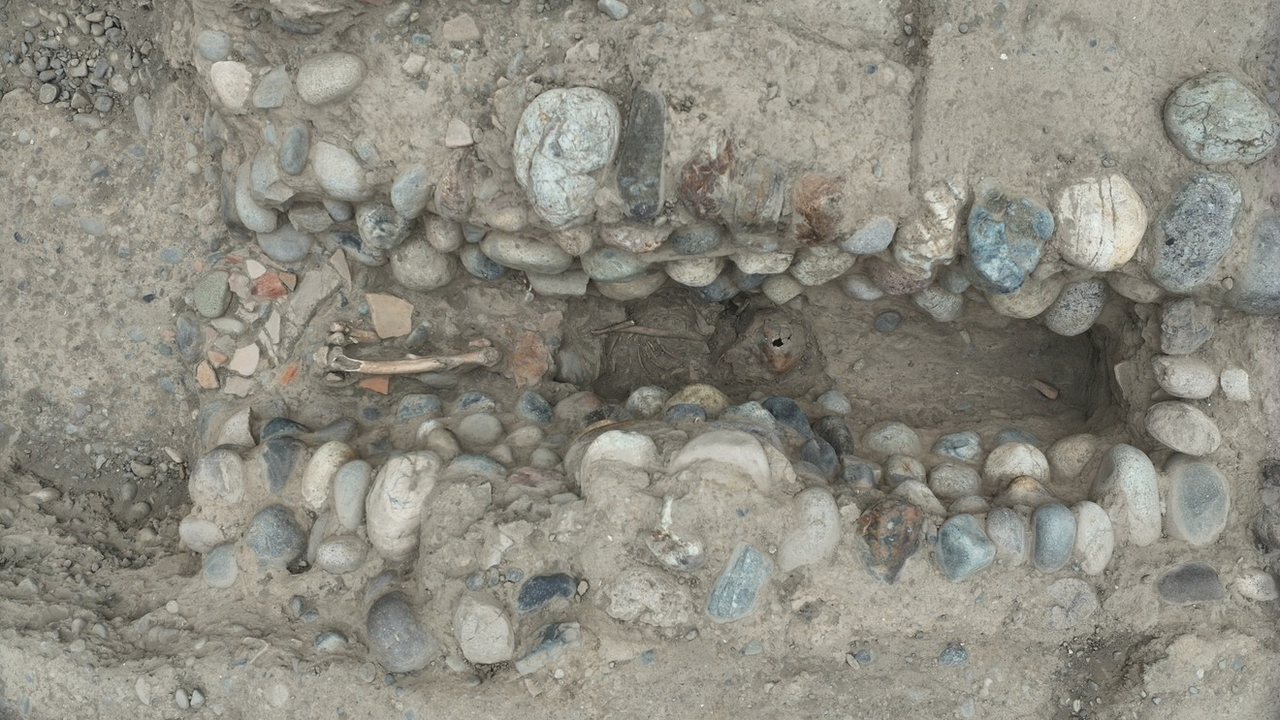
Archaeologists excavating an underground water channel in Peru discovered a 1,400-year-old skeleton that researchers believe belonged to a human sacrifice victim from a pre-Inca civilization. The remains offer new insights into ritual practices among ancient Andean societies.
The skeleton was found positioned in what researchers describe as a deliberate burial within the subterranean channel, suggesting intentional placement rather than accidental death. The archaeological context and skeletal condition point toward ritual sacrifice, a practice documented in several pre-Inca cultures including the Moche and Nazca civilizations that flourished in Peru between roughly 100 and 800 CE.
The discovery contributes to ongoing scholarly efforts to map the religious and social hierarchies of pre-Inca societies. Human sacrifice in ancient Peru typically involved individuals selected for specific ritual ceremonies, often connected to agricultural cycles, elite transitions, or religious observances. The underground channel itself may have held ceremonial significance, serving as a liminal space between the surface world and the underworld in Andean cosmology.
Researchers plan to conduct additional analysis on the remains, including biomolecular studies to determine the individual's age, sex, diet, and origin. Such data could reveal whether the victim was a local community member or someone brought from a distant location specifically for the ritual. The skeletal morphology and any signs of trauma will further clarify the circumstances surrounding the death.
The find underscores how water systems in ancient Peru functioned beyond practical purposes. Aqueducts, channels, and springs held profound spiritual meaning and served as venues for ceremonial activities. Previous archaeological work in the region has uncovered similar burials in water-related contexts, suggesting this was a patterned practice across multiple pre-Inca societies.
Understanding these ritual practices requires careful excavation and respectful engagement with descendant communities. Modern Peruvian archaeologists