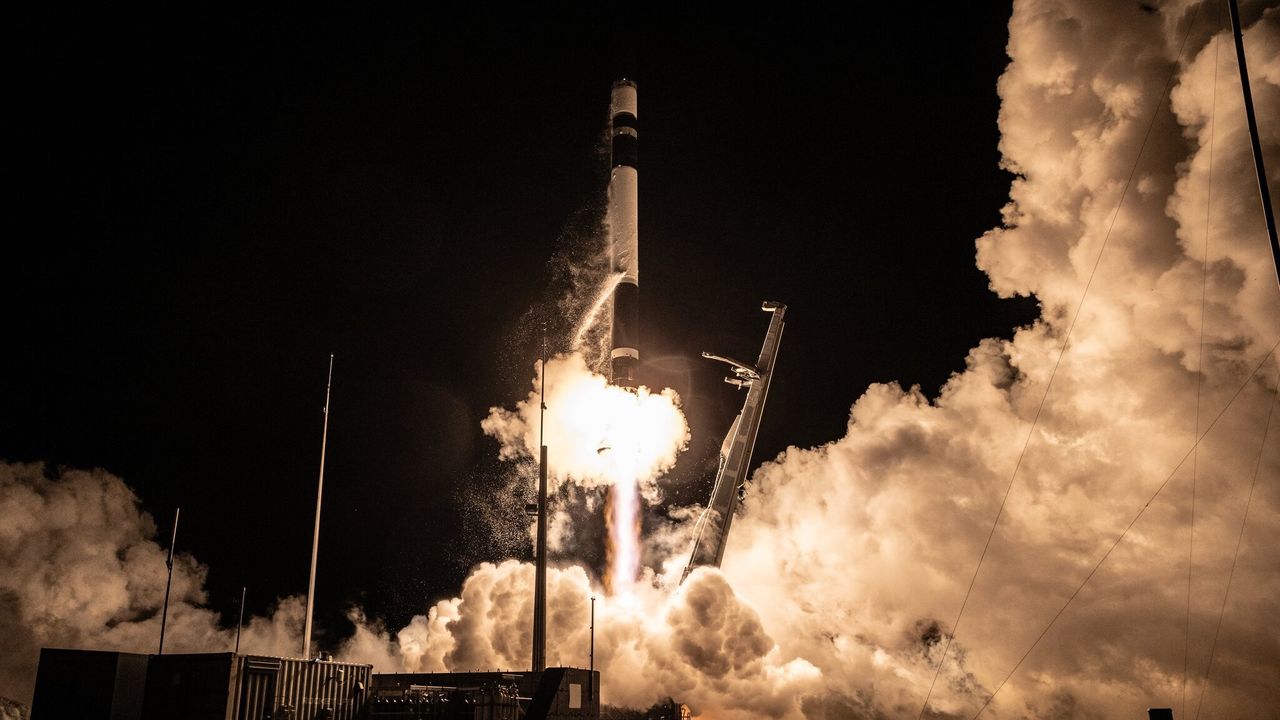
Rocket Lab launches a private Japanese Earth-observing satellite to orbit today. The New Zealand-based company will conduct its ninth mission for iQPS, a Japanese Earth-imaging firm, on August 20. Rocket Lab operates the Electron rocket, a small-lift launch vehicle designed for frequent, affordable access to orbit.
iQPS specializes in synthetic aperture radar (SAR) imaging, which penetrates cloud cover and operates regardless of daylight conditions. This capability makes SAR satellites valuable for monitoring infrastructure, agriculture, disaster response, and environmental changes. By flying nine missions for iQPS, Rocket Lab demonstrates the growing demand for dedicated small-satellite launch services in the commercial Earth-observation sector.
The mission represents the expanding role of private launch providers in space industry logistics. Rocket Lab has built its reputation on responsive, cost-effective launches using the Electron rocket, which carries smaller payloads than traditional heavy-lift vehicles like SpaceX's Falcon 9. This business model suits companies like iQPS that deploy constellations of specialized satellites rather than single large platforms.
Earth-observation satellites provide real-time data for climate monitoring, urban planning, and resource management. Commercial imaging companies compete on revisit rates, resolution, and sensor types. SAR's all-weather capability fills a niche that optical imaging cannot address, particularly for applications requiring consistent data collection in tropical regions or during storm seasons.
Rocket Lab has expanded beyond its home market in New Zealand and now launches from Virginia on the U.S. East Coast. The company recently went public and continues developing Neutron, a larger rocket intended to capture mid-range launch demand. Today's iQPS launch underscores the steady business Rocket Lab maintains with its current Electron fleet while developing next-generation capabilities.
The launch window opens this morning, with live coverage available through Rocket Lab's official channels and Space.