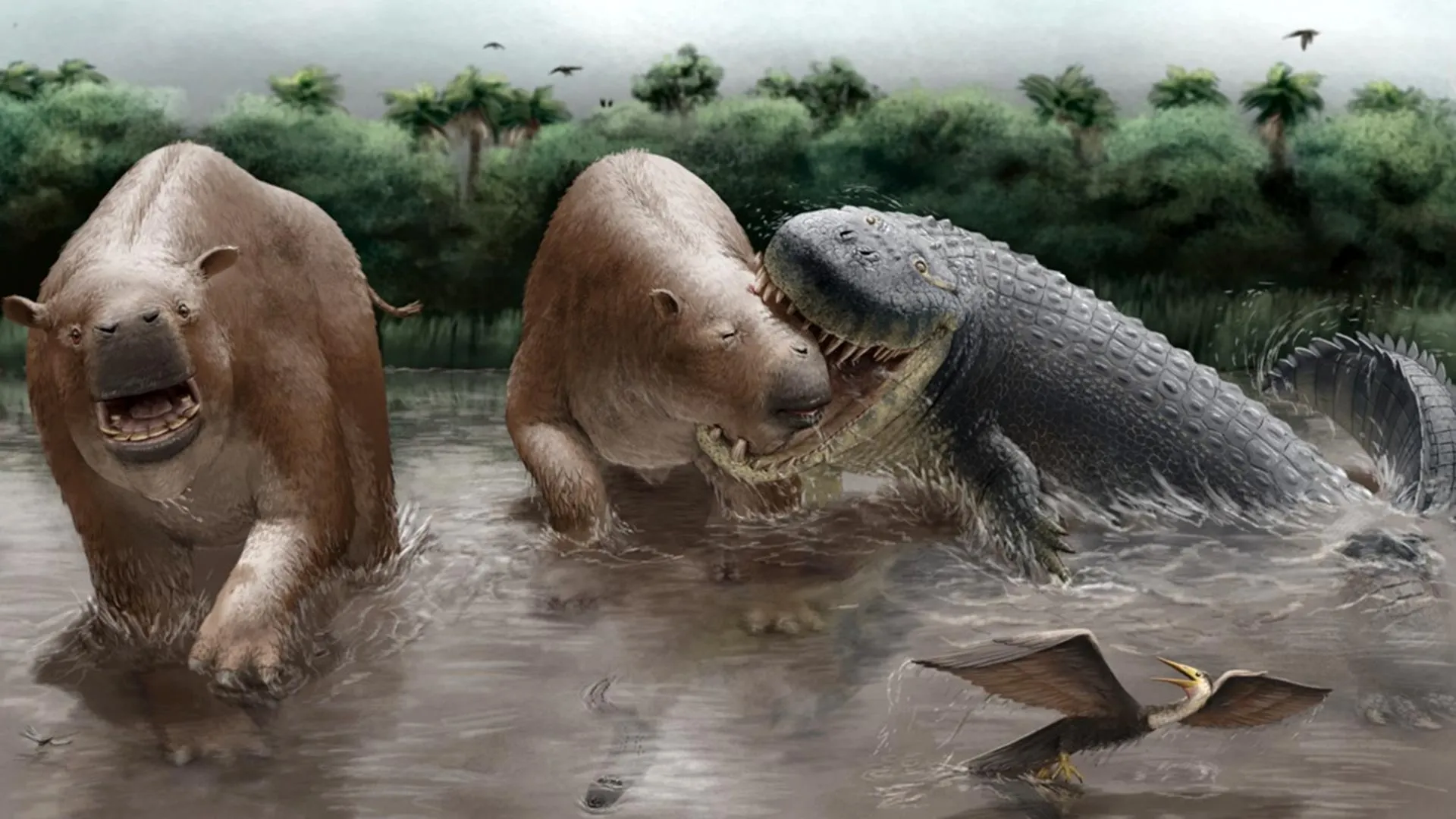
Researchers analyzing fossil evidence from Miocene South America have discovered that massive crocodylians, particularly Purussaurus neivensis, dominated the predator role in ancient tropical ecosystems rather than competing mammals. The seven-meter-long reptile left distinctive bite marks on prey fossils that reveal its status as the region's apex predator.
Purussaurus neivensis towered over mammalian carnivores of the period, using its enormous size and powerful bite to control populations of giant herbivores that roamed South American forests and waterways. The evidence comes from fossil remains showing characteristic crocodylian feeding patterns on megafauna prey species.
The Miocene epoch, spanning roughly 23 to 5 million years ago, featured an abundance of oversized animals across South America. Giant ground sloths, massive rodents, and other herbivores coexisted in this region, creating an ecosystem structured around predator-prey relationships quite different from modern ecosystems. The discovery challenges conventional assumptions that large mammals necessarily dominated apex predator roles in prehistoric environments.
Fossil bite mark analysis provides direct physical evidence of predator behavior. The marks left on bone and teeth preserved in the fossil record create a detailed record of feeding interactions. Purussaurus neivensis bore down with force that few other predators of its time could match, making it the ecosystem's primary top-down regulator.
The research demonstrates that crocodylians maintained ecological importance well beyond their modern roles. Today's crocodilians occupy limited niches in specific habitats, but Purussaurus neivensis suggests extinct relatives filled critically important positions in complex food webs. Understanding these ancient ecosystems helps researchers recognize that ecological roles shift across evolutionary time.
The findings illuminate how predator communities organize in tropical systems with abundant megafauna. South America's Miocene period offers a window into ecosystem dynamics fundament