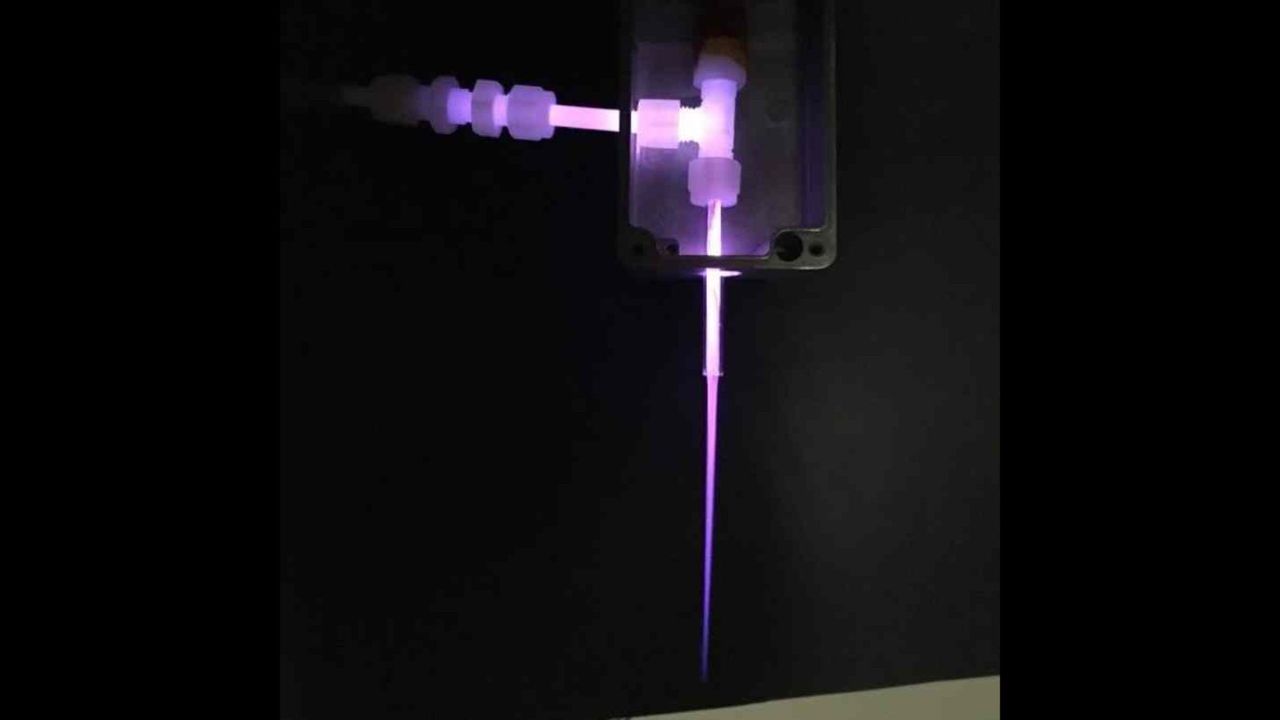
A team of researchers has developed a compact, pen-sized device that uses plasma to sterilize and clean clothing in space, potentially solving a persistent problem for astronauts on long-duration missions.
The device, colloquially called a "laundry gun," generates cold plasma that breaks down bacteria, viruses, and organic soils on fabric without requiring water or traditional detergents. This matters because water is precious in space. Current practices require astronauts to either rewear soiled clothes or discard them, wasting valuable resources and creating waste management challenges on spacecraft.
Cold plasma technology works by ionizing gas to create reactive particles that attack microbial cell membranes and degrade organic compounds. The process operates at low temperatures, preventing damage to delicate fabrics and electronic components that astronauts rely on during spacewalks and station operations.
The compact design addresses another constraint. Space stations and spacecraft operate under severe mass and volume limitations. Traditional washing machines are prohibitively heavy and bulky. A pen-sized apparatus can fit into existing storage and requires minimal power draw from station systems.
Researchers tested the device on fabric samples contaminated with common spacecraft pathogens and organic residues. Results showed effective sterilization and cleaning within minutes of exposure. The team has not yet published detailed findings in peer-reviewed journals, though space agencies including NASA have expressed interest in the technology.
Limitations remain. The device has undergone laboratory testing but not real-world validation in microgravity. Astronauts would need training on proper use to avoid damaging specialized suits or equipment. The plasma generation requires a power source, and long-term exposure effects on different fabric types require further study.
The laundry gun represents incremental progress toward self-sufficiency on extended space missions. As NASA and other agencies plan longer stays on the Moon and eventual Mars missions, solving hygiene and waste management becomes