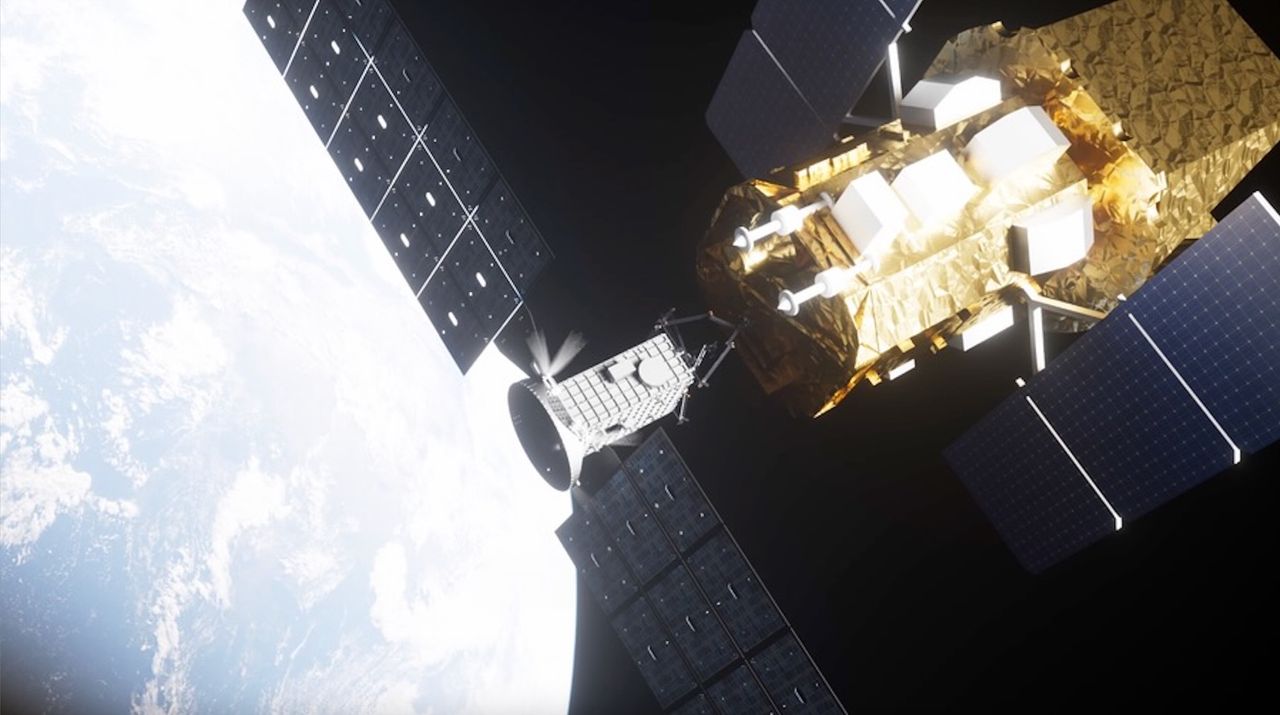
A private spacecraft mission to salvage NASA's aging Swift space telescope has failed, sealing the observatory's fate. The unmanned vehicle was launched to boost Swift's orbit and extend its operational life, but the maneuver did not succeed. Without the orbital correction, Swift will re-enter Earth's atmosphere and burn up sometime in 2025.
Swift, a space telescope that has observed gamma-ray bursts and other high-energy cosmic phenomena since its launch in 2004, has been gradually losing altitude due to atmospheric drag. The 20-year-old observatory has provided invaluable data on some of the universe's most violent events. Its mission had already exceeded original expectations by two decades.
The failed rescue attempt represents a setback for efforts to extend the operational lives of aging space assets through commercial partnerships. The private spacecraft operator had proposed a novel solution to prevent Swift's uncontrolled descent, but technical or operational issues prevented the rendezvous or reboost from completing successfully.
NASA officials confirmed the mission outcome, acknowledging that Swift's operational window has now closed. Scientists using Swift have only months to conduct final observations before the telescope's inevitable deorbit. The space agency will work with the mission team to safely manage Swift's reentry, coordinating with international partners to minimize any risk from debris.
The failure reflects the challenges of servicing spacecraft on orbit, even when companies pursue innovative approaches. While other aging satellites have been targeted for similar rescue missions, Swift's case demonstrates that not all commercial recovery attempts succeed. The telescope's end marks another chapter closing in the history of space-based astronomy, though its scientific legacy will persist through the decades of discoveries it produced during its extended operational life.