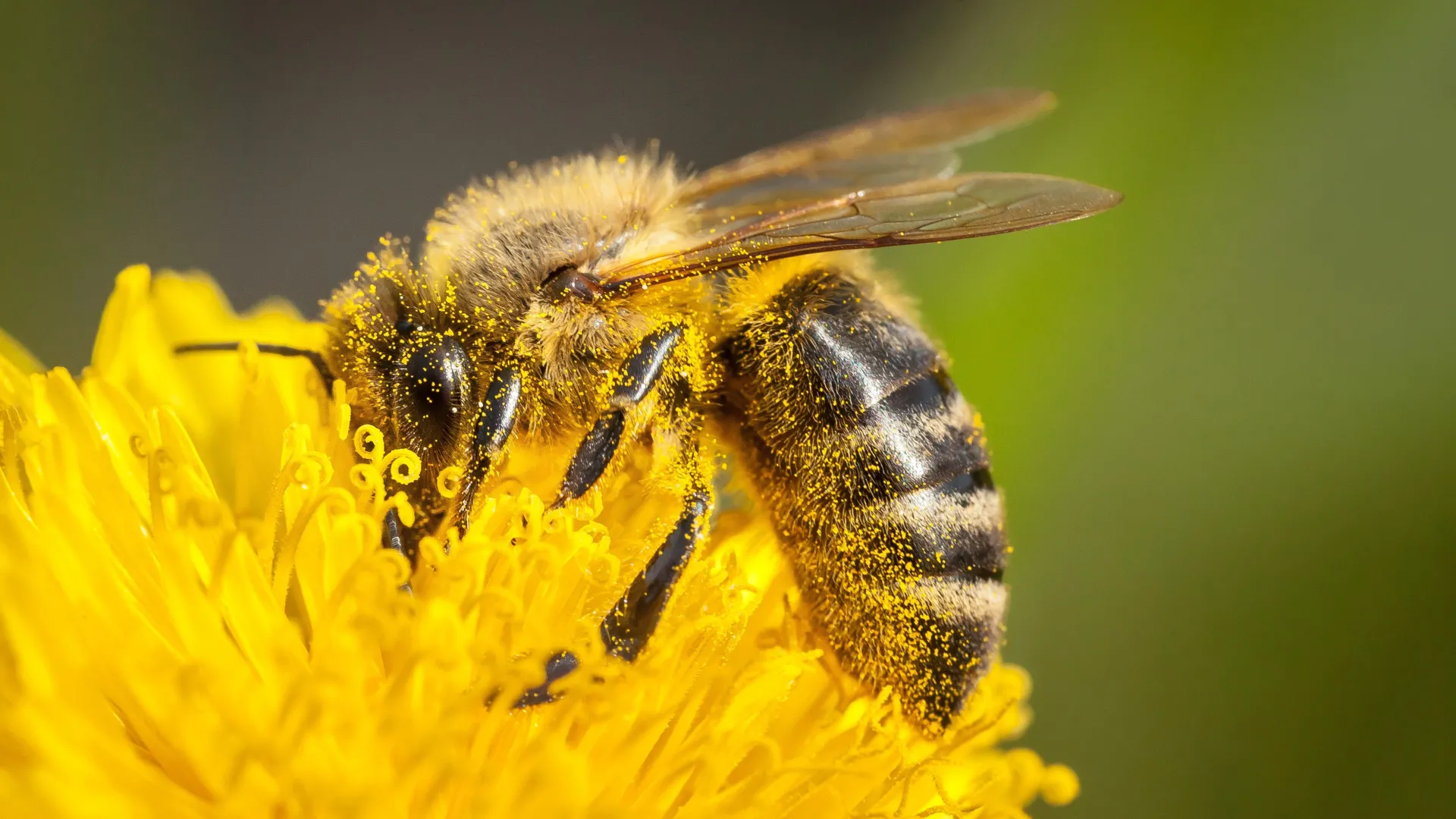
Honeybees possess a sophisticated system for managing nutritional imbalances in pollen, according to new research. The insects detect when pollen lacks proper nutrient ratios and adjust consumption accordingly, preventing potentially toxic accumulations of certain compounds.
The discovery reveals that bees don't simply consume available pollen indiscriminately. Instead, they employ what researchers describe as a nutritional strategy comparable to creating balanced "baby food" for larvae development. When processing pollen into stored provisions, bees transform raw plant material into a product with remarkably consistent nutrient composition, despite variable input sources.
This adaptive behavior addresses a real problem: pollen composition varies dramatically between plant species and seasons. Some pollen contains excessive levels of certain compounds that become harmful at high concentrations. Rather than risking larval malnutrition or toxicity, colonies manage intake and processing to maintain nutritional homeostasis.
The research demonstrates that honeybees exhibit nutritional awareness operating at both individual and colony levels. Individual foragers appear capable of sampling and assessing pollen quality before committing to collection. The hive collectively processes diverse pollen sources into standardized provisions, buffering against seasonal and botanical variability.
This finding has implications for understanding bee health and colony resilience. Agricultural landscapes dominated by monocultures may force bees to consume unbalanced pollen for extended periods, potentially overwhelming their compensatory mechanisms. The research suggests that habitat diversity directly supports bee nutrition and may influence vulnerability to diseases and other stressors.
The work also highlights an underappreciated dimension of bee biology. While researchers have long recognized bee sophistication in navigation and communication, less attention has focused on their nutritional ecology. This study indicates that bees solve complex metabolic problems through behavioral and physiological mechanisms refined by evolution.
Understanding these mechanisms carries practical weight. As beekeepers and conservation programs work to support honeybee populations, accounting for nutrit