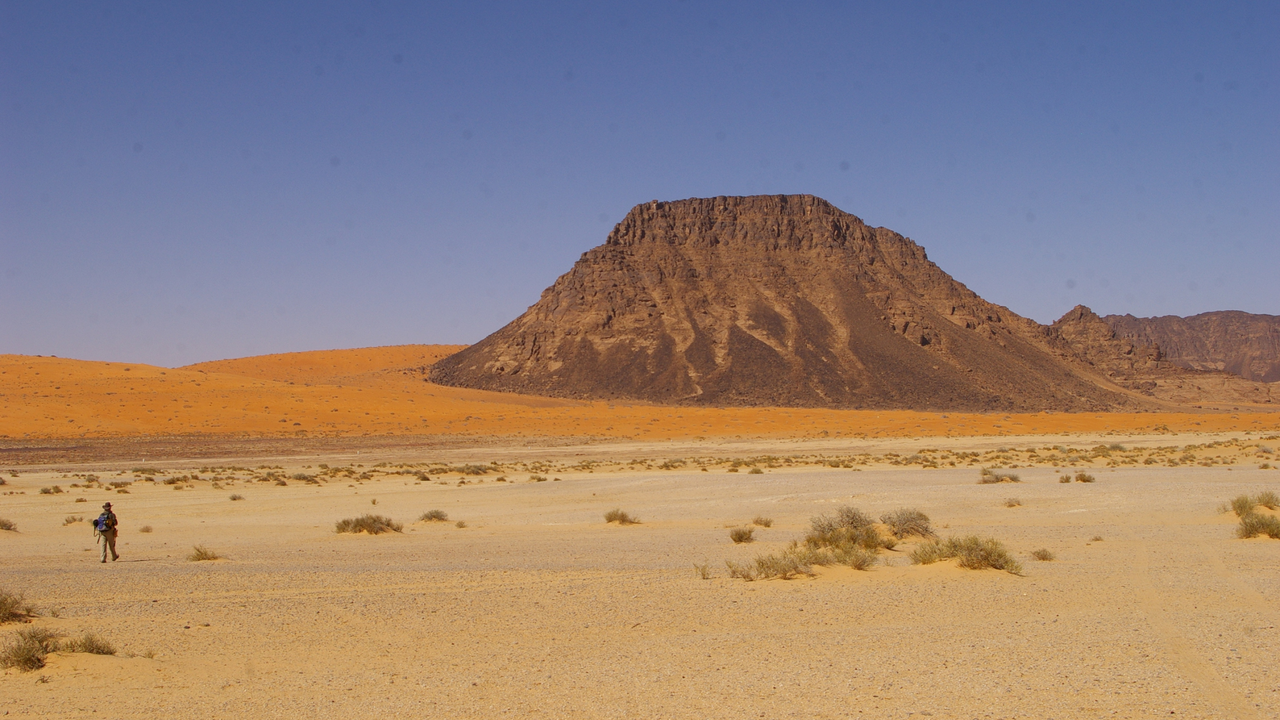
Archaeologists have discovered stone tools at a lakeside site in Saudi Arabia that suggest Neanderthals ventured into the Arabian desert roughly 55,000 years ago. The findings push the known southern range of these extinct hominins farther than previously documented and challenge assumptions about their environmental adaptability.
The tools, unearthed at a site in central Saudi Arabia, bear hallmarks of Neanderthal craftsmanship. Their discovery near ancient lakebeds indicates these populations exploited water sources in otherwise hostile terrain. Researchers believe Neanderthals used the region's periodic pluvial periods, when monsoon rains created lakes and vegetation across the peninsula, to venture deep into the arid landscape.
Previous evidence placed Neanderthals primarily in cooler European and Mediterranean climates, suggesting they were specialized for cold environments. This Saudi Arabian discovery complicates that narrative. The tools indicate Neanderthals possessed the behavioral flexibility and technological sophistication to adapt to drastically different ecosystems when resources became available.
The site's lakeside location proves crucial. During wetter climatic phases, the Arabian interior transformed from barren desert into habitable terrain with freshwater and game. Neanderthals likely followed seasonal water and prey movements, traversing landscapes that modern humans would find inhospitable. Their presence in these regions lasted only during favorable climate windows before arid conditions returned.
This research expands understanding of Neanderthal range and suggests broader geographic distribution than archaeological records typically show. It indicates these hominins were more environmentally flexible than the narrow "ice age adapted" stereotype suggests. The findings also raise questions about interactions with early modern humans, who similarly expanded into Arabia during pluvial periods.
The discovery comes from ongoing surveys in Saudi Arabia, where archaeological work remains limited compared to European sites. More investigations in arid regions could reveal additional Neanderthal