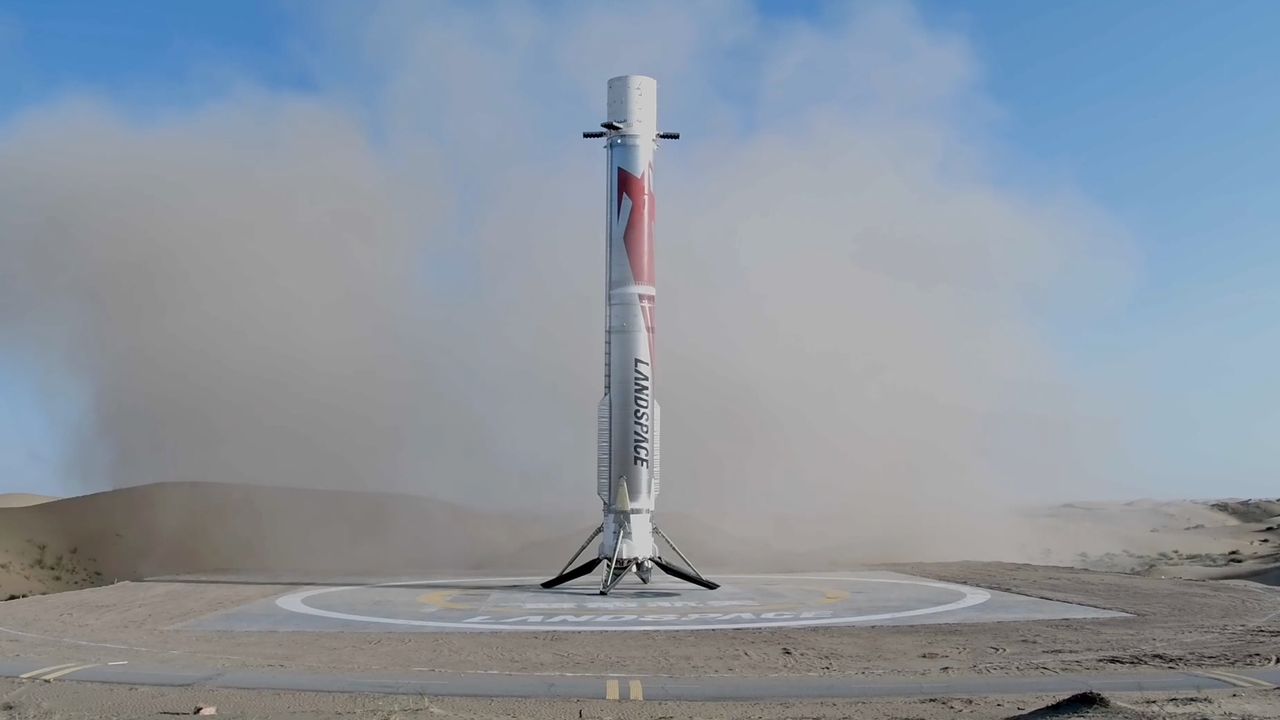
LandSpace, a Beijing-based aerospace company, successfully landed its Zhuque-3 rocket on August 18, marking only the second successful booster landing in the history of commercial Chinese spaceflight. The achievement represents a watershed moment for China's private space sector, which has rapidly expanded over the past decade.
The landing demonstrates LandSpace's progress toward reusable rocket technology, a capability that reduces launch costs and accelerates the frequency of orbital missions. Zhuque-3, whose name translates to "Vermillion Bird-3," is a liquid-fueled launch vehicle designed to carry payloads to low Earth orbit. The successful recovery of the first stage booster on only the vehicle's second flight indicates robust engineering and testing protocols.
This accomplishment follows intense competition among Chinese commercial spaceflight firms, including companies like iSpace and OneSpace, each vying to establish reliable launch infrastructure. The government has encouraged private sector participation in space activities through regulatory reforms and by opening certain launch markets to commercial operators. However, most Chinese space activities remain dominated by state-owned entities like the China National Space Administration (CNSA).
Reusable rocket technology has become central to reducing launch costs globally. SpaceX pioneered this approach in the United States with its Falcon 9 booster, which regularly lands and reflies, driving down per-launch expenses. LandSpace's successful landing suggests Chinese companies are narrowing the technological gap with international competitors.
The significance extends beyond LandSpace alone. A thriving commercial space sector strengthens China's broader space ambitions, including lunar exploration and space station operations. It also creates domestic competition that spurs innovation and attracts investment into the sector.
However, challenges remain. Chinese commercial companies face restrictions on certain technologies and limited access to some orbital slots due to national security considerations. International launch providers also compete aggressively on cost and reliability.