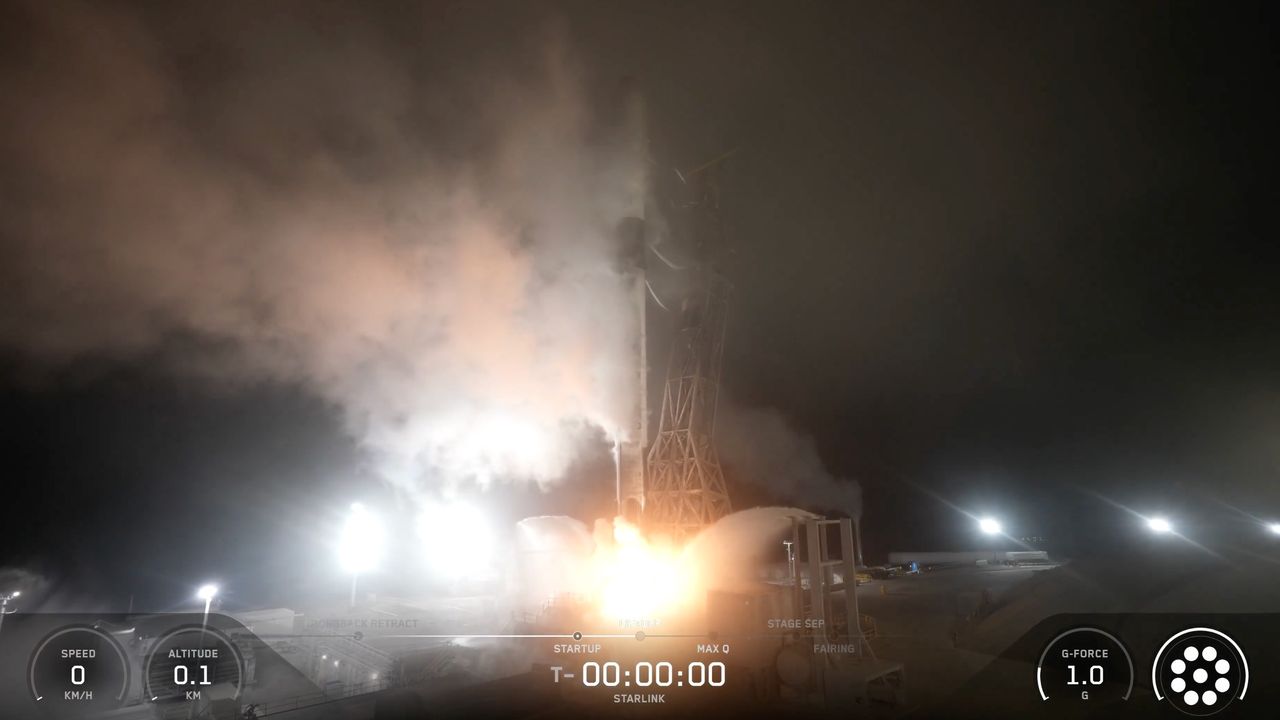
SpaceX achieved a major operational milestone on Wednesday, August 19, when a Falcon 9 rocket lifted off carrying 24 Starlink satellites to low Earth orbit. The launch marked the company's 100th mission in 2024, underscoring its dominance in the commercial spaceflight sector.
The feat reflects SpaceX's accelerated launch cadence. Just four years ago, the company completed roughly 31 missions annually. By 2023, SpaceX had surpassed 70 launches. Reaching 100 missions in a single calendar year demonstrates how rapidly the company has scaled operations across multiple programs, including national security payloads for the U.S. Space Force and Space Development Agency, NASA crew and cargo resupply missions, and its own Starlink internet constellation.
Each Starlink deployment adds to a network that now numbers more than 6,600 operational satellites in orbit. SpaceX launched its first Starlink batch in May 2019 with just 60 satellites. The constellation now covers most populated regions globally and generates revenue through internet service subscriptions, helping offset launch costs and funding development of Starship, SpaceX's next-generation fully reusable rocket system.
The 100th launch also reflects improvements in launch infrastructure and operational efficiency. SpaceX operates three launch facilities: Cape Canaveral Space Force Station and Kennedy Space Center in Florida, and Vandenberg Space Force Base in California. Reusing Falcon 9 first stages has reduced turnaround times between missions, with some boosters flying more than a dozen times.
SpaceX competitors including United Launch Alliance, Rocket Lab, and others combined for significantly fewer launches this year. Amazon's Project Kuiper constellation, a rival to Starlink, has not yet begun commercial launches, though the company conducted initial tests.
The 100