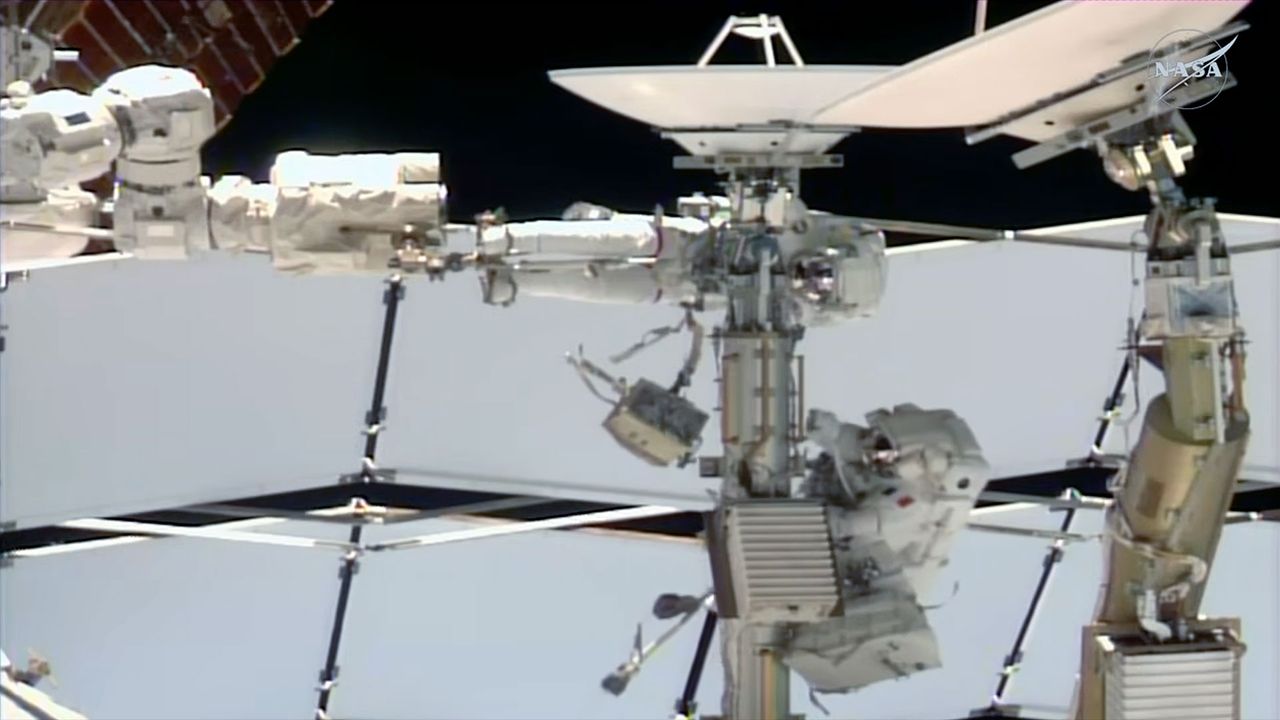
NASA astronaut Anil Menon and French astronaut Sophie Adenot removed a malfunctioning antenna during a spacewalk at the International Space Station on August 18, 2026, but time constraints prevented them from installing its replacement.
The pair successfully extracted the failed antenna, completing the primary objective of their extravehicular activity. Adenot made history as the first female French spacewalker to conduct the procedure. However, the installation of the new antenna unit was not completed during the scheduled spacewalk window.
The incomplete replacement represents a partial success for the mission. Removing the defunct hardware prevents it from causing further complications aboard the station, and the completed extraction allows engineers to study the failure mechanism and plan next steps for the replacement installation.
Spacewalks operate under strict time constraints determined by suit oxygen supplies, battery life, and daylight cycles during the mission window. Mission planners must balance the complexity of tasks against these physical limitations. The decision to prioritize removal over installation reflects established protocols that prioritize preventing damage and maintaining station safety over schedule completion.
The replacement antenna installation now requires scheduling on a future spacewalk. This represents additional work for the ISS crew roster and demonstrates the cumulative nature of maintenance demands on the orbiting laboratory. The station regularly requires external repairs and upgrades that demand human presence in the harsh vacuum environment.
Adenot's participation marks a milestone for French spaceflight. She joined the European Space Agency's astronaut corps and achieved this historic spacewalk early in her career as an ISS crew member. Her successful execution of complex extravehicular procedures contributes to the expanding roster of nations and individuals capable of conducting critical station maintenance.
The failed antenna's specific function and the timeline for completing its replacement have not been detailed in public statements. Future updates from NASA and ESA will clarify when the installation can occur and whether additional spacewalks are needed to fully restore the system