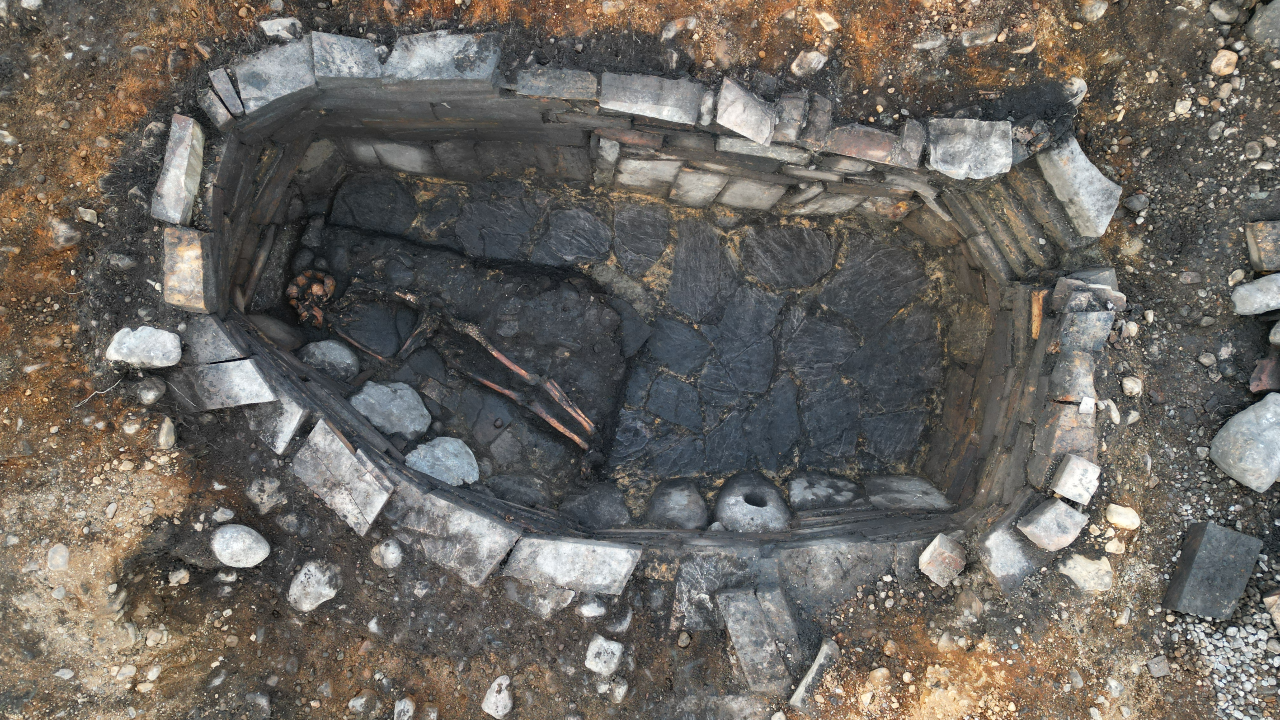
Archaeologists in the Scottish Highlands have discovered an Iron Age burial at the bottom of a well, suggesting the site served ritual purposes centuries ago. The remains, found within the well structure, offer rare evidence of specialized burial practices from that period.
Well burials remain uncommon in Iron Age archaeology, making this discovery significant for understanding prehistoric Scottish funerary customs. The placement of remains at depth within a well differs from typical grave sites of the era, pointing to deliberate ritual action rather than accidental death.
The specific circumstances of the burial, including the depth and positioning of the remains, suggest the well may have functioned as a sacred or ceremonial space. Iron Age communities across Britain and Europe occasionally used natural or constructed features like wells for ritual deposits, though such practices varied widely by region and time period.
The discovery contributes to broader understanding of Iron Age social structures and belief systems in Scotland. These burial practices often reflected community values and spiritual beliefs about death and the afterlife. By examining the remains' condition, associated artifacts, and the well's construction, researchers can reconstruct how this individual was treated after death.
Future analysis will focus on determining the person's age, sex, and health status, along with dating the burial precisely. Isotopic analysis of the remains could reveal diet and origins. Any artifacts buried with the body would provide additional context about social status and time period.
The Scottish Highlands contain numerous archaeological sites spanning millennia, yet well burials from the Iron Age remain documented rarely. This find adds to growing evidence that ritual practices in prehistoric Scotland were more diverse than previously understood. The discovery reinforces the importance of investigating unusual geological features and older structures for archaeological significance, as wells and similar sites often preserve evidence of past human behavior that conventional grave sites might obscure.