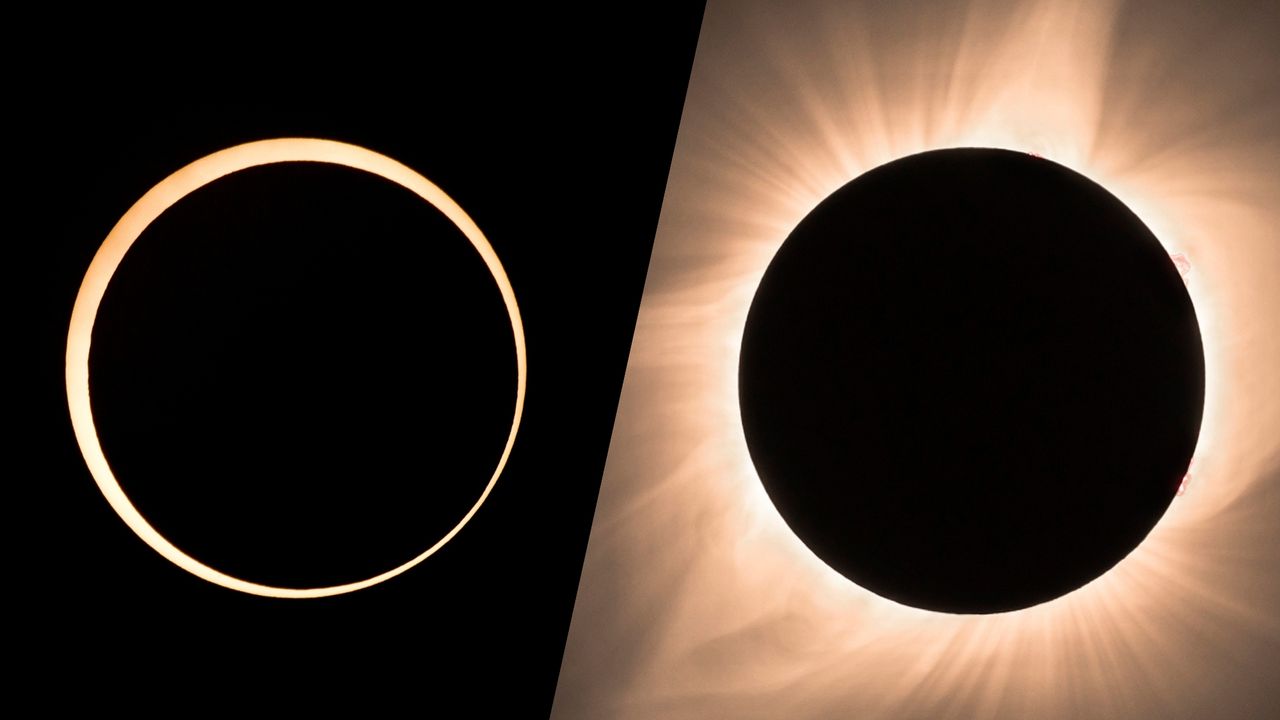
Skywatchers who witnessed the 2024 total solar eclipse across North America should prepare for another celestial spectacle. A series of notable solar eclipses will occur in the coming years, with particularly dramatic events scheduled for 2026 and 2027.
In 2026, observers will have the chance to view an annular solar eclipse, commonly called a "ring of fire" eclipse. During an annular eclipse, the Moon passes directly in front of the Sun but sits too far from Earth to completely block the solar disk. This creates the characteristic bright ring effect around the Moon's silhouette. The exact path and visibility zones for 2026's event will determine which regions can witness this phenomenon.
However, 2027 promises to deliver what many astronomers are calling the "eclipse of the century." This event will generate exceptional interest within the scientific community and among eclipse chasers worldwide. The specifics of this eclipse, including whether it will be total, annular, or partial, and which geographic locations will experience the best viewing conditions, will drive travel and observation planning for thousands of enthusiasts.
Solar eclipses occur when the Moon passes between Earth and the Sun, casting a shadow on Earth's surface. The type of eclipse depends on the Moon's distance from Earth at the moment of alignment. During total eclipses, the Moon completely blocks the Sun's photosphere, revealing the ethereal solar corona. Annular eclipses occur when the Moon is near apogee, its farthest point from Earth.
Researchers use eclipse observations to study solar physics, atmospheric effects, and the Sun's corona. These events provide rare opportunities to gather data that telescopes cannot easily collect during normal solar observation.
Amateur astronomers and eclipse chasers have already begun marking calendars for both 2026 and 2027. Organizations dedicated to eclipse observation recommend checking reliable astronomical sources closer to