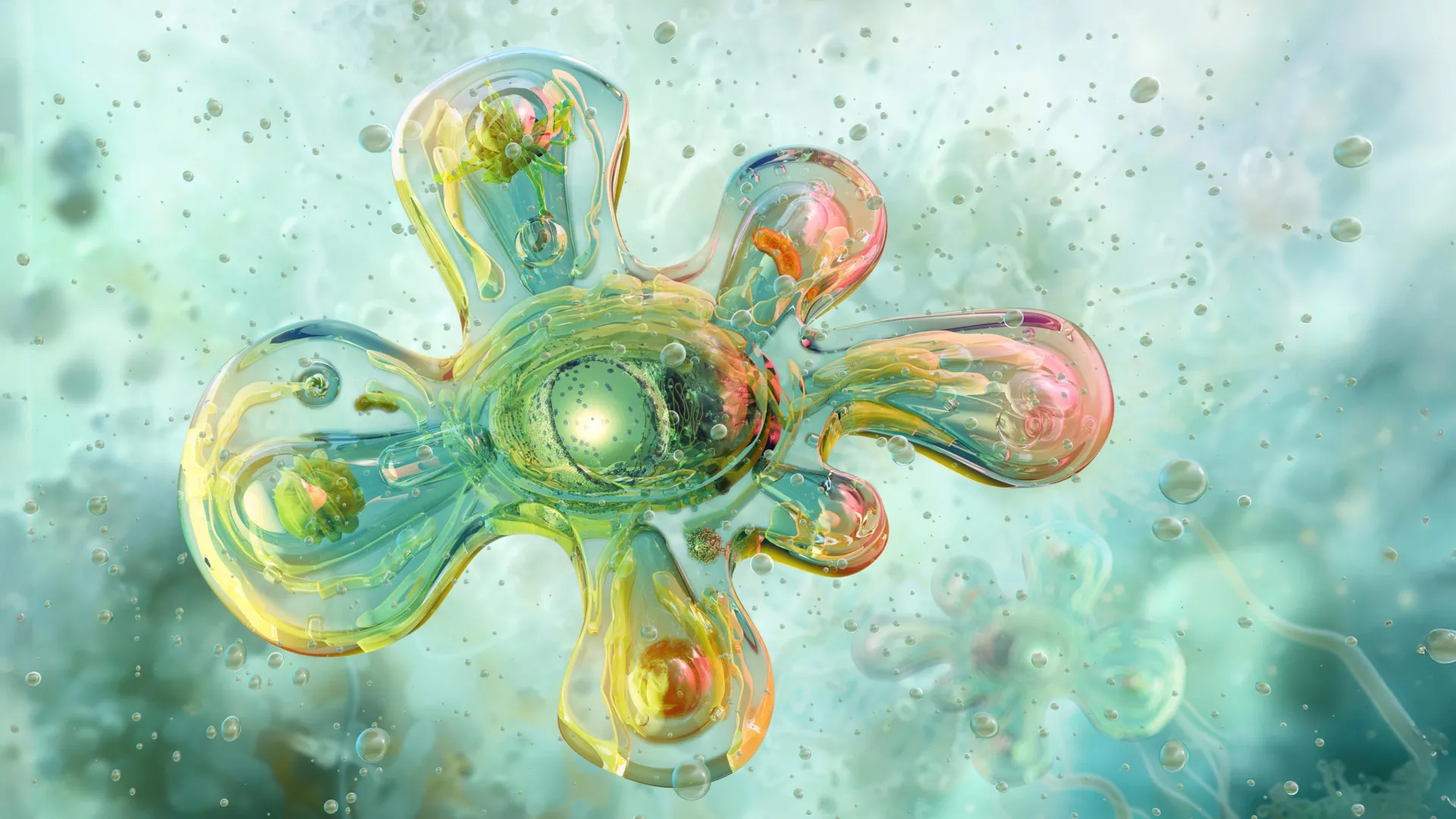
Scientists examining some of Earth's oldest rocks have uncovered tiny 1.7-billion-year-old fossils that may explain how simple microbes evolved into the complex organisms that eventually became plants and animals. The discovery addresses one of biology's deepest questions: how life transitioned from single-celled simplicity to multicellular complexity.
The fossils represent a critical gap in the evolutionary record. For roughly 2 billion years after life first emerged, Earth hosted only microorganisms. Then, relatively suddenly in geological time, complex life forms appeared. Understanding this transition requires studying the molecular and cellular changes that occurred during that period, and these ancient fossils provide direct physical evidence of organisms caught in that transformative phase.
The research has implications beyond Earth's history. If scientists can determine what conditions and mechanisms enabled the evolution of complexity here, they can apply those insights to assessing the likelihood of complex life elsewhere in the universe. Astrobiologists use such knowledge to guide the search for life on exoplanets and in environments like the subsurface oceans of Jupiter's moon Europa or Saturn's moon Enceladus.
These tiny fossils likely represent early eukaryotes, organisms with nuclei and other membrane-bound structures that mark the boundary between simple prokaryotic microbes and more complex life. The transition required significant evolutionary innovations, including the development of the cytoskeleton, phagocytosis, and the endosymbiotic incorporation of what became mitochondria and chloroplasts.
Researchers face considerable challenges in studying such ancient material. Fossilization at that scale preserves minimal detail, and distinguishing genuine biological structures from artifacts of mineralization requires careful analysis and multiple verification methods. Dating fossils from the Archean and Proterozoic eons also presents technical difficulties.
By examining these 1.7-billion-year-old specimens alongside other early