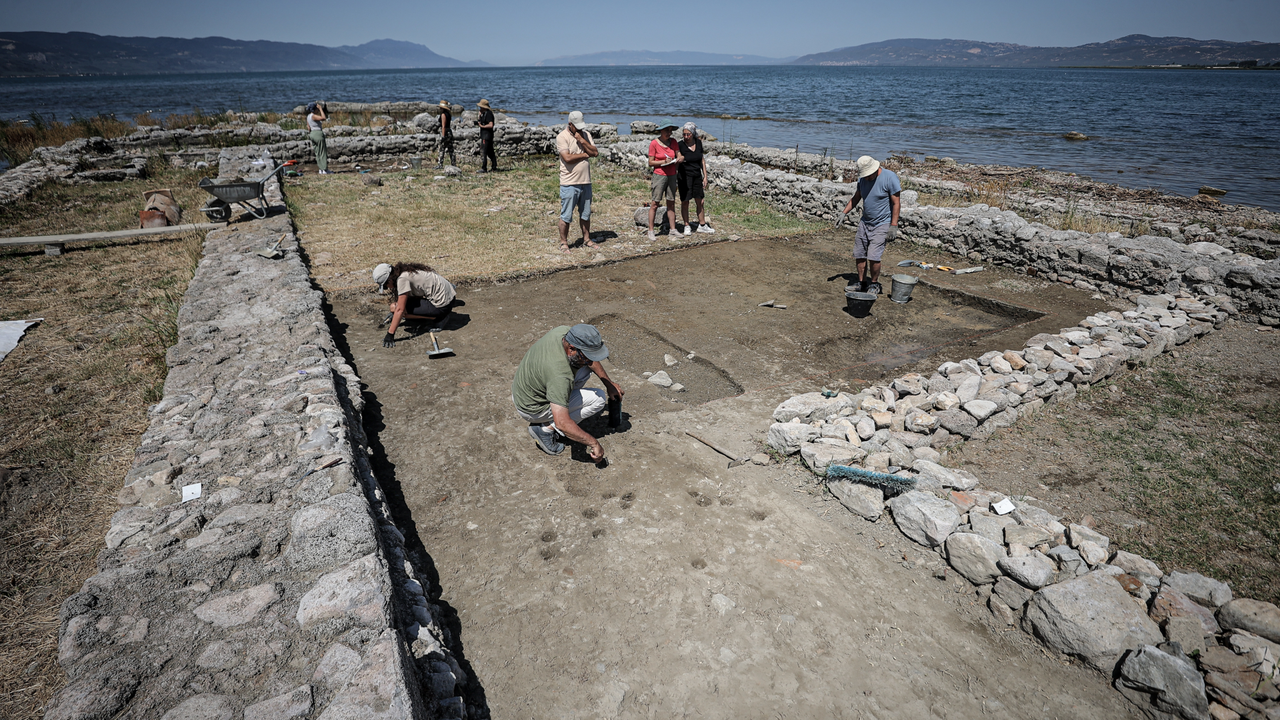
Archaeologists in Turkey have uncovered a small church buried beneath a larger structure that may have hosted the First Council of Nicaea, one of Christianity's most pivotal gatherings. The discovery, made during excavations under what is now a lake, dates back approximately 1,700 years.
The First Council of Nicaea convened in 325 CE under Roman Emperor Constantine and produced the Nicene Creed, a foundational statement of Christian doctrine still recited in many churches today. The council addressed theological disputes, particularly the nature of Christ and his relationship to God the Father. Its decisions shaped Christian theology for centuries.
The recently discovered church sits beneath a larger structure, suggesting it may have been sealed or abandoned before the construction of the overlying building. The site's location and archaeological context have led excavators to propose it served as the council's meeting place. The timing aligns with the council's documented date, and the structure's religious significance fits the historical account.
However, other scholars express skepticism about the identification. Historians and archaeologists uninvolved in the excavation caution that the evidence remains circumstantial. Without definitive inscriptions, artifacts bearing the council's name, or other direct archaeological markers, confirming the site's exact historical purpose presents challenges. Multiple churches existed during this period across the region, complicating identification efforts.
The location's submersion under a modern lake adds complexity to the investigation. Water damage and erosion may have destroyed evidence that could corroborate or refute the claim. Excavators continue studying the structure's architectural features, decorative elements, and any recovered artifacts to strengthen their case.
The discovery has generated significant interest among historians and theologians because establishing the council's meeting location would resolve a longstanding historical question. Previous scholarly consensus placed the council in nearby Iznik, which modern research has challenged. This underground church potentially offers new evidence in that ongoing