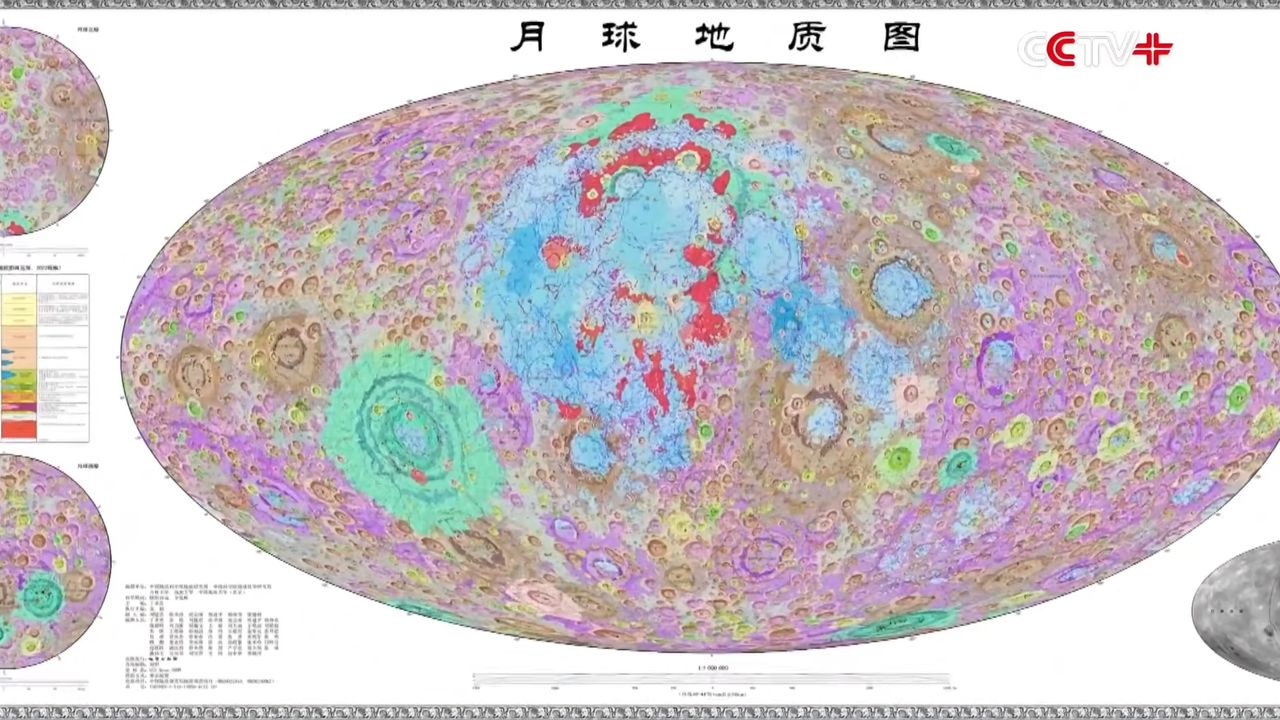
China released a comprehensive new moon map that establishes its own cartographic standard for lunar geography, marking a shift in how the solar system gets documented. The map incorporates fresh chronological data and detailed information about the moon's far side, regions that remain less studied than the near side visible from Earth.
The initiative extends beyond scientific documentation. Chinese officials frame the effort as demonstrating technological capability and influence in space exploration. By creating an independent mapping standard, China reduces reliance on existing international frameworks and positions itself as a space power capable of setting planetary science conventions.
The map draws on data collected by Chinese lunar missions, including Chang'e orbiters and rovers that have operated on the lunar surface. These programs have gathered substantial information about the moon's geology, topography, and composition over multiple years of operation. The new cartographic system reflects China's accumulated knowledge from these missions.
The far side of the moon remains scientifically valuable territory. Its geology differs notably from the near side, offering insights into lunar history and formation. Previous missions from other nations provided limited coverage of these regions. China's detailed mapping of the far side adds a new dimension to global understanding of lunar geography.
The timing underscores China's broader lunar ambitions. The country plans additional moon missions in coming years, including efforts to establish a research station. A standardized mapping framework supports long-term exploration plans and facilitates coordination between missions. The cartographic standard also signals readiness for future operations involving multiple nations or private entities on the lunar surface.
International space agencies have historically used shared coordinate systems for planetary mapping. China's creation of an independent standard suggests the country views itself as capable of operating independently in space governance. This development reflects larger geopolitical competition in space exploration, where establishing technical standards and leading research agendas carry strategic weight alongside scientific advancement.
The map's release demonstrates how space science intersects with national interest and technological demonstration. China leverages its lunar