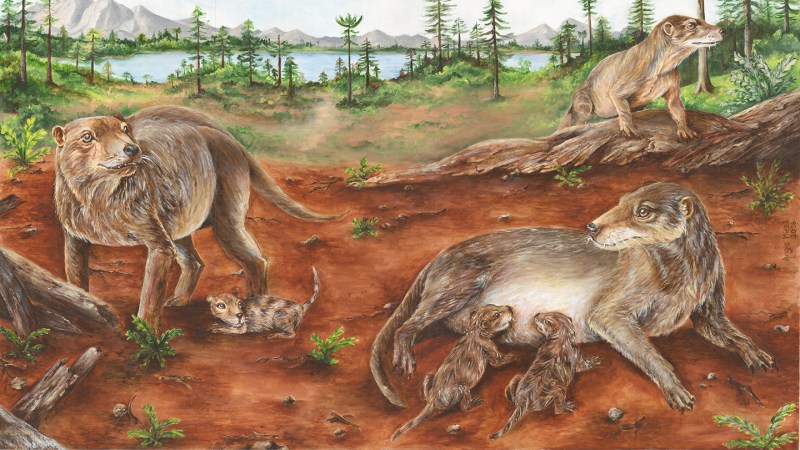
Researchers analyzing growth rings in a 236-million-year-old fossil bone have found evidence that at least one mammal ancestor gave birth to live young far earlier than previously thought. The discovery pushes back the origin of viviparity, or live birth, by tens of millions of years.
The study examined growth patterns in bone tissue from a synapsid, an early relative of modern mammals that lived during the Triassic period. By studying the microscopic structure and growth lines preserved in the fossilized bone, scientists identified markers consistent with live birth rather than egg-laying. The growth rings revealed interruptions that suggest pregnancy-related physiological changes in the mother.
This finding challenges the conventional timeline for the evolution of mammalian reproduction. Paleontologists previously assumed that viviparity evolved later, closer to the emergence of true mammals. The new evidence indicates that the shift from oviparity to live birth occurred much earlier in synapsid evolution, suggesting this reproductive strategy provided significant survival advantages to ancient creatures facing environmental pressures during the Triassic.
Live birth offers distinct benefits over egg-laying. Mothers can protect developing offspring internally, regulate their temperature, and provide nutrients directly through physiological connections. These advantages would have been particularly valuable for early synapsids navigating the complex ecosystems and climate variations of the Mesozoic era.
The research relies on detailed paleontological analysis of bone microstructure, a technique that reveals life history information locked in fossil tissues. Scientists can infer reproductive strategies, growth rates, and developmental timelines from these preserved biological records.
However, the study examines only one specimen, leaving questions about how widespread live birth was among synapsid populations at that time. Additional fossil evidence will help clarify whether this trait emerged in multiple lineages independently or represented a broader evolutionary shift across synapsid groups. The findings contribute to understanding how mammals and their ancestors developed the reproductive