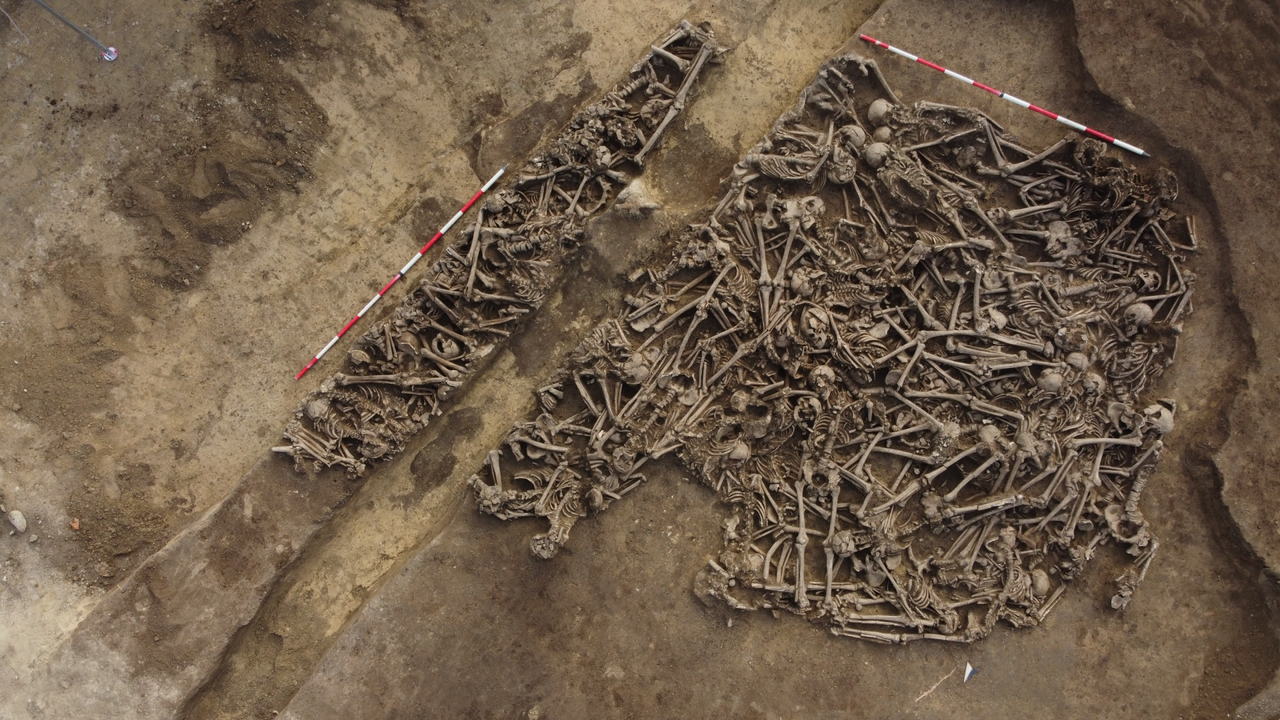
Archaeologists analyzing remains from a mass grave in Austria have uncovered evidence of a previously undocumented ancient Roman battle. The skeleton collection shows an unusually high prevalence of groin and lower abdominal injuries, with some individuals bearing arrowheads and lance tips embedded in their bones.
The discovery suggests the grave contains military casualties from a violent conflict, though historical records contain no account of this particular engagement. Researchers examined the trauma patterns across multiple skeletons, noting that several individuals sustained injuries consistent with close-quarters combat and projectile weapons typical of Roman military conflicts.
One skeleton retained a lance head lodged within the pelvic bones, offering direct evidence of fatal wounding. The concentration of groin injuries across multiple individuals points to deliberate targeting or the chaos of hand-to-hand combat where such vulnerable areas became exposed during fighting.
The mass burial's location in Austria places it within Roman territorial boundaries during the imperial period. The pattern of injuries and burial practices suggests these were soldiers who fell together in a single engagement. Researchers are working to determine the battle's date and the opposing forces involved.
This discovery highlights how archaeological evidence can reveal conflicts absent from surviving written records. Ancient historians documented major campaigns but often omitted smaller engagements or battles that later chroniclers deemed insignificant. The Austrian mass grave provides a rare window into undocumented military violence.
The analysis required careful examination of bone trauma, wound trajectories, and healing patterns to distinguish combat injuries from other causes of death. Such forensic approaches have become standard in bioarchaeology, allowing researchers to reconstruct the violence and circumstances surrounding ancient burials.
Further investigation, including potential DNA analysis and radiocarbon dating, may help identify the soldiers' origins and narrow down when this battle occurred. The findings underscore how archaeological field work continues to expand our understanding of Roman military history beyond what textual sources alone can reveal.
CATEGORY