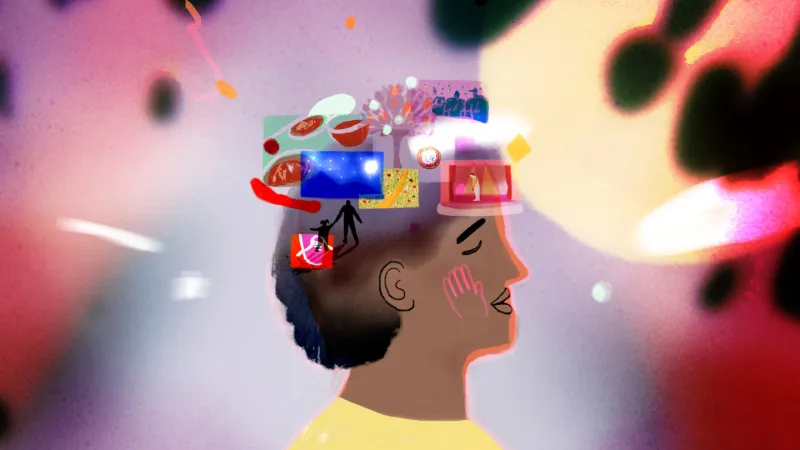
Human memory does not work like a camera, despite enduring myths about photographic recall. Neuroscientists have repeatedly demonstrated that human brains selectively filter, compress, and reconstruct memories rather than storing perfect digital copies of events.
The brain prioritizes survival-relevant information over complete accuracy. When we encode memories, the hippocampus and prefrontal cortex work together to extract meaning and emotional significance from experiences, discarding peripheral details automatically. This filtering mechanism evolved because storing everything would overwhelm neural networks and waste metabolic resources on useless information.
Research published in cognitive psychology journals shows that memory reconstruction happens constantly. Each time we recall an event, we access fragmented neural patterns and rebuild the memory anew, often incorporating new information or emotional context from the present moment. This explains why eyewitness testimony, despite seeming vivid and confident, contains systematic errors and fabrications.
The limitations of human memory actually serve adaptive functions. Forgetting allows us to extract generalizable lessons from specific experiences rather than getting trapped in literal details. We remember that touching a hot stove causes pain without needing to replay the exact sensory experience. We recall someone's character rather than their precise appearance on each meeting.
Rare cases of hyperthymesia, or superior autobiographical memory, show the downside of retention without filtering. People with this condition report intrusive, unwanted recall of mundane details that clutters conscious thought and sometimes impairs abstract thinking.
The myth of photographic memory persists partly because some people excel at strategic memorization techniques. Memory champions use spatial mnemonics and deliberate rehearsal to encode information densely, but even their recall remains constructive and error-prone compared to actual photography.
Understanding how memory genuinely works helps explain why witness accounts conflict, why we misremember events we felt certain about, and why shared family stories diverge over time. It also clarifies that