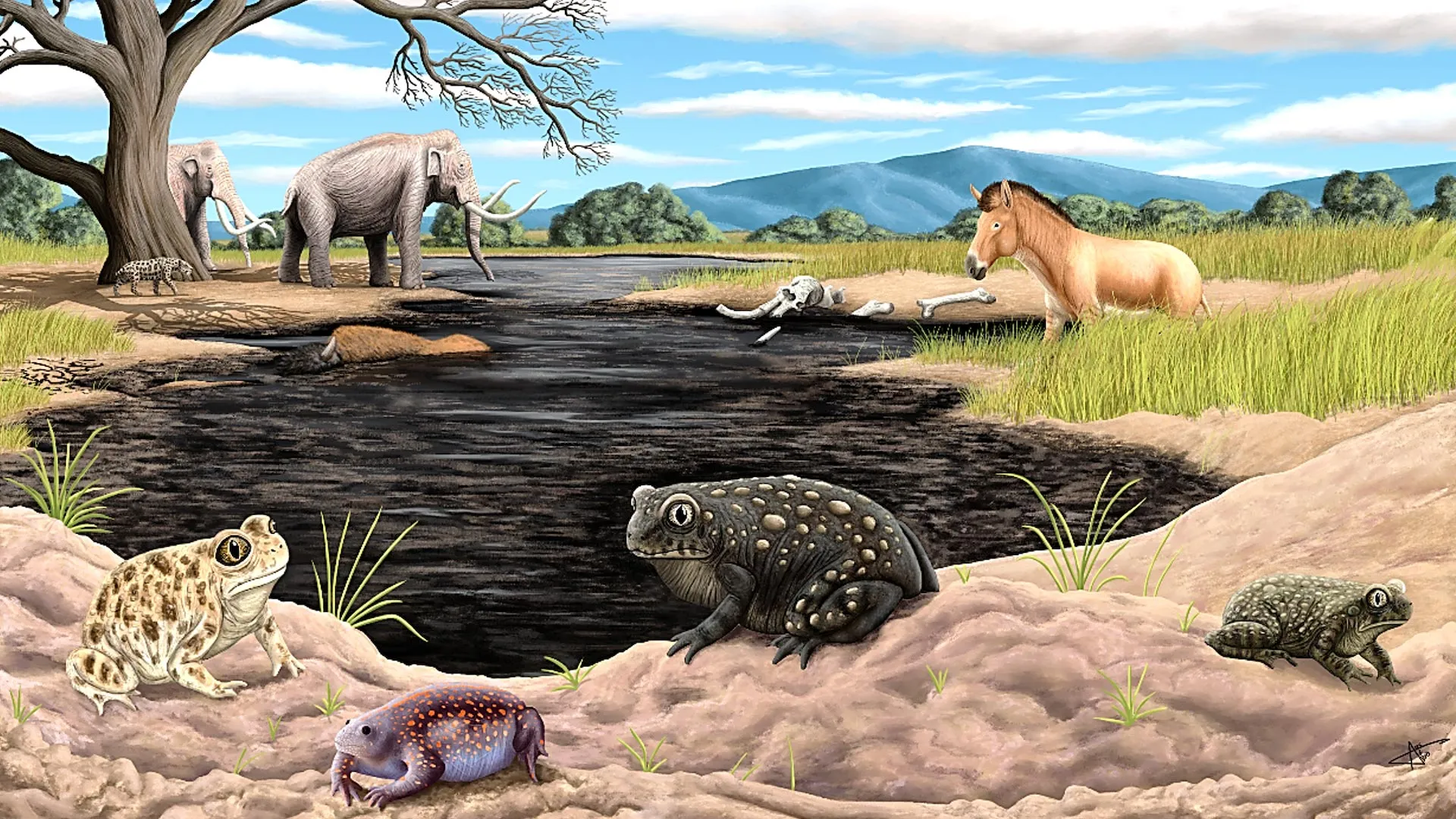
Researchers have identified a new extinct amphibian species from fossils stored at Los Angeles' La Brea Tar Pits for over seven decades. The team named the creature Spea labreae, an Ice Age spadefoot toad that lived during the Pleistocene epoch. A scientist examining the museum collections noticed anatomical features that distinguished the fossils from all previously known species.
The discovery marks only the second identified extinct Pleistocene amphibian ever found in North America, making Spea labreae exceptionally rare in the paleontological record. The bones had resided in the tar pits' collections since the 1950s without attracting scientific attention until the recent analysis. La Brea's unique preservation environment, where asphalt seeps trapped and preserved animal remains for thousands of years, created ideal conditions for fossilizing these delicate amphibian skeletons.
Spadefoot toads belong to the genus Spea, which still exists today in North America and other regions. The extinct La Brea species provides a window into amphibian biodiversity during the last Ice Age, when the Los Angeles basin supported an ecosystem dramatically different from today's climate and landscape. The rarity of amphibian fossils in the tar pits suggests these creatures either lived in limited numbers in the region or their anatomy made them less likely to become entrapped in the sticky asphalt compared to larger mammals and reptiles that dominate the collections.
This find demonstrates that museum collections often harbor undiscovered species awaiting careful analysis. Paleontologists frequently re-examine existing specimens using updated taxonomic methods and morphological comparisons, uncovering biodiversity previously overlooked. The identification of Spea labreae enriches our understanding of Pleistocene California's ecosystem and adds to the remarkable diversity of life preserved in the La Brea deposits, which have