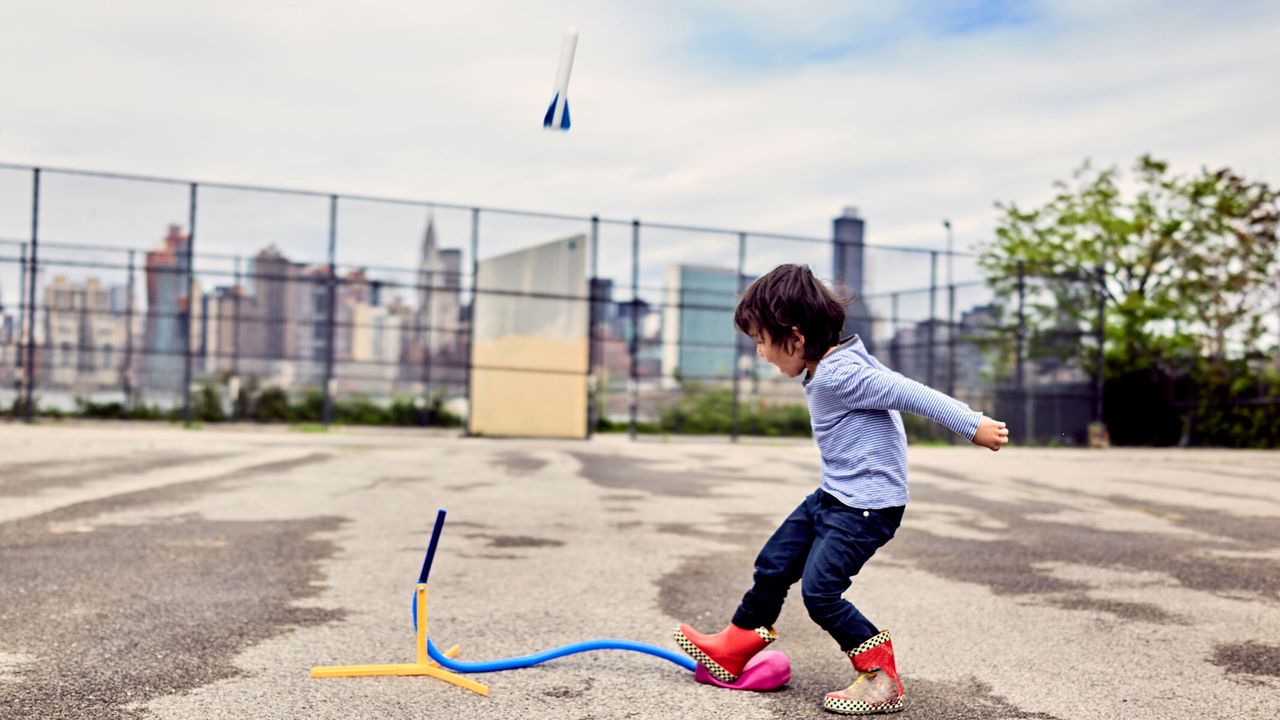
Stomp Rockets offer an accessible entry point for children interested in model rocketry. These toys operate without engines or combustion, instead using foot-powered air pressure to launch foam rockets into the air. The concept removes several barriers that traditional model rockets present: no need for complex assembly, no regulatory concerns about engines, and no fire risk.
The basic mechanics are straightforward. A child stands on an inflatable launch pad, which forces pressurized air through a tube and into a foam rocket. The sudden release of pressure propels the rocket upward, sometimes reaching heights of 100 feet or more depending on the model and launching force. This hands-on experience teaches fundamental principles of physics, including Newton's third law of motion and basic aerodynamics.
For parents and educators, Stomp Rockets present practical advantages over traditional model rocketry kits. They require minimal supervision compared to engines requiring regulatory compliance and protective equipment. Setup takes minutes rather than hours. The foam construction makes crashes inconsequential, encouraging repeated launches and experimentation without costly replacements.
However, the toys have limitations as a long-term introduction to serious rocketry. They don't replicate the complexity of engine-based flight, the precision engineering required for stability, or the troubleshooting skills developed through traditional model rocket building. Children interested in advancing beyond casual play may outgrow them quickly.
Stomp Rockets work best as a gateway activity rather than comprehensive training. They build enthusiasm for spaceflight and physics concepts while maintaining safety and accessibility. For families seeking a true entry into model rocketry, these air-powered launches serve as an excellent stepping stone before progressing to traditional engines, launch controllers, and recovery systems. The low cost and immediate gratification make them popular choices for birthday gifts and classroom demonstrations.