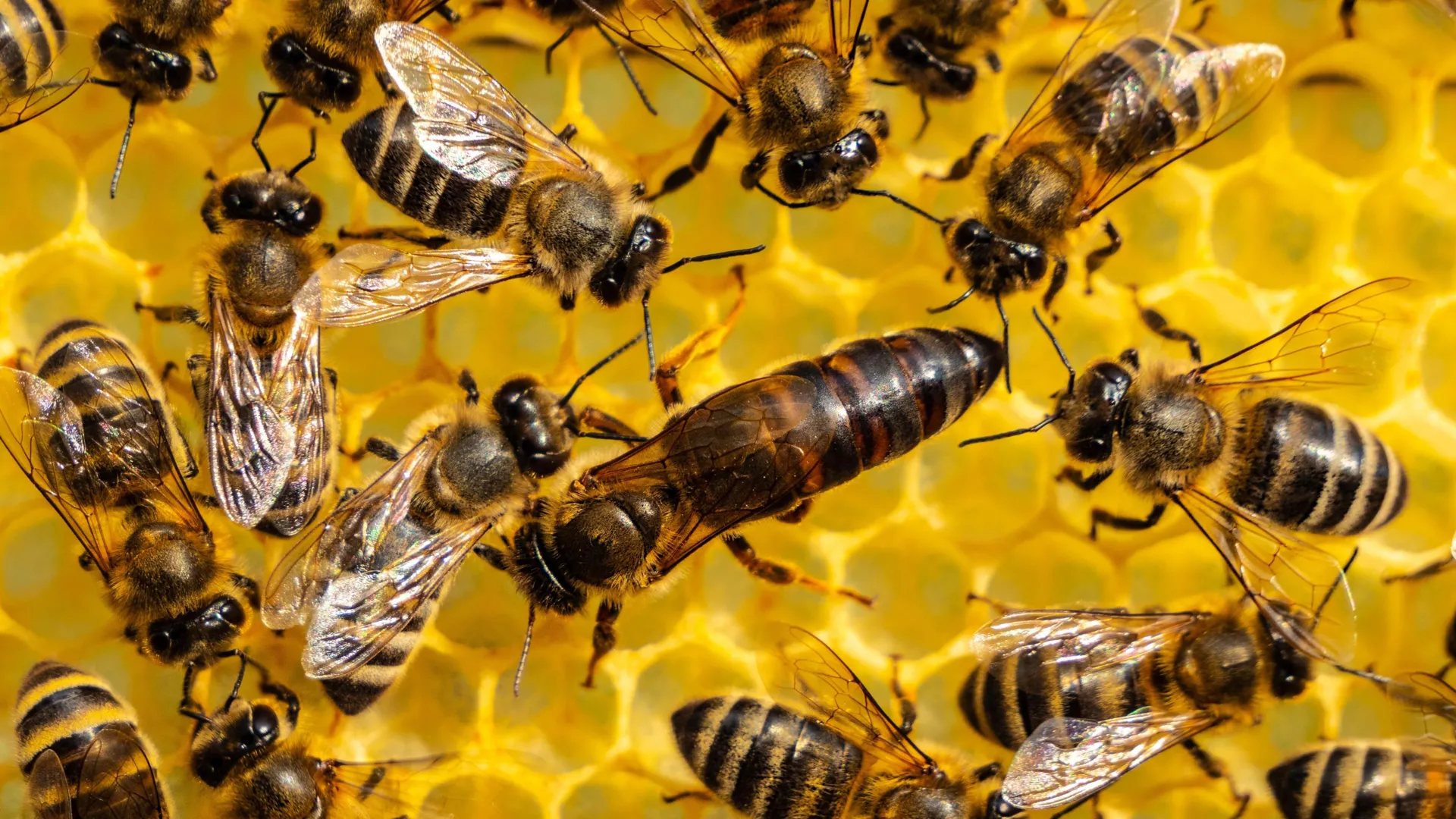
# Long-Standing Theory About Social Insect Evolution May Need Revision
A sweeping new analysis challenges a 60-year-old hypothesis about why ants, bees, and wasps developed their famously complex social structures. The research suggests that the genetic system once thought to be the primary driver of their sociality may play a smaller role than previously believed.
Scientists have long credited haplodiploidy, a reproductive system where males develop from unfertilized eggs and females from fertilized ones, as the key to understanding why these insects evolved such elaborate colonies. The logic seemed sound: in a haplodiploid system, sisters share more genetic material with each other than they would with their own offspring, theoretically making cooperative breeding more advantageous. This idea, rooted in kin selection theory, offered an elegant explanation for why sterile workers would forgo reproduction to help their colony.
The new analysis upends this framework. Researchers who conducted the comprehensive study found that haplodiploidy alone cannot account for the emergence and persistence of sociality in these insects. The genetic system exists in other arthropods that never developed social behavior, suggesting that something else drives the unique social complexity found in ants, Hymenoptera, bees, and wasps.
The team examined multiple lines of evidence across thousands of insect species and fossil records. Their findings point to other traits as potentially more important factors. These include behavioral predispositions, environmental pressures, nest architecture, and the ability to communicate effectively within colonies. The research indicates that social evolution in these insects likely resulted from a combination of genetic and non-genetic factors working together over evolutionary time.
The implications reshape how biologists understand social evolution broadly. For decades, kin selection and haplodiploidy have dominated textbooks and lectures on insect societies. This new work suggests that evolutionary biologists need to look beyond simple genetic models and consider the ecological and behavioral context in which these insects evolved.
Researchers emphasize that haplodiploidy still plays a role in insect sociality, but it appears to be enabling rather than causative. The genetic system may have provided initial conditions that made cooperation possible, but it did not determine that cooperation would emerge. Other factors acted as the actual drivers of social complexity.
The findings carry broader significance for evolutionary theory. Scientists studying the origins of cooperation and complex social structures across species cannot rely solely on genetic arguments. Behavioral ecology, environmental constraints, and developmental factors deserve equal attention in models explaining how societies originate and persist.
The analysis builds on decades of research by examining previously fragmented data sources within a unified framework. By synthesizing information across multiple disciplines, the researchers challenged an assumption that had calcified in scientific consensus. The work demonstrates how large-scale analyses can overturn long-standing theories when sufficient data becomes available to test them rigorously.
This research opens new avenues for investigating what truly distinguishes social insects from their solitary cousins. Future work will likely focus on identifying which non-genetic factors prove most influential across different species and environments. The revised understanding may also inform conservation efforts, as protecting these insects requires understanding the full suite of conditions that maintain their societies.