# 30-Year-Old Japanese Fossil Reveals Hidden Mosasaur Bones and Possible New Species
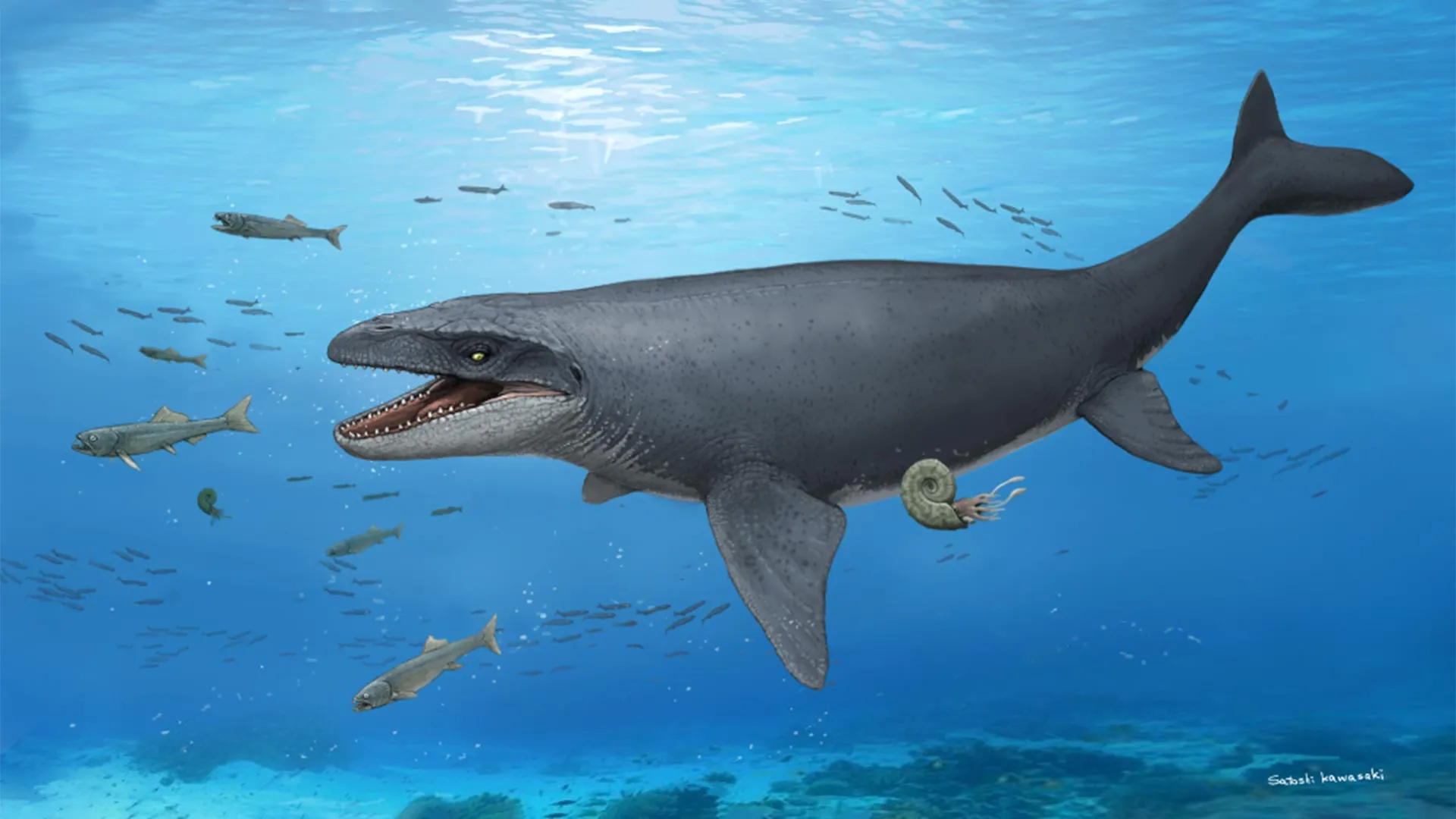
Paleontologists working with specimens collected in Osaka more than three decades ago have uncovered four previously overlooked bones belonging to a giant Cretaceous mosasaur, according to new analysis of the material. The discovery includes the first confirmed premaxilla—the frontmost bone of the upper jaw—ever documented in a Japanese mosasaur fossil, marking a significant advancement in understanding these apex marine predators from the Mesozoic era.
The premaxilla finding alone represents a notable gap in the Japanese fossil record. This bone forms the front of an animal's upper jaw and plays a crucial role in feeding mechanics and taxonomic classification. Its identification in this specimen provides researchers with new anatomical data for comparative analysis with mosasaur populations from other regions and time periods.
What transforms this into a potentially landmark discovery, however, is the presence of unusual cranial features that deviate from established mosasaur anatomy. The skull bones exhibit characteristics that do not align with any currently recognized mosasaur species, prompting researchers to consider that the specimen may represent an entirely undescribed taxon. This possibility underscores how fossil collections can harbor secrets for years before technological advances or fresh analytical approaches reveal their true significance.
The timing of this reassessment reflects broader trends in paleontology. Fossils housed in museum collections worldwide often contain unrecognized specimens or overlooked anatomical details. Advances in imaging technology, refined phylogenetic analysis, and renewed examination of historical collections have led to repeated discoveries of previously hidden material within existing specimens. This case demonstrates how decades-old fossils can yield new discoveries without requiring new excavations.
Mosasaurs dominated ocean ecosystems during the Cretaceous Period, functioning as apex predators that could reach lengths exceeding 50 feet. They possessed powerful jaws, large teeth, and paddle-like limbs that made them formidable hunters. Understanding their anatomical diversity across different regions and time periods contributes to broader knowledge of how marine ecosystems functioned before the mass extinction event 66 million years ago.
The Osaka specimen's potential status as a new species carries implications beyond simple taxonomy. If confirmed as a distinct species, it would expand knowledge of mosasaur biogeography and ecological roles in East Asian Cretaceous seas. Different species often exhibit specialized adaptations suited to their particular environments and prey preferences. Identifying new species therefore illuminates how predator-prey relationships and food webs operated in ancient oceans.
Researchers have not yet formally named the potential new species or published detailed anatomical descriptions in peer-reviewed literature. The next phases will likely involve comprehensive morphological analysis, comparison with related mosasaur species from Japan and globally, and phylogenetic modeling to determine where this specimen fits within mosasaur evolutionary history.
This rediscovery emphasizes that paleontological knowledge expands not solely through field expeditions but also through careful reexamination of existing collections. Natural history museums house millions of specimens, and systematic review of these holdings continues to yield new scientific insights. The Osaka mosasaur serves as a reminder that definitive answers about ancient life sometimes rest within institutions, waiting for researchers to look closely enough to see what had been overlooked for three decades.