# Ancient Manuscripts Yield DNA Secrets Without Damage
Researchers have developed a method to extract DNA from centuries-old parchment manuscripts without harming the irreplaceable documents themselves. The breakthrough transforms historic texts into biological archives, offering unprecedented glimpses into ancient trade networks, animal husbandry practices, and the origins of books themselves.
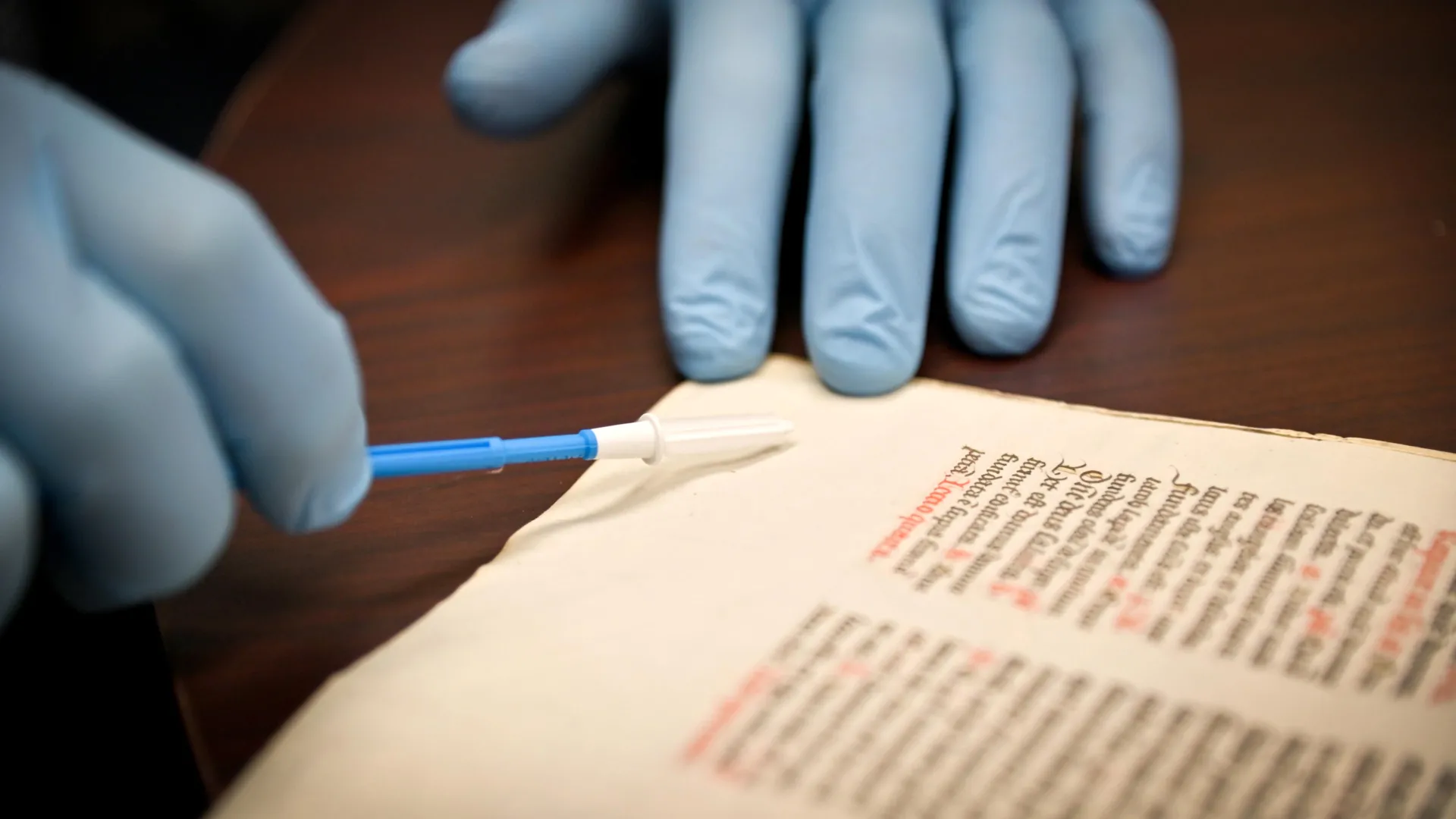
The technique works by sampling the surface proteins and cellular material on parchment, which is made from animal skin. Unlike invasive sampling methods that require scraping or drilling into manuscripts, this approach collects genetic traces already present on the document's exterior. Scientists can then sequence the DNA to identify which animals provided the skin and trace other biological signatures embedded in the material.
The implications extend far beyond simple curiosity. By identifying the species and geographic origins of the animals used for parchment, researchers can map ancient trade routes and understand how manuscripts moved across continents. A parchment made from sheep raised in North Africa but discovered in medieval Europe tells a story of commerce and cultural exchange that written text alone cannot convey.
The method also reconstructs livestock history. DNA analysis reveals which animal breeds existed at specific times and places, providing data on selective breeding practices, animal health, and agricultural practices spanning over a thousand years. This biological record complements traditional historical sources and fills gaps where written documentation is sparse or absent.
Manuscript origin mysteries find resolution through this approach as well. Parchments whose origins were uncertain or disputed can now be verified through their biological makeup. A document claimed to originate from a specific monastery can be tested against the known livestock of that institution and region, either confirming or challenging historical attribution.
The non-invasive nature of the technique addresses a long-standing tension in manuscript conservation. Researchers historically faced ethical and practical barriers when studying invaluable texts. Removing even tiny samples risked damaging culturally irreplaceable objects. This new method eliminates that constraint entirely, allowing scientists to extract genetic data while preserving manuscripts in their original condition.
The technology builds on advances in ancient DNA recovery and protein sequencing. Researchers can now identify and isolate extremely small quantities of biological material, sufficient for analysis from surfaces exposed to centuries of environmental conditions. Contamination from modern handling is manageable through careful sampling protocols and genomic verification.
Institutions housing major manuscript collections, including medieval monastic archives and royal libraries, are logical candidates for this analysis. A single large library might contain thousands of parchments, each representing a potential data point. Systematic sampling could produce comprehensive maps of medieval animal husbandry, trade patterns, and manuscript circulation across Europe and beyond.
The research opens possibilities for previously inaccessible historical questions. What genetic diversity existed in medieval livestock? How did animal populations change after disease outbreaks or environmental shifts? Which materials were valued enough to warrant long-distance transport? These questions connect individual manuscripts to broader patterns of social, economic, and ecological history.
This breakthrough represents a shift toward treating historical documents as multi-layered information sources. Text provides one narrative. Biology provides another. Together, they create a more complete historical record than either alone could offer.