# Stress Hormone Accelerates Brain Repair After Injury
A counterintuitive discovery reveals that the body's stress response system mobilizes brain repair at the cellular level. Researchers found that corticotropin-releasing hormone (CRH), a stress chemical typically associated with anxiety and fight-or-flight reactions, actually orchestrates the brain's ability to rebuild protective insulation around nerve fibers after damage.
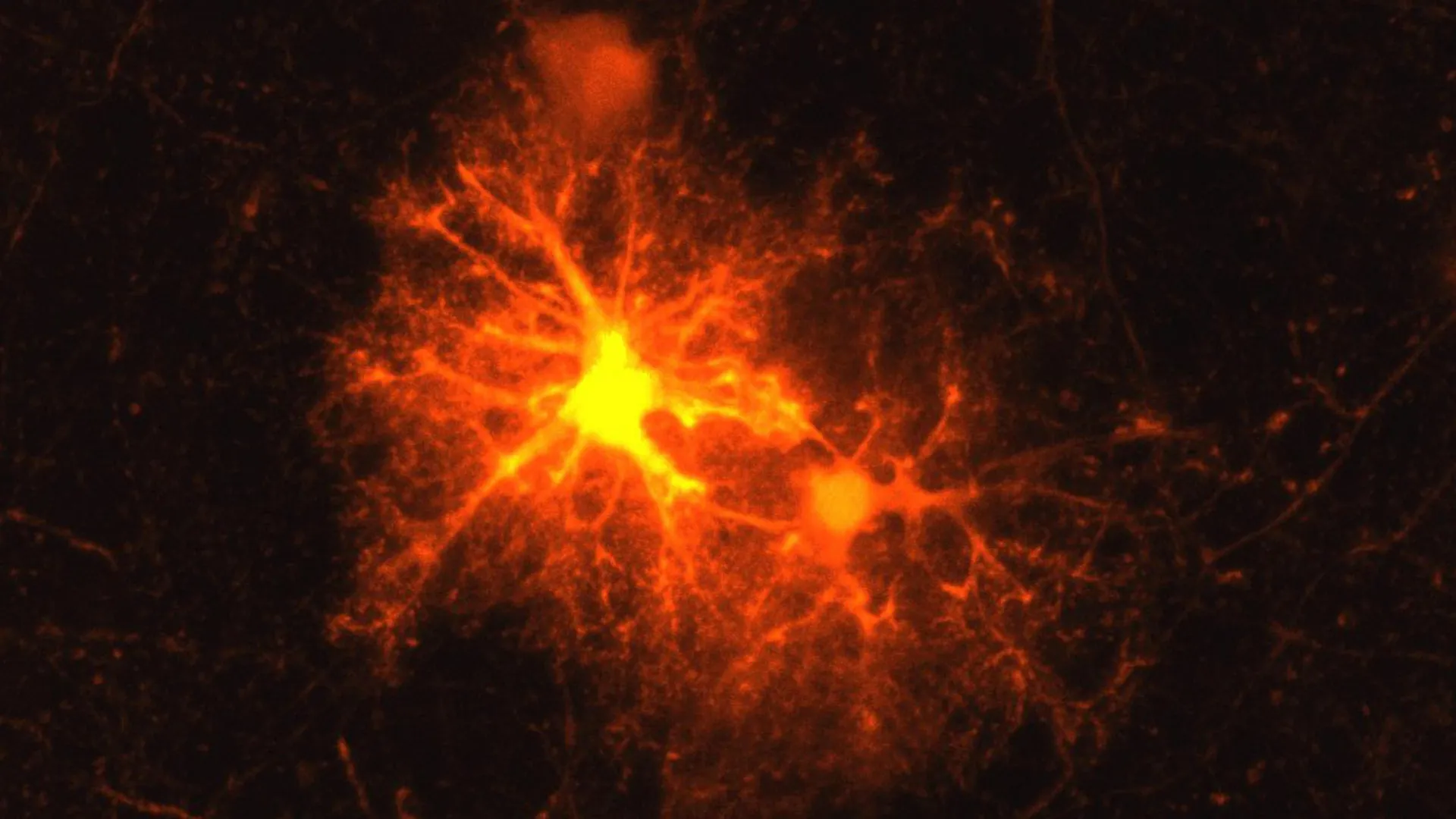
The study identifies myelin-producing precursor cells as rapid-release factories for CRH. When brain tissue sustains injury, these cells flood the damaged region with the stress hormone within minutes. Rather than harming repair efforts, CRH coordinates how precursor cells mature into oligodendrocytes, the specialized cells responsible for manufacturing myelin. This fatty substance wraps around axons like electrical insulation, allowing neurons to transmit signals efficiently across distances.
"This finding overturns conventional thinking about stress hormones," the research indicates. The team discovered that CRH acts as a local signaling agent rather than simply triggering systemic stress responses. By controlling oligodendrocyte maturation at injury sites, the hormone accelerates the brain's capacity to restore myelin damage that occurs from trauma, stroke, or degenerative disease.
The implications extend beyond acute injury. The same CRH signaling system shapes myelin thickness during normal brain development and influences myelin composition throughout life. This connection opens a new framework for understanding how chronic stress during childhood could rewire the brain's protective architecture, potentially establishing biological vulnerabilities that persist into adulthood.
Psychiatric disorders including depression, anxiety, schizophrenia, and post-traumatic stress disorder show correlations with early-life stress exposure. Many of these conditions involve myelin abnormalities visible on brain imaging. The research suggests a mechanistic link: if early stress dysregulates the CRH system in developing brains, it could compromise myelin formation during critical developmental windows, leaving lasting traces in neural circuitry.
The finding emerged from investigating how stress hormones interact with oligodendrocyte biology. Researchers used experimental injury models and cellular assays to track CRH release and measure effects on myelin precursor cell behavior. They confirmed that CRH binds to specific receptors on precursor cells and that blocking this interaction impairs the repair response. The hormone appears to fine-tune the balance between precursor cell proliferation and differentiation, preventing excessive proliferation while promoting maturation toward functional oligodendrocytes.
This research establishes CRH as a dual-function molecule. The hormone simultaneously serves as a systemic stress signal coordinating whole-body responses and as a local repair coordinator in injured brain tissue. Understanding this dual role could reshape therapeutic approaches to brain injury and stress-related psychiatric conditions.
Future work will likely examine whether therapeutic CRH delivery enhances recovery from stroke or traumatic brain injury. Researchers may also investigate whether interventions that normalize CRH signaling during early development could prevent some psychiatric consequences of childhood trauma.
The work highlights how evolutionary adaptive systems often contain internal paradoxes. The stress response evolved to mobilize resources during threats, but its molecular machinery serves repair functions under normal circumstances. Disrupting these finely calibrated systems through chronic stress exposure may exact costs that accumulate across the lifespan.