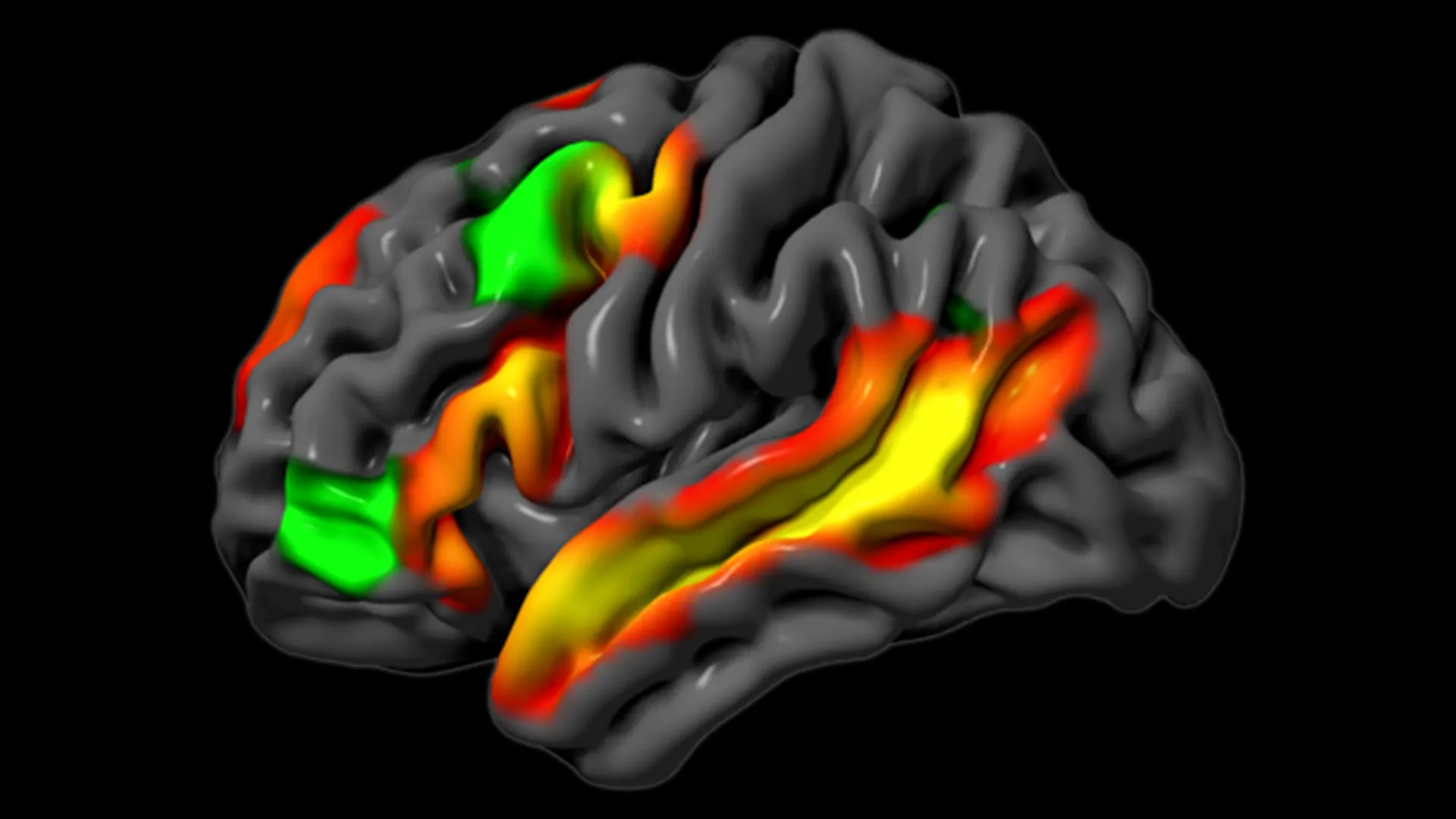
MIT neuroscientists have upended a longstanding assumption about how the brain works, demonstrating that language and logical reasoning operate as distinct neural systems rather than interconnected processes.
The research team, based at MIT, found that stroke patients with severe language impairments performed as well as unimpaired individuals on complex logic puzzles. Brain imaging revealed that during reasoning tasks, the language-processing regions of the brain remained largely inactive, suggesting that abstract thinking does not depend on the brain's language machinery.
The study involved stroke survivors who had sustained damage to language-dominant areas, resulting in aphasia or other communication disorders. Despite their difficulty speaking, reading, or understanding words, these patients demonstrated intact logical reasoning abilities. Neuroimaging data from functional MRI scans confirmed that reasoning engaged different brain regions entirely, primarily in areas associated with visual-spatial processing and working memory rather than language comprehension and production.
This finding challenges decades of neuroscientific theory proposing that language fundamentally scaffolds human reasoning. Philosophers and cognitive scientists have long debated whether abstract thought requires an internal language, with some arguing that all complex cognition rests on linguistic foundations. The MIT work provides empirical evidence against this view.
The implications extend beyond academic neuroscience. Understanding that reasoning and language are separable systems reshapes how researchers think about brain plasticity and recovery after brain injury. Stroke rehabilitation protocols might benefit from this knowledge, potentially allowing clinicians to target language recovery separately from cognitive function. The findings also inform education, suggesting that language delays or disorders need not impair a child's capacity for mathematical or logical thinking.
The research team conducted rigorous testing protocols to ensure participants understood task instructions despite language deficits. They used multiple logic puzzle formats and difficulty levels to demonstrate consistency in performance. Brain imaging analysis employed statistical methods to confirm that language regions showed significantly lower activation during reasoning compared to language-based tasks like reading comprehension.
Some limitations merit mention. The study involved a relatively specialized population: stroke patients with specific language impairments. Whether the same separation applies to individuals with other types of brain damage or neurodevelopmental conditions remains unclear. Additionally, while language regions remained quiet during reasoning, the study does not rule out subtle linguistic processing occurring outside typical language areas.
The work aligns with emerging research in cognitive neuroscience suggesting greater modularity in brain function than previously recognized. Multiple teams have documented dissociations between different cognitive capacities, indicating that the brain compartmentalizes function more than once believed.
Future work should explore how these systems interact in everyday cognition, where reasoning and language typically work together. Researchers might also investigate whether certain types of reasoning depend more heavily on language than others, and whether intensive language training could partially restore reasoning abilities through alternative neural pathways in stroke survivors.
This discovery opens new questions about consciousness, cognition, and the brain's fundamental architecture.