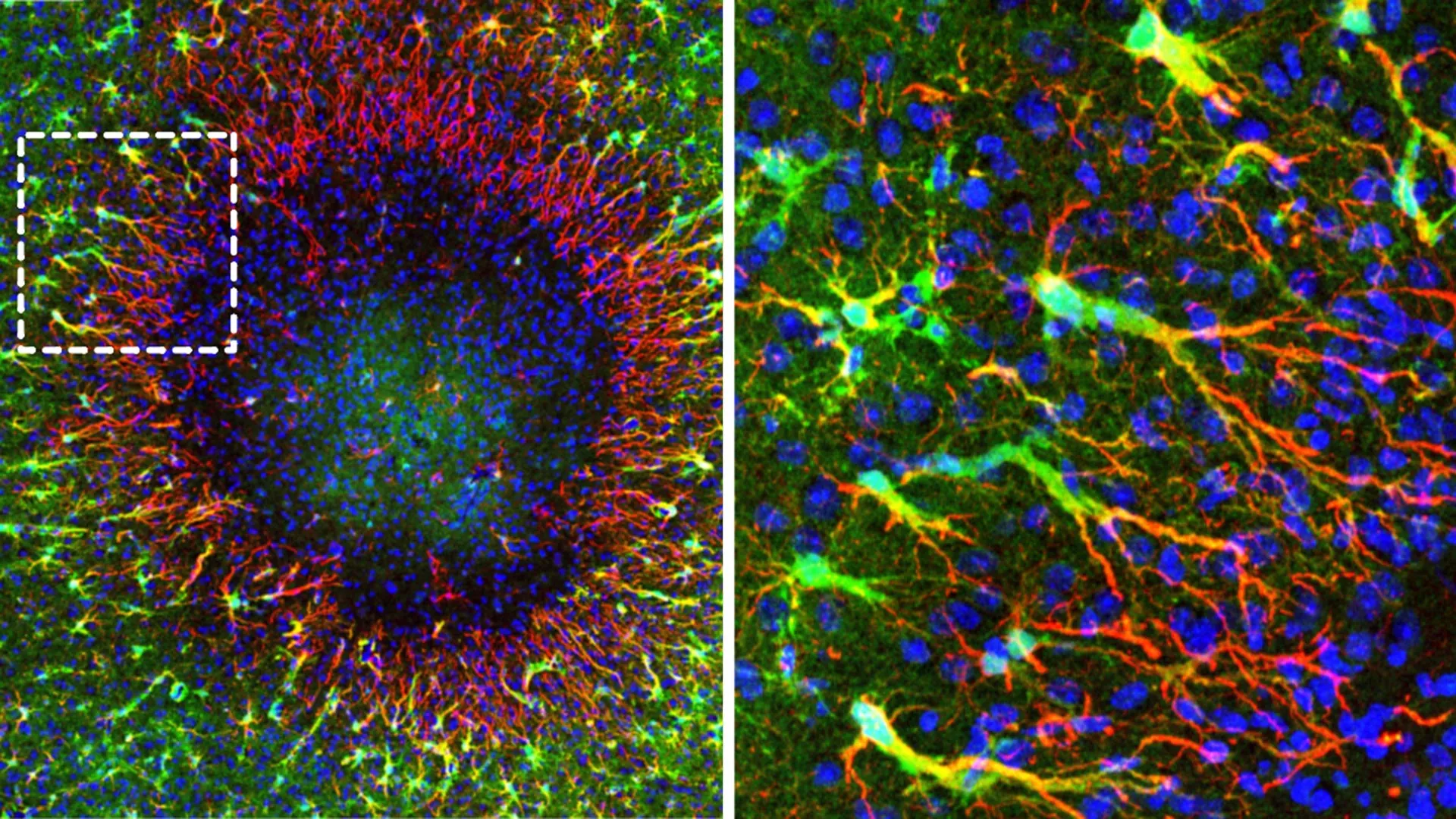
Researchers have discovered that adult brains possess a previously underappreciated capacity for self-repair. In studies conducted in mice, scientists identified astrocytes—support cells abundant throughout the brain—that respond to injury by reconstructing damaged neural networks.
The cells employ an unusual mechanism. Rather than migrating to injury sites, astrocytes generate new nuclei (the cellular structures containing genetic material) and transport them through extended cellular projections to repopulate affected regions. This process allows the brain to restore lost cellular infrastructure without replacing entire cells.
The finding challenges the long-held assumption that adult brains have limited regenerative capacity compared to developing brains. For decades, neuroscientists believed adult neural tissue could not effectively replace damaged networks. This discovery suggests the adult brain retains latent repair mechanisms that activate following injury.
The research carries implications for treating brain injuries and neurodegenerative diseases. Understanding how astrocytes mobilize repair responses could inform strategies to enhance the brain's natural healing processes after trauma, stroke, or conditions like Alzheimer's disease. Current therapies often work around permanent brain damage rather than facilitating recovery.
The study was conducted in mouse models, which limits immediate applicability to human neurology. Mouse brains differ substantially from human brains in size, complexity, and regenerative capacity. Researchers must verify whether human astrocytes employ identical repair mechanisms and whether this capacity translates to functional recovery in living organisms.
The work also requires clarification on what triggers astrocyte activation and whether this response can be amplified therapeutically. Scientists need to determine the timeline and extent of repair, and whether it restores normal brain function or merely fills physical gaps.
Despite these limitations, the research opens new avenues for neuroscience. The discovery that adult brains possess active repair machinery—rather than remaining static after development—fundamentally reframes understanding of neural plasticity and injury response. Future work