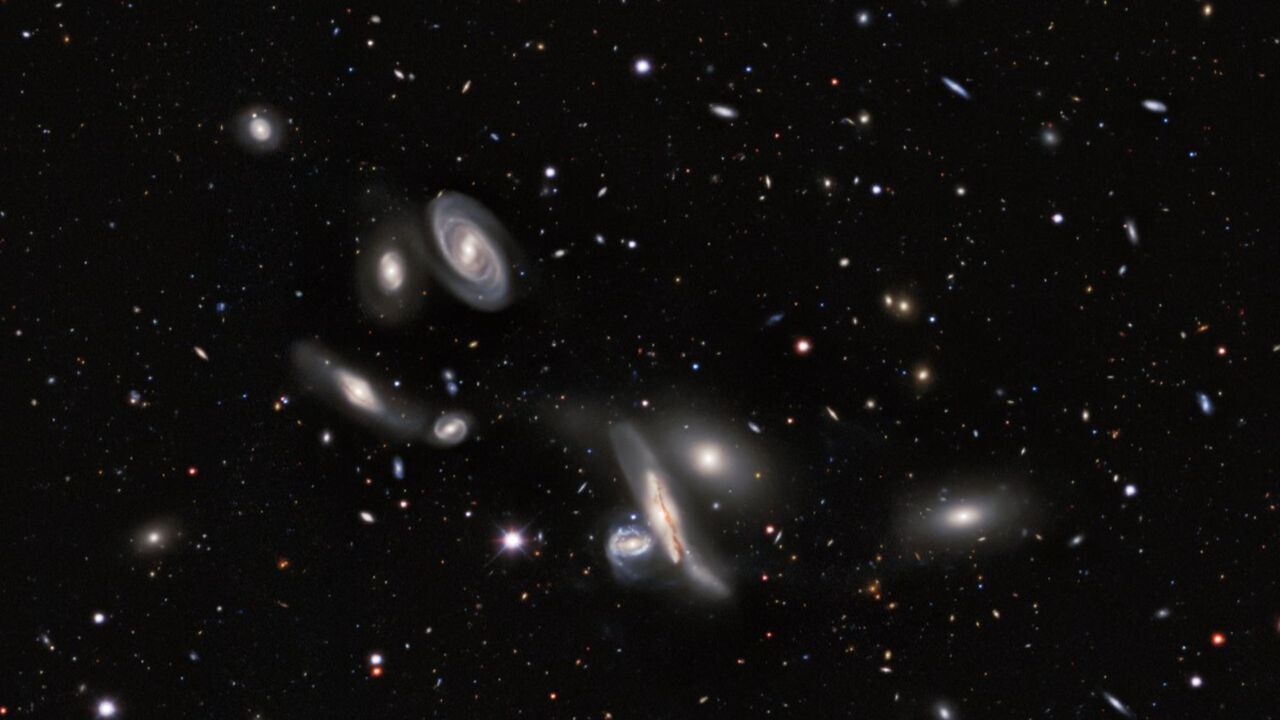
Astronomers have created the largest two-dimensional map of the universe ever produced, containing 5.6 trillion pixels and cataloging nearly 4 billion cosmic objects. The unprecedented dataset represents a leap forward in observational astronomy and provides a resource that researchers say will anchor decades of future discoveries.
The map was assembled using data from ground-based telescopes and represents an exhaustive survey of vast cosmic regions. By combining observations across multiple wavelengths and surveys, scientists created a unified framework that allows astronomers to study galaxy distributions, measure cosmic expansion, and investigate the nature of dark matter and dark energy on scales previously unavailable.
The sheer volume of data reflects modern astronomy's evolution. Where previous surveys cataloged millions of objects, this map reaches billions, enabling statistical analyses that were impossible with smaller samples. Researchers can now identify subtle patterns in galaxy clustering, trace the cosmic web's filamentary structure, and test theoretical models of structure formation in the expanding universe.
The project demonstrates how computational methods and data integration have become central to contemporary astronomy. Processing and organizing this information requires sophisticated algorithms and computing infrastructure. The map's accessibility to the broader research community transforms it from a single study into shared infrastructure for the field.
Limitations remain inherent to the dataset. The map captures objects visible at specific wavelengths and depths, leaving portions of the universe unmapped. Dust obscuration, instrument sensitivity limits, and observational biases constrain what the survey reveals. Fainter objects escape detection, and certain cosmic regions remain inaccessible to current technology.
The resource complements upcoming observations from next-generation instruments and space telescopes. As new data arrives from facilities like the Vera Rubin Observatory and the James Webb Space Telescope, researchers will integrate fresh measurements with this foundational map, progressively refining humanity's cosmic census.
This map establishes a new baseline for understanding the universe's large-scale structure.