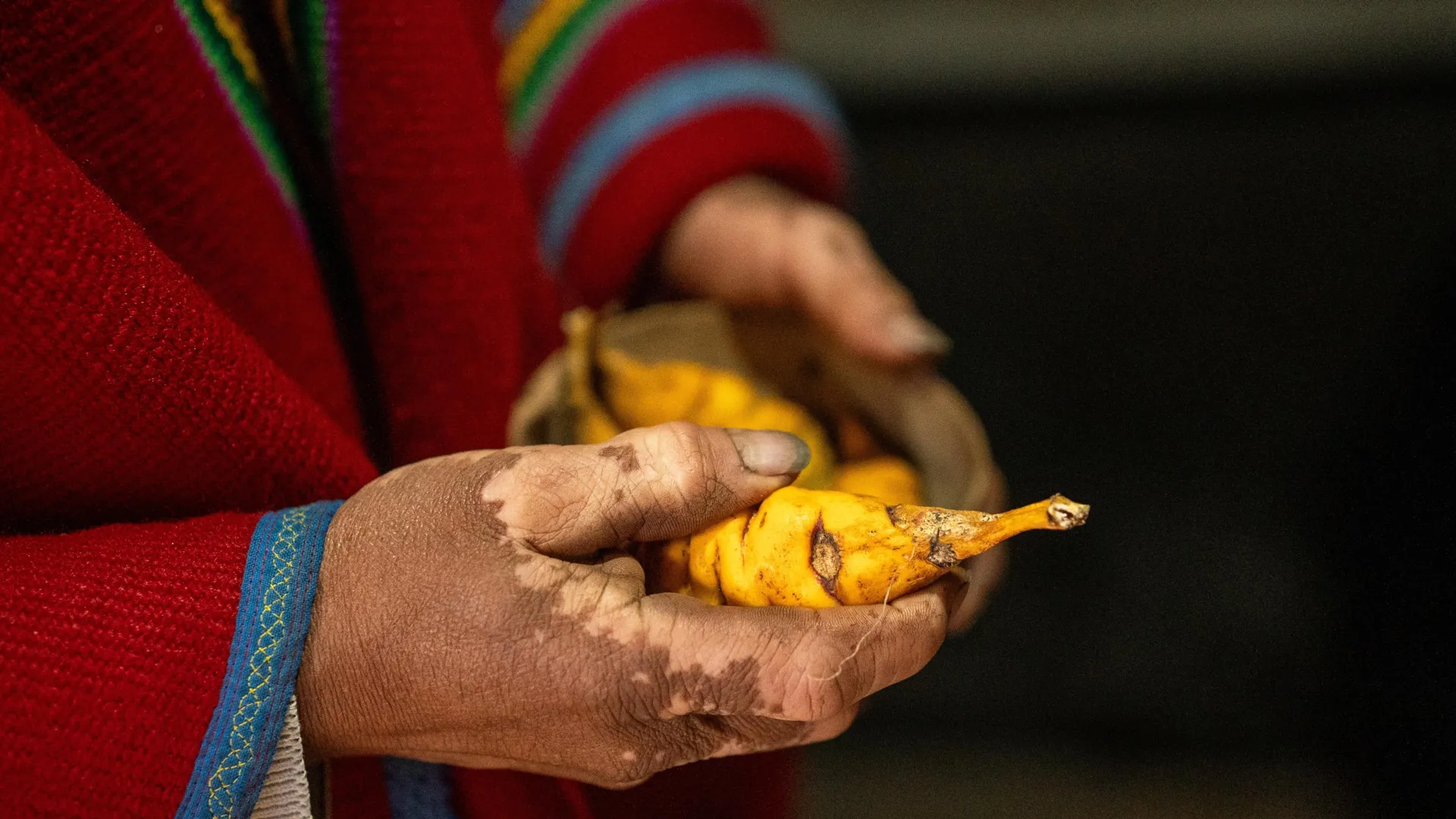
Indigenous Peruvians possess exceptionally high numbers of copies of the AMY1 gene, which encodes an enzyme that breaks down starch. Researchers attribute this genetic abundance to selective pressure from the adoption of potatoes as a dietary staple in the Andean region thousands of years ago.
The potato, domesticated in the Andes around 8000 to 10000 years ago, became central to Peruvian diets and enabled population expansion at high altitudes. People carrying more copies of AMY1 could digest starch more efficiently, converting it into glucose faster and absorbing nutrients more effectively. This metabolic advantage allowed carriers to thrive on a potato-heavy diet, reproduce more successfully, and pass additional gene copies to offspring. Over generations, the frequency of high AMY1 copy numbers increased in the population.
This genetic shift represents one of the clearest examples of recent human evolution driven by dietary change. The AMY1 adaptation mirrors similar patterns observed in other populations. East Asian populations, whose ancestors consumed rice and millet, also show elevated AMY1 copy numbers. However, the Andean case offers a distinct advantage for researchers. The timing of potato domestication and its archaeological record provide a clear window into when selection occurred, allowing scientists to map the genetic response to a specific dietary transition.
The research underscores how food systems shape not just cultures but human biology itself. Potatoes transformed Andean societies, supporting larger populations and enabling settlement in previously marginal environments. The genetic imprint of this transformation persists in contemporary Indigenous Peruvians, demonstrating that evolution operates on timescales far shorter than traditionally assumed.
The findings carry implications for understanding how human populations adapt to environmental and dietary challenges. They suggest that genetic variation in metabolic capacity reflects historical subsistence patterns, offering a biological record of how ancient peoples met nutritional demands. This work also highlights