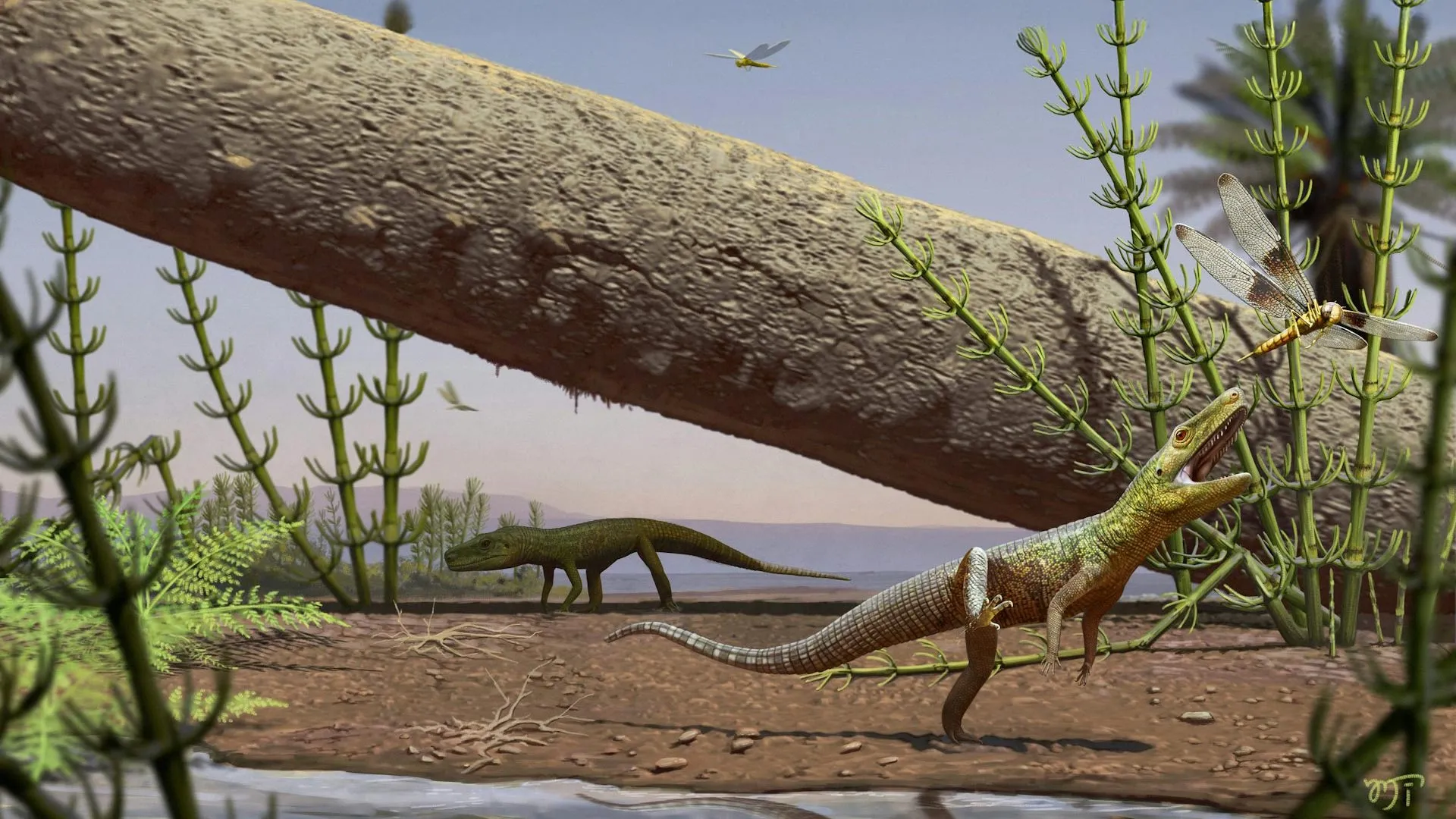
Paleontologists studying a 240-million-year-old reptile fossil from Brazil have uncovered evidence of an evolutionary transition that occurred just before dinosaurs and crocodiles dominated the landscape. The small predator possessed unusually positioned legs, a feature researchers believe enhanced its locomotion compared to earlier reptile species.
The specimen belongs to a group whose relatives were previously documented almost exclusively on other continents. This geographic distribution suggests these Triassic reptiles achieved a broader range across the ancient supercontinent than scientists previously understood. The discovery adds detail to a poorly understood chapter of reptilian evolution during the Middle Triassic period.
The positioning of the legs indicates an adaptation toward more efficient movement, reflecting evolutionary pressures that shaped early reptile lineages before the spectacular radiation of dinosaurs in the Jurassic period. Such anatomical innovations were critical as different reptile groups competed for ecological niches during the Triassic.
Finding well-preserved specimens from this era remains challenging. Most fossil assemblages from the Triassic either lack sufficient detail or concentrate in specific geographic regions. The Brazilian fossil fills an important gap by demonstrating that certain reptile groups achieved worldwide distribution despite the fragmented nature of the fossil record.
This discovery underscores how much remains unknown about the Triassic reptile radiation. The animal's characteristics suggest that the earliest evolutionary experiments in reptile body plans were more diverse and geographically widespread than the existing fossil evidence had indicated. Understanding these pre-dinosaur reptiles provides context for explaining how some lineages eventually produced the dominant vertebrates of the Mesozoic Era while others left only rare fossil traces.