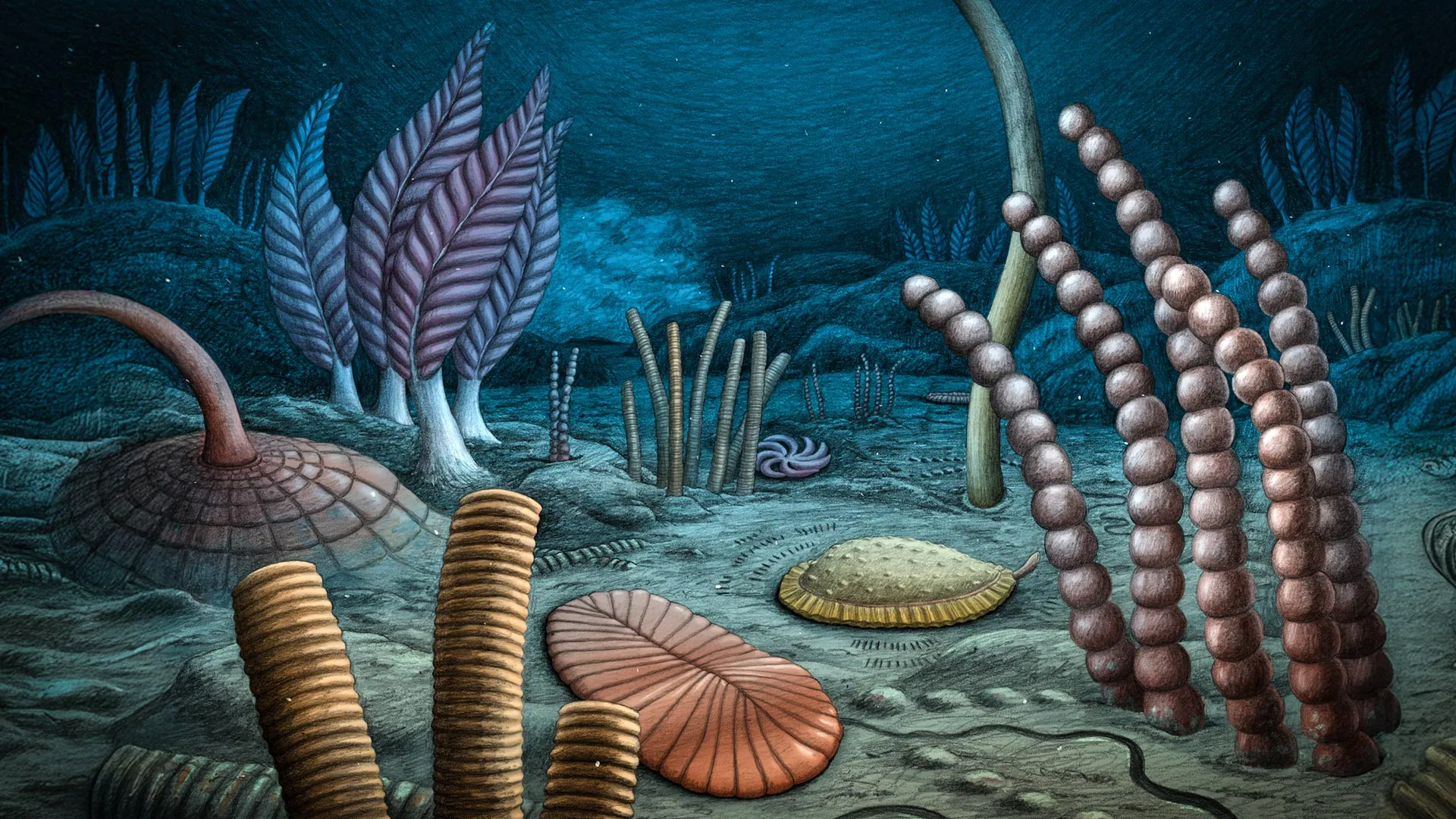
Researchers examining a fossil site in British Columbia have discovered 567-million-year-old organisms that fundamentally reshape our understanding of early animal evolution. The specimens represent some of the earliest known creatures to exhibit movement, sexual reproduction, and distinct body plans, pushing the timeline of these evolutionary milestones back approximately 10 million years.
The fossils come from the Marble Canyon site in the Canadian Rockies, a location renowned for preserving soft-bodied organisms from the Ediacaran period. Unlike earlier fossil records dominated by stationary, disc-shaped creatures, these specimens show evidence of active locomotion and organized anatomy. Researchers identified traits suggesting sexual reproduction rather than simple asexual division, a development previously thought to emerge much later in animal history.
The discovery carries substantial implications for understanding how complex life emerged. These organisms developed before the Cambrian explosion, the period beginning around 541 million years ago when most major animal groups rapidly diversified. The findings suggest that sophisticated body organization and behavior preceded this explosive radiation of diversity, indicating gradual evolution rather than sudden appearance of complex forms.
The Marble Canyon site occupies a particular ecological niche that experts believe represents deep-ocean conditions. This environment challenges assumptions that early animal evolution occurred primarily in shallow waters. The evidence points toward deep-sea habitats as potential incubators for developing body plans and behaviors.
The research team examined the morphological characteristics and preservation patterns of the fossils to reach these conclusions. Several specimens displayed bilateral symmetry and segmentation, features absent in earlier Ediacaran life. These structural developments correlate with the enhanced mobility and sensory capabilities required for predatory or competitive behaviors.
While the discovery expands knowledge of early animal life, some interpretations remain tentative. Ediacaran fossils present preservation challenges that occasionally obscure anatomical details, and researchers continue debating whether certain specimens represent true animals or other early organisms.