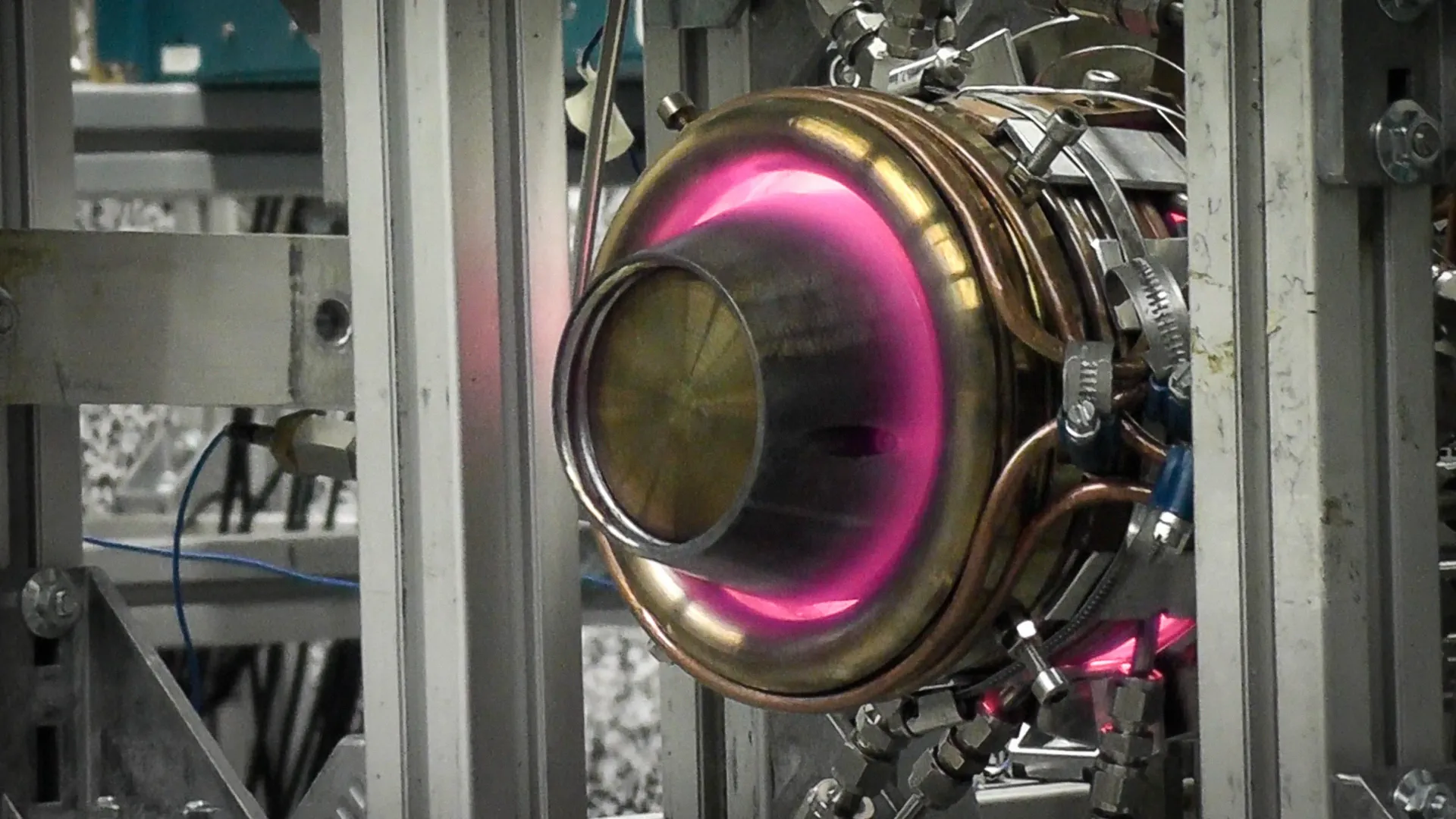
Researchers have demonstrated a hydrogen turbine that harnesses detonation waves to generate its own pressure, eliminating the need for a mechanical compressor. This approach converts controlled explosions directly into electrical power, potentially revolutionizing how clean energy systems operate.
Traditional gas turbines require separate compressors to pressurize fuel before combustion. The detonation-based design cuts out this energy-draining middle step. Instead of steady combustion, detonation waves create rapid pressure spikes that drive the turbine blades directly. The system ignites hydrogen fuel in a controlled manner, producing shock waves that perform double duty: they generate the pressure and deliver the energy to spin the turbine.
The efficiency gains are substantial. Removing the compressor stage reduces parasitic power losses that plague conventional designs. Hydrogen combustion produces only water vapor as exhaust, making the system emissions-free. This addresses two major energy challenges at once: improving turbine efficiency while eliminating fossil fuel dependence.
The technology targets both stationary power generation and aviation applications. Aircraft engines consume enormous fuel quantities to power onboard compressors. A detonation turbine could dramatically reduce fuel consumption and emissions in future aircraft. Ground-based systems could provide cleaner electricity generation with higher thermal efficiency than conventional turbines.
The concept exploits physics principles known for decades but difficult to engineer at scale. Researchers refined how to maintain stable detonation patterns and transfer that explosive energy into sustained mechanical work. The challenge involved preventing damage from the extreme pressures while keeping the system operationally reliable.
This breakthrough builds on decades of detonation engine research. Previous work explored detonation in military applications and theoretical studies. Moving from laboratory demonstrations to functional electricity generation represents a critical advancement toward practical deployment.
Hydrogen remains the limiting factor. Production, storage, and distribution infrastructure remain underdeveloped in most regions. However, growing momentum toward hydrogen