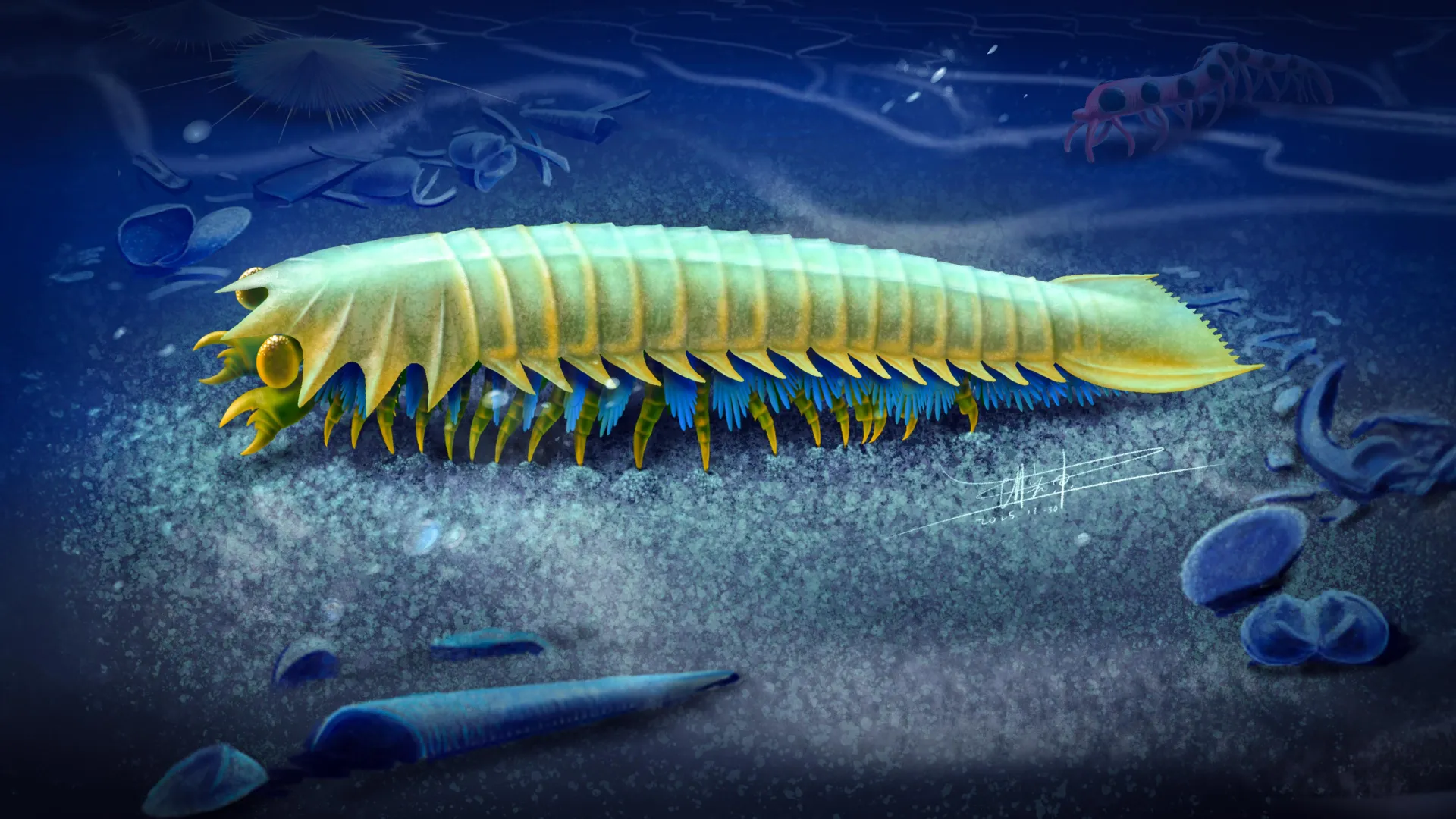
Paleontologists analyzing a 518-million-year-old fossil have discovered the ancestral precursor to spider fangs, offering the earliest known window into how arachnids evolved their signature hunting weapons.
The creature, preserved in exquisite detail, possessed pincerlike limbs that researchers identified as the evolutionary forerunners of venomous fangs. The fossil retained soft tissue structures, a rarity in paleontological specimens, allowing scientists to trace the anatomical pathway from primitive appendages to the specialized piercing organs found in modern spiders and scorpions.
The specimen dates to the Cambrian period, when most major animal groups first appeared in the fossil record. At that time, predatory arthropods were experimenting with various body plans and appendage configurations. This particular creature belonged to the early branches of the chelicerata, the arthropod lineage that includes spiders, scorpions, mites, and horseshoe crabs.
The pincerlike structures examined in the fossil suggest that early chelicerates used relatively simple grasping organs to capture prey. Over millions of years, natural selection refined these limbs into increasingly sophisticated weapons. The soft tissue preservation revealed musculature and joint configurations that illuminated how the mechanical systems evolved from blunt pincers into sharp, venom-injecting fangs.
The discovery carries implications for understanding predator-prey interactions in Cambrian ecosystems. Early arachnid ancestors represented a significant evolutionary innovation in hunting strategy. Their development of specialized feeding apparatus allowed them to exploit new food sources and ecological niches.
The research team studied the fossil using advanced imaging techniques to map three-dimensional structures without damaging the specimen. These methods enabled them to compare anatomical features across modern arachnid species and reconstruct the intermediate evolutionary stages with confidence.
This work demonstrates how major anatomical transitions occur through gradual modification