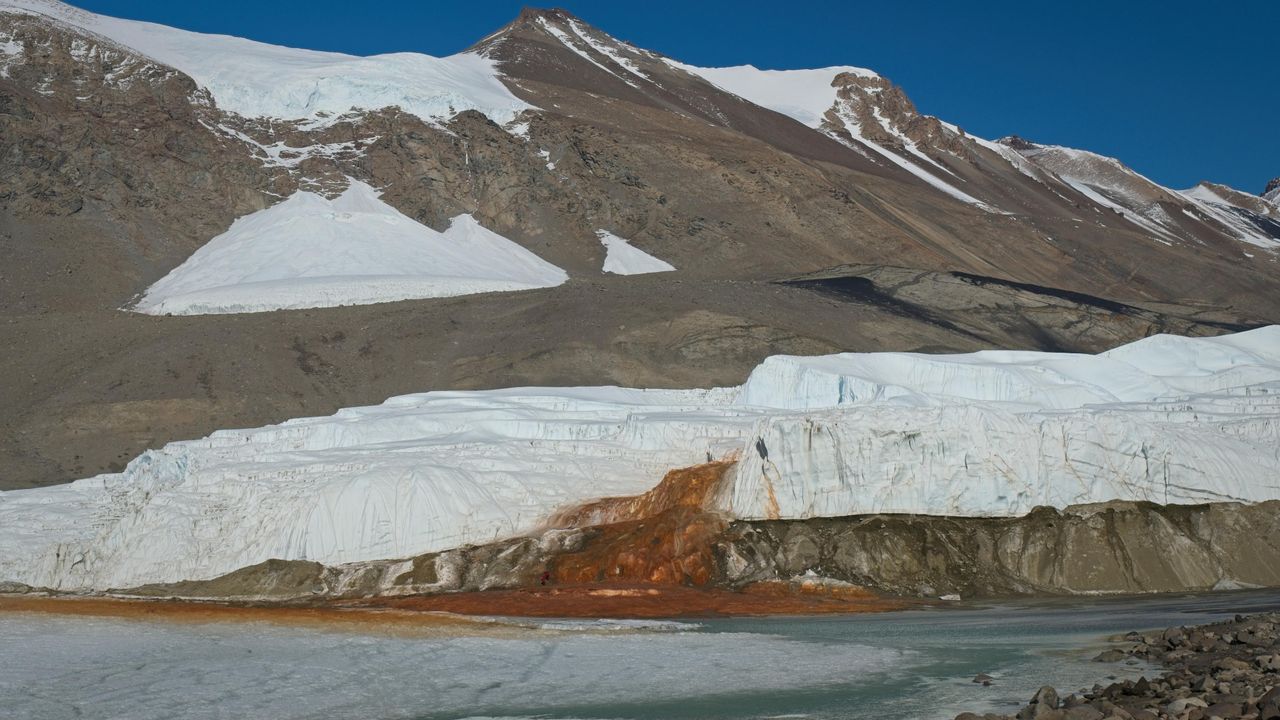
Researchers have identified a potential origin for Blood Falls, the striking crimson waterfall that flows from the Taylor Glacier in East Antarctica. A new study suggests that the salty brine feeding this phenomenon may have been deposited when sea levels were significantly higher than today.
Blood Falls derives its distinctive reddish color from iron oxide and microbial life in hypersaline brine that seeps from beneath the glacier. The waterfall has puzzled scientists for decades, who struggled to explain how such concentrated salt water accumulated in a frozen environment.
The study proposes that the brine was emplaced during a period of elevated sea levels, likely when Antarctic ice sheets were smaller and oceans stood higher relative to the continent. This ancient saltwater may have become trapped in subglacial reservoirs and preserved beneath the ice for millennia, insulated from freezing temperatures by the overlying glacier's pressure and geothermal heat from below.
This hypothesis reconciles a longstanding mystery about Blood Falls' extreme salinity. The brine contains up to five times the salt concentration of seawater, making it dense enough to resist freezing even at temperatures well below the freezing point of fresh water. If the salt water was originally emplaced as seawater during higher sea-level stands, subsequent concentration through freeze-out processes could explain its current composition.
The research underscores how Antarctica's geological history shapes its present hydrology. Blood Falls represents a rare window into subglacial processes and paleoenvironmental conditions. Understanding its origins provides clues about how Antarctic ice sheets responded to past climate changes and how they may evolve as oceans warm again.
The study builds on decades of research at Taylor Glacier, where researchers have documented the brine's chemistry and traced microbial communities that thrive in extreme conditions. These findings support growing recognition that subglacial environments harbor complex ecosystems and retain