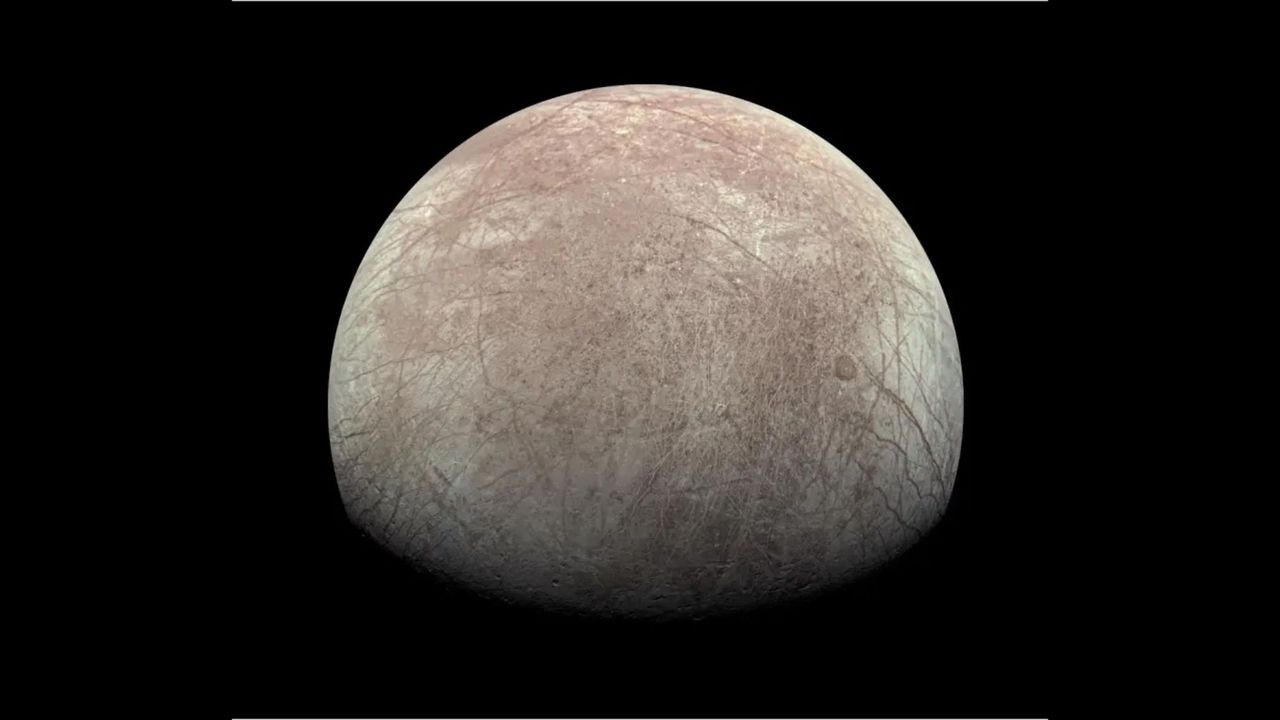
Scientists exploring the possibility of life on Jupiter's moon Europa face a fundamental challenge: accessing the subsurface ocean where microbial life might exist. Europa harbors a vast water ocean beneath its icy crust, making it one of the most promising locations in our solar system for discovering extraterrestrial life.
Recent research emphasizes the importance of understanding Europa's geological features and chemical composition to guide future exploration missions. The moon's surface shows signs of active geological processes, including water plumes that scientists believe erupt from the buried ocean. These plumes could carry organic molecules and other biosignatures to the surface, where robotic probes might detect them without drilling through kilometers of ice.
The challenge lies in identifying where to search and what instruments will best detect signs of habitability. Future missions, including NASA's Europa Clipper spacecraft launched in 2024, will conduct detailed surveys of the moon's surface composition and geological activity. These observations will help researchers pinpoint regions most likely to harbor life and determine the best methods for detecting it.
Several factors complicate the search. Europa's radiation environment, created by Jupiter's powerful magnetic field, damages organic molecules on the surface. Additionally, the thickness and composition of the ice shell vary across the moon, affecting which areas might be accessible. Scientists must also consider that life, if present, may not resemble Earth organisms, requiring innovative detection methods.
The prospect of discovering life on Europa carries profound implications for understanding how common life is in the universe. Even fossilized microbial remains or chemical signatures of past life would demonstrate that abiogenesis, the natural origin of life, can occur beyond Earth.
Researchers emphasize that current missions focus on reconnaissance rather than sample collection. Direct exploration of Europa's ocean remains a distant prospect requiring technological advances in drilling and subsurface exploration. For now, scientists concentrate on mapping the moon's surface features and analyzing the composition of water plumes to build