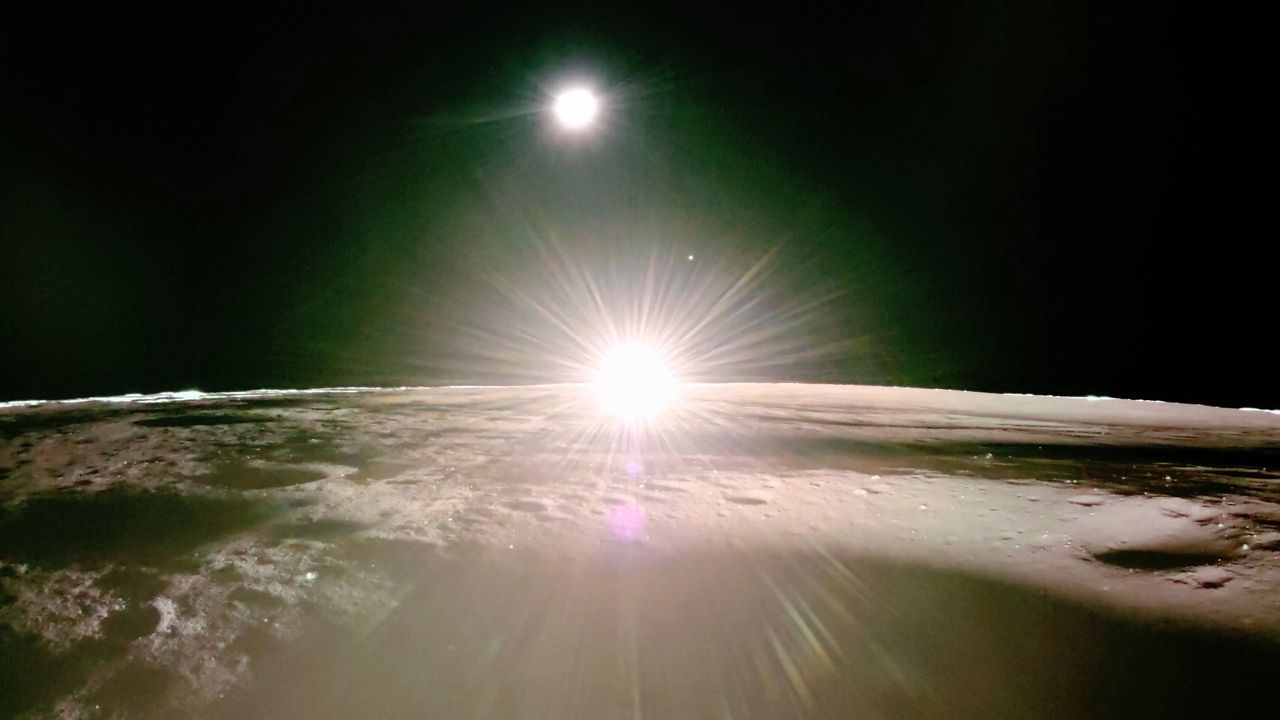
A SpaceX Falcon 9 rocket's upper stage is set to impact the lunar surface early Wednesday morning, August 5. The collision stems from orbital mechanics and the rocket's trajectory after completing its primary mission.
The incident involves the booster that launched the Deep Space Climate Observatory (DSCOVR) satellite in 2015. After releasing its payload, the upper stage entered an elliptical orbit around Earth. This trajectory was never corrected to avoid the moon, leaving the spent booster on an eventual collision path with the lunar surface.
Rocket stages frequently remain in space after completing their missions. Most fall back to Earth or remain in stable orbits indefinitely. However, gravitational interactions between Earth and the moon can alter orbital paths over time. In this case, the Falcon 9 upper stage gradually drifted into a course that intersects the moon's orbit.
SpaceX engineers could have performed a deorbit burn shortly after DSCOVR's deployment to guide the stage safely into Earth's atmosphere or away from lunar impact. Such maneuvers consume fuel and require planning, but they prevent collisions with celestial bodies. The decision not to perform this burn reflects practices from the 2015 era, when tracking and predicting long-term orbital decay was less sophisticated.
The impacting stage will strike the lunar surface at approximately 5,600 miles per hour. At this speed, the collision will create a crater but will not damage any lunar infrastructure or missions. The moon has been bombarded by meteorites and asteroids for billions of years, and one additional impact from human debris produces minimal scientific consequence.
This event highlights growing concerns about space debris. As launch rates increase and more satellites enter orbit, the risk of unintended collisions rises. Space agencies and companies now prioritize end-of-life planning for rocket stages and satellites, designing missions to avoid cluttering Earth