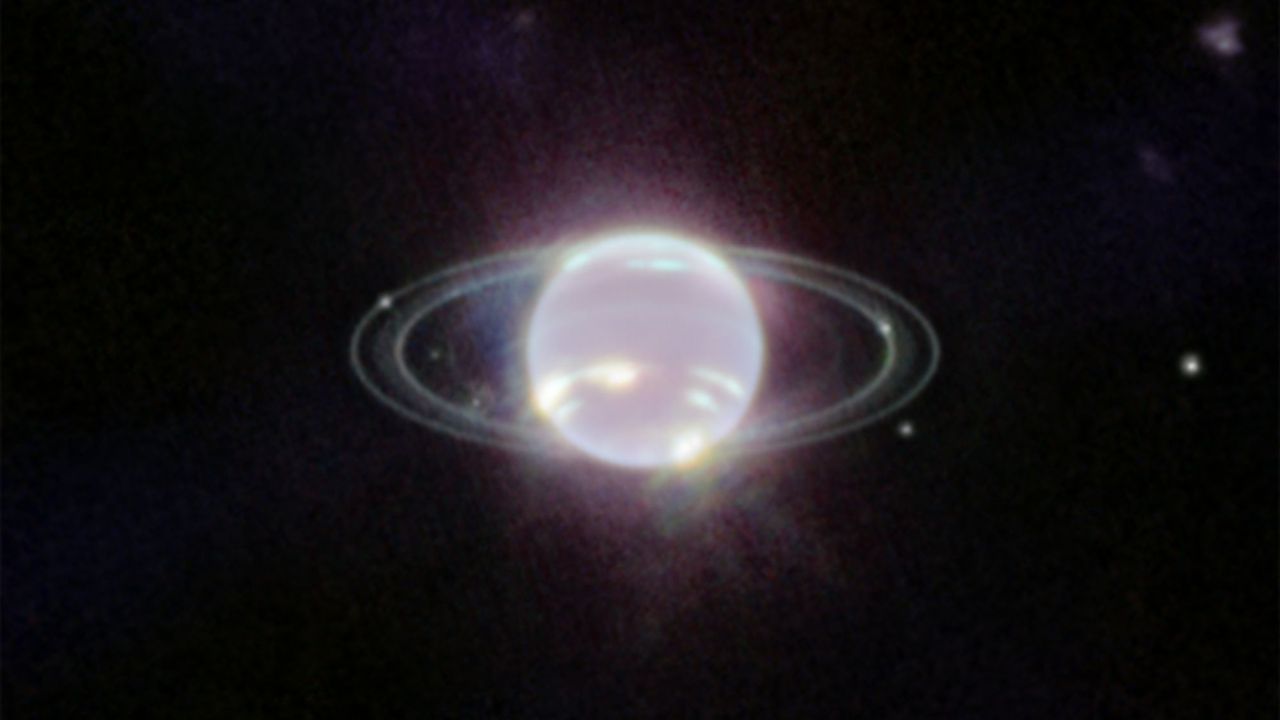
Three moons orbiting Neptune may be fragments from a massive collision between larger icy bodies, according to new research analyzing data from Voyager 2's 1989 flyby. The study reveals that Proteus, Triton, and Nereid display characteristics consistent with being remnants of shattered ice worlds rather than intact celestial bodies.
Researchers examined surface features and orbital patterns of these three moons, finding evidence that a catastrophic impact occurred early in Neptune's system history. The collision would have fragmented at least two substantial ice bodies, scattering their pieces across different orbital zones around the planet.
Proteus, Neptune's second-largest moon, shows an irregular shape typical of collision debris. Triton, the system's largest moon, orbits retrograde, suggesting it was captured from the Kuiper Belt after being destabilized by the hypothesized impact. Nereid's unusual elongated orbit further supports the catastrophic scenario, as such trajectories frequently result from gravitational disruption following major collisions.
The research builds on decades of analysis from Voyager 2's single encounter with Neptune. That 1989 flyby gathered the only close-range data available, capturing images and measurements that scientists continue to reexamine with modern analytical techniques. The findings underline how much remains unknown about Neptune's satellite system.
The research team notes that confirming this collision hypothesis requires direct observation. A dedicated mission to Neptune would provide crucial data unavailable since Voyager 2's brief passage nearly four decades ago. High-resolution imaging of surface geology, spectroscopic analysis of moon compositions, and gravitational measurements could definitively establish whether these bodies are indeed fragments or formed through different processes.
Neptune's moon system ranks among the least studied in the solar system. Only Triton received substantial scientific attention, and it remains poorly understood. The proposed impact scenario offers an explanation for the