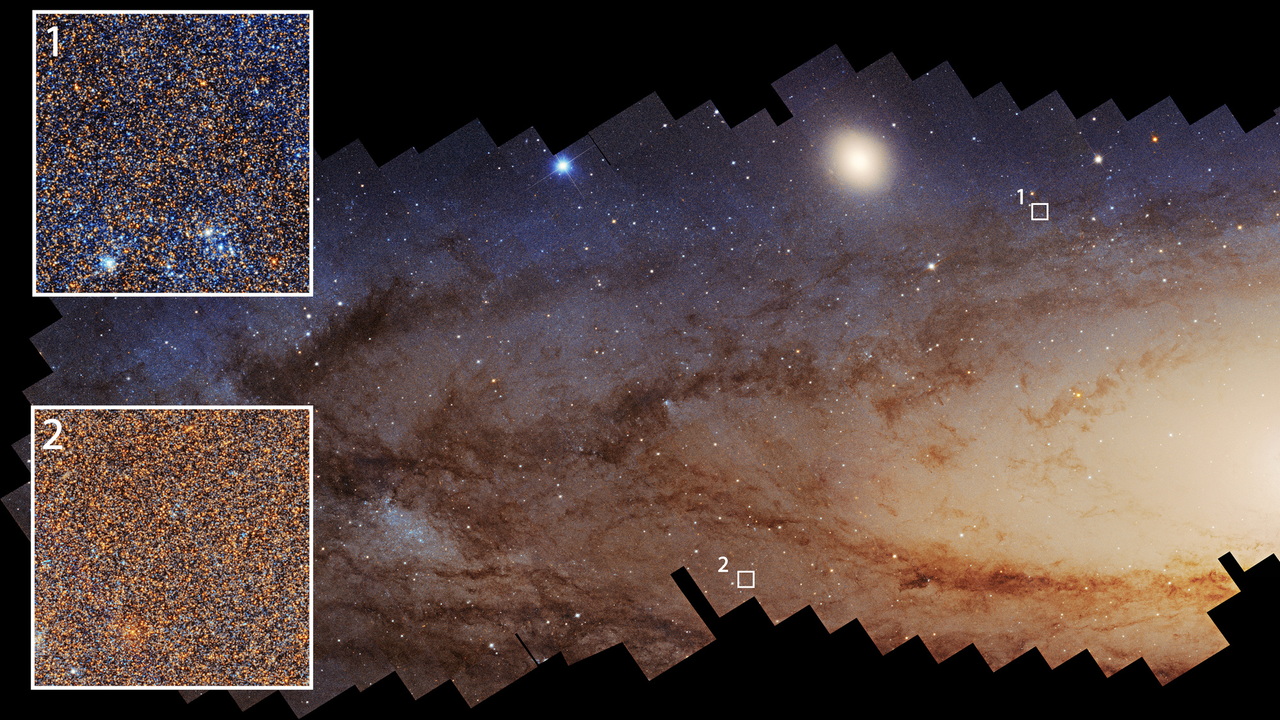
NASA's Hubble Space Telescope has captured one of the most detailed images of the Andromeda galaxy, revealing a surprising discovery about this nearest major galactic neighbor. The observation shows that Andromeda, the universe's most famous giant spiral galaxy, is no longer the prolific star factory it once was.
The high-resolution imagery provides astronomers with unprecedented views of Andromeda's stellar populations and structure. The galaxy, located about 2.5 million light-years from Earth, has long served as a laboratory for understanding galactic evolution and star formation processes. These new Hubble observations indicate that the rate of star birth in Andromeda has declined significantly compared to its historical activity levels.
The timing of this discovery carries particular importance as NASA prepares to launch the Nancy Grace Roman Space Telescope, which will eventually surpass Hubble's capabilities for observing distant galaxies and cosmic structures. Roman will possess greater sensitivity and resolution for studying galaxies across the universe, potentially revealing similar patterns of star formation decline in other spiral galaxies.
The findings suggest that Andromeda may have exhausted much of its available gas reserves or experienced processes that suppress star formation, such as gravitational interactions or feedback mechanisms from existing stars and supernovae. Understanding why this galaxy has transitioned from an active star-forming system to a quiescent one provides insights into the life cycles of spiral galaxies more broadly.
The Hubble observations join decades of data about Andromeda collected across multiple wavelengths of light. Each observation adds layers to astronomers' understanding of how galaxies evolve over billions of years. The detailed imagery captured by Hubble's advanced instruments reveals individual stars and stellar clusters, enabling researchers to map the composition and age distribution across different regions of the galaxy.
As the Roman Space Telescope approaches deployment, these Hubble observations of Andromeda establish a crucial comparison