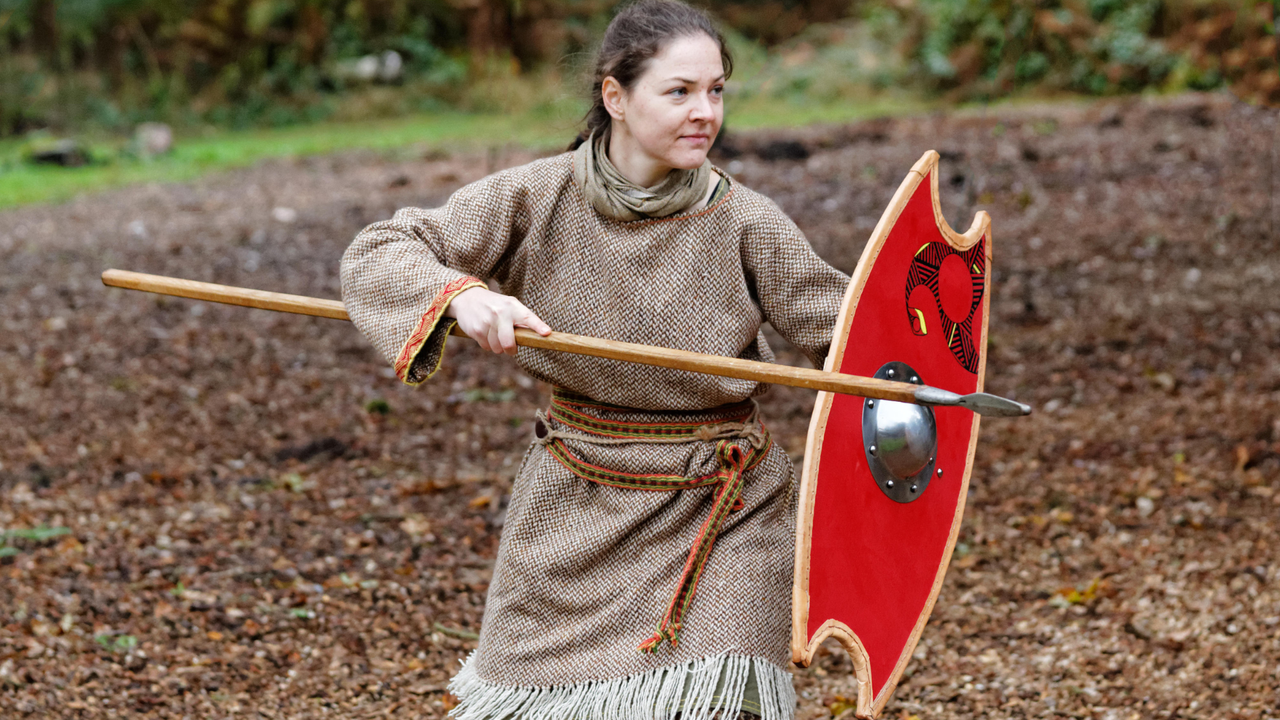
# Celtic Women Warriors: New Evidence Reshapes Understanding of Iron Age Combat
Scholars have long debated whether Celtic women participated directly in warfare, or confined their roles to domestic and religious spheres. New archaeological and historical analysis suggests that Celtic women did fight in battles, challenging traditional assumptions about gender roles in Iron Age societies.
The evidence comes from multiple sources. Archaeological findings reveal weapons buried with female skeletal remains across Celtic territories in Europe. Grave goods including swords, spears, and shields appear in women's burials from the 6th to 1st centuries BCE, patterns concentrated in regions across what is now France, Germany, and the British Isles.
Classical writers provide corroborating accounts. Greek and Roman historians documented female Celtic warriors, with Strabo noting that Celtic women matched men in combat strength. Tacitus described Germanic and Celtic societies where women fought alongside men during conflicts.
The historical record includes named female warriors. Boudicca of the Iceni, who led a major rebellion against Roman occupation around 60 CE, commanded forces and fought directly. Celtic law codes reference female warriors and their property rights, suggesting formal recognition of women in martial roles.
Scholars emphasize that Celtic societies differed markedly from Mediterranean civilizations in gender norms. Evidence indicates Celtic women held property rights, could initiate divorce, and participated in religious and political life with greater autonomy than Greek or Roman counterparts. Combat participation aligned with these broader social structures.
However, limitations exist in interpreting archaeological evidence. Weapons in graves do not definitively prove combat participation. Some may reflect status, inheritance customs, or religious significance rather than martial experience. Biological evidence of trauma on female skeletons remains scarce.
The consensus among historians now leans toward acknowledging Celtic women as occasional warriors rather than routine combatants. They fought during major conflicts or emergencies, particularly in leadership capacities.