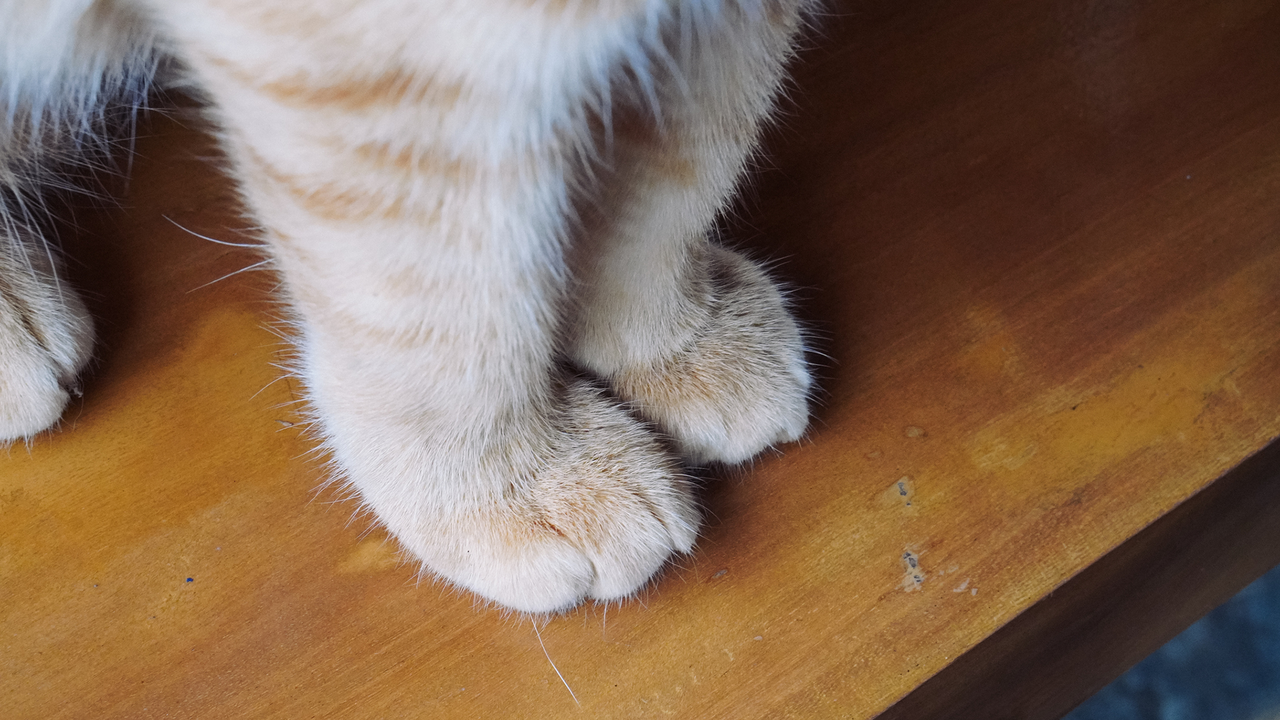
Cats possess specialized sensory hairs on their legs, commonly called "leg whiskers" or carpal vibrissae, that function as sensitive touch receptors. These hairs detect subtle changes in air currents, ground texture, and nearby objects, providing cats with crucial spatial awareness during movement and hunting.
Located primarily on the inner surface of the front legs near the wrist area, these vibrissae contain follicles packed with nerve endings. When the hairs bend even slightly, they transmit signals to the brain about the immediate environment. This sensory input helps cats navigate in low-light conditions, assess prey movement, and maintain balance while climbing or jumping.
The biological purpose extends beyond mere convenience. During hunting sequences, leg whiskers allow cats to detect the faint vibrations and air displacement created by prey animals. They also help cats determine whether spaces are wide enough for their bodies to pass through, contributing to the animal's legendary agility.
Other animals besides cats possess similar structures. Rodents, rabbits, and various mammals use leg vibrissae for comparable purposes. Researchers studying animal sensorimotor systems have found that these hairs represent an ancient evolutionary adaptation present across multiple species.
The leg whiskers work in concert with the more famous facial whiskers, or mystacial vibrissae, around the muzzle. While facial whiskers excel at close-range detection when cats interact with objects head-on, leg whiskers gather information from the lower body and ground level. This dual system gives cats comprehensive sensory coverage.
Damage or removal of leg whiskers impairs a cat's movement precision and hunting effectiveness. Studies have shown that cats with compromised leg whiskers display reduced accuracy during pouncing and exhibit more cautious movement patterns.
Understanding these sensory organs reveals how cats' seemingly simple physical features represent evolutionary solutions to environmental challenges. The leg whiskers demonstrate that cats